

Verizon is Reimagining Connectivity for the Future
How Verizon is Building Smarter Networks, Empowering Businesses, and Driving Change
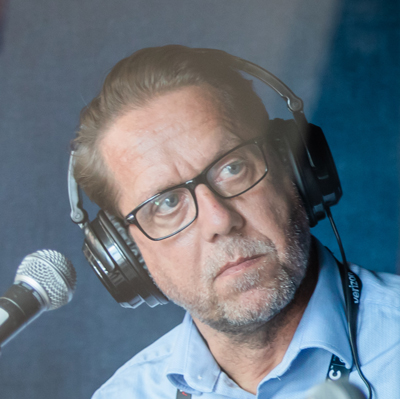
Matthew Roberts, Head of Customer Marketing, Amdocs
S10 E1
13 Mar 2025
Please provide your details
Asterisk (*) indicates required field.
Thank you!
Your submission has been forwarded to the appropriate contact.
Mar 13, 2025
Verizon is Reimagining Connectivity for the Future
Verizon is a company that needs no introduction, as with over 140 million subscribers, it continues to push the boundaries of connectivity and innovation. Live from MWC Barcelona 2025, Matthew Roberts sits down with two of the company’s leaders for an exclusive look at the future of IoT and AI. First, he speaks with Ragu Masilamany from Amdocs and Shamik Basu, VP of Strategic Connectivity at Verizon, to explore how 5G is transforming the Internet of Things. They dive into the evolution of IoT, from basic sensor monitoring to today’s advanced AI-driven applications, and discuss the real-world impact of 5G, from smart cities to autonomous vehicles. Shamik also unpacks the global challenges facing IoT adoption and how Verizon is tackling them with cutting-edge solutions. Next, Matt sits down with Iris Meijer, CMO & Chief Product Officer at Verizon Business, to understand Verizon’s AI strategy and how the company is harnessing artificial intelligence to drive success. From AI-powered workload management to customer support innovations, Iris shares how AI is reshaping enterprise solutions. She also delves into AI’s role in storytelling, personalized marketing, and campaign optimization, offering insights into how different generations are embracing AI in unique ways. From connectivity to intelligence, this episode provides a front-row seat to the future of Verizon and beyond.
Quote from Placeholder Name
“We and yourselves and everyone else in the industry can come together and really collaborate to really help drive this ecosystem. I think that's the third unlock or what we call the trifecta – the hardware, the network, and now the device ecosystem are gonna come together to really deliver the outcomes that customers are looking for.”
Speaker

Shamik Basu, VP of Strategic Connectivity, Verizon
Quote from Placeholder Name
“I think storytelling has always been important and it's become even more important. I think the challenge is we talk so much about the technology, but at the end of the day, if you think about consumer customers or business customers, you need to convince them. You need to tell the stories. You need to show them how they actually benefit from the technology. So I think storytelling is absolutely critical. And I think AI can help marketeers as well when it comes to storytelling and even storytelling at scale. If you think about personalization it's been something that marketeers have talked about for years. But now, together with AI and GenAI, we can actually do personalization at scale and really focus on the storytelling and focus on a segment of one, which is so exciting and I think it's exciting for our customers but for us as well.”
Speaker

Iris Meijer, Chief Product & Marketing Officer, Verizon Business
Quote from Placeholder Name
“This secret sauce is called eSIM. So the remote provisioning is a fantastic tool that the operators have in terms of being able to deliver services cost effectively, but also give some controls back to the enterprises to essentially manage them as if they are managing any of the Wi -Fi connected devices.”
Speaker

Ragu Masilamany, GM, Global Head of BSS & AI Solutions, Head of eSIM & IoT and Solutions, Amdocs
So we're back again at MWC twenty twenty five day two, I think. I don't know yet. I have no idea anymore. And it's great. The guest I have on next, I'm really looking forward to. She's been a former guest on the show before all the way from Verizon, Iris Meyer. Hi, Iris. Thank you very much, Matthew. Thank you for returning. It was it was so much fun last time. You had to come by. I'm back. Exactly. Yeah. Now, Iris is the CMO and the chief product officer of Verizon Business, And it's always great to speak to Verizon. So let's get into it. How's the first day and a half been? It's been fantastic. It's been really, really busy. I've been talking a lot about mobile trends, fixed wireless access. All exciting stuff. So we can dive straight into that. And what are the biggest trends you've picked up from twelve months ago that you think have been very prominent and significant over the last twelve months? Yeah. I think that's a good question. I like being here at Mobile World Congress, everybody talks about AI. Yes. But for us at Verizon, like, we've been focused on AI for over a decade now. Yes. So in in that sense, it's it's not new, but obviously, we are making very big head base in there. We just launched actually our strategy and approach to AI called AI Connect. Yes. Yes. Where we are really rematching our existing assets to provide support for the AI ecosystem and really helping move the AI workloads. Right. Now that's really cool. That's really interesting. Now you're right. Everything is AI this year then. And is it and I've made some early observations that I will validate with you, Iris, that I think are really interesting. I think the first one, it probably relates very significantly to AI Connect. But a year ago when we met, there was a lot of hype and talk and bless that. And everybody was writing AI on everything, whether it existed or not, at twelve months reinvigorated by generative AI. Because like you said, AI has existed. Yes. Yeah. You know, and for for much longer than the launch of ChatGPT, that just gave it that reinvigoration. But twelve months on, I would say the the talking has given way to actual manifestation and realization of of what it can do. Hundred percent. And if I think about just from our perspective, as a company we are focused on three different areas when it comes to AI. First is obvious, it's really looking about efficiency, customer experience, which always starts from employee experience. That is something that we've been focused for years, as I mentioned. Yeah. Something that we developed, for example, for our customer care agents is a personal research assistant. Yes. Yes. So when customers call, they often have actually so many, even ten different screens where they find We like to think we are very simple, everything is very clear, but sometimes we have so many different promotions available for customers as well. So the personal research assistant is a fantastic help for the customer care So that's kind of like enabling cognitive offload. Hundred percent. Exactly. So that's kind of like area that we've been focused for years already. Another one we've been very focused is kind of like embedding AI to our products and services. Great example there is actually our Verizon Business Assistant. Right. If you think about a lot of the small business customers, they don't often have the same kind of like access and resources to be able to really utilize AI as the larger business larger customers have. Yeah. Powers. So we are providing them tools and capabilities, and Verizon Business Assistant is just one example of this, where we are actually providing them a text message based customer care agent that's AI driven. Right. So customers like, let's say that you have a bakery shop, bakery shop customer can text them and say like, oh, do you provide the great hazelnut croissants today? Okay. And through AI driven answers, it says, yes. Today, we have hazelnut croissants. Ah. Like, cool. Cool. Yeah. Yeah. The smaller business customers to get access to these great Yeah. Yeah. And the third one is, as I said, to really providing support for the whole AI ecosystem when it comes to kind of like moving the AI workloads. Yeah. As we all know, so far it's very much focused on training. But I think I read a McKinsey study that by two thousand and thirty, actually, when it comes to AI workloads, about sixty to seventy percent is going to be inferencing. Wow. Wow. Now, but that's really cool. I wanna get into the AI business assistant a little later on. I think that's amazing. But going back to what I think I've noticed so far, and I and and this has been very profound, and it's something that we've talked about for years, but I see it, a real clear manifestation of it this year is partnerships. Yes. We're on it. The partnerships, again, we've gone beyond just the notion of shake hands. We're great partners, everyone. That's what to actual physical implementations in partnership. Is that something that you've you've picked up as well? Yeah. So we have for years already, a couple of good examples. Actually, the AI Connect, we are partnering together very closely with NVIDIA and Vulture. Okay. Yeah. But what we announced yesterday is a great partnership with Accenture when it comes to cybersecurity. Yeah. Yeah. So if you think about, like, everybody talks about AI here at Mobile World Congress, another big topic is security. Cybersecurity has been such a big topic for quite some time now, really top of mind of our customers as well. And together with Accenture, we are partnering in this area. And and we are very excited about it. I think it's a great collaboration. And what's the nature of the the solution or the partnership that that you're coming together on? Yeah. So it has several phases. At the first phase, we are providing our customer some of the Accenture solutions. Yeah. Like managed extended detection and response, identity access management. And at the same time, Accenture is providing their customers our cybersecurity consulting as well. And you think that as well there's an extra need for that. Do you think the threat or there's extra secure cybersecurity risks now because of AI and generative AI? Is that maybe a precursor for for such a partnership? Yeah. I I think, overall, the cybersecurity threats have been increasing. Yeah. Just think about, like, the online mobile fraud, and the impact of that is is just over a trillion. So I think it's been a topic for quite many years already. Yeah. And let's go back to the partnerships again because I know when we spoke twelve months ago, there was a real and I remember quoting this to you when I heard Sampath talk at an event in Seattle, and he told about we need a 5G partnership ecosystem and that there was we talked about it twelve months ago. We've noticed it here in relation to it, but how is it going with Verizon on that initiative we spoke about specifically? Do want to come So I think in terms of like 5G partner ecosystem, private wireless networks, we've seen great traction there just alone the last twelve months. But what we believe is key there is truly having the ecosystem partners. Everybody working together to support our customers. So so I think there we have been building partnerships quite some time already now, and it's really yielding benefit to our customers. Yeah. I think that's clearly an area where partnerships matter a lot. Yeah. Yeah. And what about the challenges facing your customer base right now as we go through this extensive retransformation? And I say retransformation because it seems to happen so frequently. What are the biggest barriers and challenges that they're facing that you are stepping up to to help solve for them? I think it really depends on the customer sizes as well. Like, of the smaller customers are still brick and mortar. Yeah. So just this whole digital transformation can be quite daunting. And I mentioned, for example, AI that they don't really have the resources and access and understanding. And there, we can provide them a lot of support. We have Verizon Digital Ready, which is a free online tool that provides a lot of training for smaller customers as well. Yeah. And as I mentioned, we are providing different products as well to help them on their journey, really providing them support and acting as their tech partner. Yeah. When it comes to larger enterprise customers, there are different challenges. Some of them have legacy systems, and then it's kind of like, what is the right time to start to modernize the legacy systems? And we're partnering with them and working together with them and ensuring that we're just kind of like, not just ripping off everything, but doing it gradually and ensuring that there's always return on investment. Yeah. No. Of course. Absolutely. Now coming back to the show, and you've had a busy day and a half as we've seen already, one of the things and we and again, we spoke about this last year. One of the things that's passionate to us as marketeers is the role of marketing in the industry, how marketing is changing versus because of of generative AI. And and what's your feeling now on the importance of storytelling and marketing as we continue to travel down this tumultuous technological journey? What what are your thoughts on the importance of storytelling to our industry? I think storytelling has always been important. I think it's become even more important. I think the challenge and some of the discussions I've had here as well is we talk so much about the technology, but in the end of the day, like if you think about consumer customers or business customers, you need to convince them, you need to tell the stories, you need to show them how they actually benefit from the technology. Yeah. So I think storytelling is absolutely critical and and I think AI can help marketeers as well when it comes to storytelling. And even storytelling at scale. I think we touched a little bit about it last time as well, but if you think about like personalization, it's been something that marketers have talked about for years. Yes. Yeah. Yeah. But now, together with AI and Gen AI, we can actually do personalization at scale. Yeah. Yeah. And really focus on the storytelling and focus on a on a segment of one. Yeah. Which is so exciting. And I think it's exciting for our customers, but for us as well. No, absolutely. And the whole season of episodes we did leading up to this, geared centrally on storytelling. And again, it comes back to as a marketing I mean, have a huge marketing organization. How are your marketeers using AI and generative AI right now to help them with their with their day to day? They're using a lot. As I said, we're focused on personalization, really kind of like ensuring that we can do it at scale. We are using AI a lot also to predict customer propensity models when we build campaigns. I think I probably can't even think about everything because AI is so entrained in everything we do. We're looking at our customer base, looking at their risk profiles, and really based on different metrics deciding what other kind of like, you used to call it next best action, I would like to say next best experience for our customers. Yeah. So I think AI is truly integrated into our day to day marketing actions. Yeah. Yeah. And and are you using it personally as well? This is always my sort of free Even I have started to use it personally. I know. I know. I can't believe I'm saying this. Because I did was a guest said something to me before and that's how I always wrote this podcast. By the end of the week, by having so many interviews, there's so many insights that I then replay back to to other guests. But he said to me before, it doesn't change what I do. It changes the way I think about how I'm going to do it. Sweet. Which I thought was really interesting because now, you know, a year, two years on, when people are more acclimatized with generative AI, they're like, well, I still got to do the same thing, but now I'm going to think about how I do it differently and in a more productive fashion. Right? So people's thinking on just their general usage of it now. Yeah, absolutely. And what I think is very interesting, I read this study about that they were doing a research on a younger generation, like early in a career, five years into a career, and then people who are like more longer in their career journey. Yeah. And actually, the people that are younger in their career journey were much more open to AI, excited about the opportunities and how they can use it at work. Yeah, yeah, yeah. And I think that's really, really encouraging. But I think our responsibility is then, to your point about thinking differently and all that, our responsibility is to ensure that we guide them to use AI so they can actually be even more efficient in their journey. Yes. Yes. Yeah, exactly. Very helpful. That's fair years ago. Yeah, exactly. And it's funny because, again asking people that question twelve months ago, that twelve months on, people would say to me, well, played around with it. I haven't really or I I wrote a poem for my wife for Valentine's Day. Twelve months on, I asked the same question and it's a completely more tangible, demonstrable response Yeah. That people that people are doing, you know, with it. Sort of I always had this notion that I was cheating. If I'd if I use them, was a shortcut, a cheat that I'd compromised myself. Yeah. But I've got over that now. So I I started to see these, like, very elaborate emails from my leaders, and I was like, oh wow wow. And then I realized like, And I was like, can play this game as well. What's happened? The quality of the work has gone up. I've been oh Oh my god. So what are you excited about this week? What are you excited about seeing and and witnessing by by the time you fly home? I think Mobile World Congress for me is always about networking, and and it's it's really fantastic opportunity to see so many people I know catch up and just hear kind of like from I've been discussing with different telco operators around the globe, what they see, what we see Yeah. Different vendors, the trends. Yeah. It's just kind of like it's an overwhelming amount of information that I need to then kind of like in my head about, oh, what were the key points? But it's fantastic opportunity in just couple of days to talk to so many people and get so many different ideas and Yeah. Yeah. And and and catch up with old friends and old colleagues and people you haven't seen Yeah. In a while. It always it always Like you. So Exactly. Yeah. Well, this is this is an annual occurrence now, Eris. This is an annual occurrence to do this to do the podcast. And and how's life in in New York? It's cold. It's very cold. It's been cold for weeks on end now. So I know I'm originally from Finland. I can't handle it anymore. So I'm just looking forward to a spring. Looking forward to this this spring. Yeah. Excellent. Well, listen. Before we finish, you know, we do our quick fire TGI to go round. It's always I always position it to my guess as a bit of fun, but really I'm getting researched by it. It's like data extrapolation for AI models. But if you had to go at the weekend, and you're from Finland, of course, originally, are you a skier or a skater? Skier. Cross country or downhill? Downhill. Oh, really? Oh, like, Goshgandy is so boring. Sorry. Sorry, guys. And have you had a winter vacation this year already and been No. I haven't. Well, it's that time. But do you like skiing in North America or prefer it back in Europe? Oh, I'm not sure if I'm able to answer this one. That's a tough one, isn't it? That's a tough one. Both have positive and and negatives. Okay. I'm being very diplomatic now. There you go. There you go. So would you rather have a beach? They're all vacation questions. I don't know much. A beach vacation or a mountain retreat? Oh, beach. The beach? Still. Okay. It's because it's been cold for a while so I need to Yes. Now you lived in London for a long time as well. Would you rather have a cup of coffee or a cup of English breakfast tea? Oh, sorry. Sorry English people. I love the country, but I'll still go with the coffee. We'll go with the coffee. Excellent. And you could go for a weekend break following Barcelona. Would you go to Istanbul or Budapest? A very random Of course. I love both of those cities. I think I think I would now go for Budapest Yeah. Just because I was more recently in Istanbul. Oh, nice. Nice. And do you have any final so we've come to the end now, Iris, but any final thoughts or points you would like to leave our listeners with before we sign off again for another year? I I think just overall, I think telecommunications, the industry, I think it's all really exciting. AI obviously, also IoT, by the way, there's a really exciting announcement coming up from ours tomorrow. Yeah. Security. I think there's just so much exciting things happening. So, yeah, I'm looking forward to twenty twenty five. Excellent. Well, thank you for returning to the great indoors. Is this pleasure to see you again. Thank you.
Iris Meijer, Chief Product & Marketing Officer, Verizon Business on TGI
Okay. Welcome back to the great indoors live here at MWC 2025. Really excited for our next guest to join us from Verizon. His name is mister Shamik Basu, and he's the VP of strategic connectivity at Verizon. And I will be joined in this endeavor by my good friend from Amdocs Raghu. And so I'd like to welcome you both to the great indoors today. Well, thank you, Matthew. And, you know, congratulations for what I hear is your hundredth episode Thank you. Of this podcast as well. Yeah. It's it's It's amazing to be at the show. Amazing to be here with you both. No. Thank you for joining us. And thank you, Raghu. Thank you very much. Thanks for hosting us. This week, thank you for joining us. So let's get into it, Shamik. Tell us a little bit about your role at Verizon, what you're taking care of right now, and your journey to date. Yeah. Sure. So the culmination of the role that I perform right now is really coming off of combining various parts of the organization, and we've done it very strategically, as the name sounds. I lead an organization at Verizon called strategic connectivity, and what that really means is we've taken assets that we're servicing the high bandwidth networking space. We've combined it with highly programmatic platforms, such as our Think space platform. And then we've also brought in the fold, the OT part of our business, which is our Internet of Things business. Right. So the combination of connectivity, platforms, and the Internet of Things business is what constitutes strategic connectivity, which is the role I run. And I'm really, really proud of the way that we've all come together in terms of the teams. It's a very high powered team distributed about thirty plus locations worldwide. And we're servicing customers all the way from the, you know, Fortune five hundreds to medium businesses to developers. So extremely proud about the fact that we're taking all these services to market. Wonderful. Wonderful. Now let's get into IoT and 5G. Now IoT is a term that's been around the industry for many years and and we've talked about it in in in many episodes of this podcast. But what is Verizon's 5G strategy now in relation to IoT and propelling that in multiple industries that you serve? Yeah. Matthew, it's so interesting that you asked that because, you know, we've had a running joke at Verizon sometimes where we say, is this the year of IoT? Yeah. And every year goes by and we say it's the year of IoT, but there's a reason we say that. Right. And we say that because, you know, when we step into every new year, there's something new and exciting that touches sort of the operational technology space, which kind of triggers that thinking over and over again to say, you know, how do we characterize this and associate it with IoT and hence becomes another year of IoT. But I'll come to your 5G question. I think it's important because 5G, as we look at it, as we, you know, as the world understands it, is the next generation of cellular technology or wireless technology, but it's a lot more than that. If you think about what 5G is delivering today and 5G is able to deliver in the future, you know, there's a whole bunch of new, what we call 5G currencies that can be put to use Okay. You know, for the benefit of, you know, enabling and really amplifying, taking Internet of Things to the next level. The first one, if you start to think about it, is like the high high bandwidth, which we're we're very familiar with. And the unlock there is, you know, this this whole set of high fidelity connectivity that's required. For example, if you start to think about license reading, video recognition, computer vision, these things are now possible in IoT because you need the effect of high bandwidth which is what 5G kind of unleashes. But at the same time, you also have a second currency, that's enabled via things like 5G standalone or things like network slicing that you've heard about. Yeah. And traditionally, what do you think about IoT? You think about hundreds of thousands of sensors, and I like to call it little data being connected to big data, and that's how sensors and cloud kind of come together. The discussion is now shifting very, quickly. And the discussion is shifting to how do I start to unlock those new use cases? Like, for example, you've got a semi autonomous vehicle in the street that's starting to interact with city infrastructure in a very, very low latency manner that can actually produce the right levels of safety in the vehicle as well, you start to see that come alive with some of these new currencies and low latency capabilities in 5G. So if I had to sum it up, would say 5G enables brand new outcomes when it comes down to, you know, what's available. You know, in the sensor space, in the mid tier kind of gateway vertical space, and at the same time, more importantly, the other space that I run today for the company, which is the automotive business. It's just amazing to see what things come to light come alive because of 5G. Now it's interesting, and I like the year of IoT, and I like the 5G currencies. And, you know, we've talked about IoT and 5G propelling all these new use cases that we've dreamt about, we've speculated about. And it's been, you know, it's it's like you said, it's it's not new. But do you believe with the technologies that are coalescing around 5G, and you mentioned some of them right then, we're close to finally unlocking some of these dreams? I absolutely see them. I see them on kind of unlocking right in front of our eyes. Very recently, we launched a service called Sensor Insights Right. With the Atlanta Hawks that you may have followed with us. Yeah. You know, what's so interesting about that space is that customers are coming to us with what I call stackable use cases. But they start they wanna start small. Right. And they wanna realize the efficiencies that connectivity and 5G eventually bring to them. So if you start to take a venue like them, and you start to, you know, look at a use case that might begin with something very rudimentary, like am I measuring the temperature of the rooms where the servers are located? Or am I measuring you know, or am I trying to detect, you know, leaks in in pipes that might be going across the venue? That's sort of your starting use case for where you begin sort of the IoT journey. But when you evolve in that journey, you know, you're also talking about things like, can I now start counting the number of of cars in a parking lot? Can I also start to count the number of people that are coming on into the stadium? And then Yes. Which kind of opens up the whole gamut of computer vision type use cases in an anonymized kind of motion. But what happened as a result of this is what really started pre 5G, which is sort of counting rudimentary data and making some good sense of it, Two, a very advanced use case where you're actually counting cars and doing recognition of license plates and you're counting people. And what that really needs is that essence of high bandwidth And those currencies of 5G that we just talked about that are related to IoT. And now the two worlds are coming together. And and what they're generating for these customers is the outcomes that they always wanted Yeah. In the operational space. If I may Yeah. If I may ask you about the practicality about the device cost. So, you know, think in, you know, in in in most of the operator networks that I see from the IoT point of view, still majority of the devices are on some form of an LTE X. And some operators have turned off, including you turning off the three gs CDMA network. So that actually forces the migration of these devices over to 5G. How do you see the the per unit cost of an EMVB device or for that matter, leveraging RedCap, for example, as a way of kind of scale getting to the right price point so your customers can actually start to leverage the 5G currencies? You know, just from the nature of your question, I can tell you're completely in the know on, you know, how some a lot of this technology is evolving. Let me shed some more light on it. So I think you you touched a very, very important point, which is, you know, we're sort of sitting in the middle of two tech shifts. One is the evolution of networks that went from three g over to four g, and we had sort of the motion in place last year, a year and a half ago, where we took our base that was sitting on older three d technology and we migrated them to LTE technology now. But what that's enabled in in the form of what we call low power WAN on the cellular side, we've enabled millions and millions of these sensors that actually sit on an LTE network. And frankly, they're sitting very profitably, and they're sitting with a a tremendous amount of scale that's enabled via our platforms. But they're also faced with the next tech shift right now, which is how do I make a sense of what use cases actually justify the cost and the effort for me to go to 5G? And I'm getting these questions from customers, and this is how we answer the question. Right. One, we say you need to future proof. Because, you know, you only have a certain level of longevity Yeah. With the networks that are in place, and therefore you should future proof. Second, you should be open to unlocking the use cases that we just talked about, that I mentioned to you a little while ago. And the third piece is that intent and the volume to go to four g to 5G is actually going to make possible the the eventual lowering of cost that makes adoption a lot lot simpler. But even before you go that go there, the standards are helping us get there very quickly. So you mentioned Redcap, which I believe could could do with a better marketing name. I'm you know, I do not buy want to buy a a product that says reduced capacity, but we'll talk about that later. I think at the end of the day, what you will see happen is where we started 5G was, you know, by design, a very high priced hardware product. We are starting to see use cases that are served by the mid tier product, which is RedCap. And we're also starting to see ecosystem participation in how chipset makers, module makers, device makers are all coming together to create this affordable hardware ecosystem, where more and more use case now try to latch on to 5G. Yeah. And I was mentioning to someone that when when I was walking down here, and they asked me a very similar question to say, how do we really drive this this explosion in the adoption of 5G? And I tell them that it's gonna come from one of two things. One is, do people understand the use case and the need to future proof? The answer is yes. They're starting to see the the possibilities emerge. Second, are they going to see that affordability gonna kick in? We're seeing that with RedCap right now, where, you know, you've got this next level of chipset evolution happening. And the third piece is, are the platforms gonna be ready? Is are the partners gonna be ready? Are the device makers gonna be ready? And I think that's where there is a that we, and and and yourselves, and everyone else in the industry can come together really collaborate to really help drive this ecosystem, because I think that's sort of the the third unlock or what we call trifecta. Yeah. You know, the hardware, the network, and now the device ecosystem kind of comes together to really deliver for Yeah. The the outcomes that those customers are looking for. And I tell you, this is my word of the day, and you've just sparked it in my head. My word of the day, based on what you've said, is auto catalytic. Because effectively, as you mentioned, the customers wanna start small and specific Yep. And then that gradually feeds off itself and unlocks more and more. So as more data comes in and even things we can't have a discussion without mentioning generative AI, which obviously is gonna be the hot topic this week. But it's almost these new technologies that are coming in coalesce around 5G and that auto cataclysm as it builds and builds and feeds off itself will propel this forward. Right? Do you like that word by the way? What's a catalytic? It sounds like an automotive word for me, but I get the point. I think future proofing as Shamik said. What what what I see talking to global operators, including what Verizon is doing with ThinkSpaces that is the platform pieces of critical critical enabler for that future proofing. Right? So I see kind of CMP's or the connection management platforms need to have a full reshift of how they were built for four g versus going to 5G and capturing the additional capabilities. And the second one is around even the back to basic billing and the monetization models for how you sell the next generation higher level capability beyond just connectivity. And the third piece is around this secret sauce called eSIM. So the remote provisioning is is a fantastic tool that the operators have in terms of being able to deliver services cost effectively, but also give some controls back to enterprises to essentially manage them as if they are managing any other WiFi connected devices. So also, I would like to hear how Verizon sees the pieces and that you're doing very good job with the ThinkSpace platform. But how do you see the platforms themselves getting ready for the, let's call it, the next generation of capability delivery to your customers? Yeah. You know, you mentioned the operative word, which is eSIM. And I think, you know, I talked about future proofing, I talked about flexibility and who needs to come together to do all this. And I think at the center of the flexibility discussion is eSIM. So when customers come in, and, you know, I hate to use the word like a word like shackle. I mean, there's no there's no opportunity for getting yourself shackled to single operator going forward. You need the flexibility. You need to be global. And you need to really get access to the right commercial models in the platform centric manner that you want. So we've been at the forefront of enabling eSIM technology for that reason. Because we believe that customers truly should value the relationship that they have with us based on the quality of the service we provide, but at the same time giving them the flexibility of, you know, frankly choosing another operator in another But to enable eSIM, you need to have an abstraction where customers don't have to worry about the complexities of orchestrating the whole thing themselves. Yeah. And what we've done is we've abstracted all of that in the form of APIs in two ways. You know, one is, like you said, via the Thinkspace platform. But at the same time, we've unlocked a brand new portfolio called our network API portfolio. Right. So when you start to think about anyone that's, like, even looking at, you know, potential to prevent things like fraud, we've opened up, beyond eSIM, APIs to a financial institution that might come back and say, you know, I want to know when a device is compromised because of ESA. Yeah. So we're bringing the whole fold together in the form of how we're writing specifications for sim makers to come work with our network, making it easy for customers. We're making sure that Inter operates and integrates with our ThinkSpace platform for the purposes of how customers deal with them and get outcomes. And third, we're actually building that magic layer of security and automation around it Via our network API platform. And then, you know, from our recent releases, we're seeing a lot of customer interest because we are really serving for solving for those use cases. And you mentioned it before. Like I said, over the years on on this show, we've had very various Verizon executives come in. And I and you've dropped my memory back to two years ago, this very day, I think it was, when we had Debica on the podcast. And she talked about the ecosystem and partnerships, and you brought it up before. How is Verizon progressing with building that ecosystem and partnerships now to support a lot of the the use cases or new use cases and some of the things you spoke about? Yeah. We've invested in You know, we like to think about it as platforms, people, and processes. Right. And it all comes together when all three have the right levels of investment and the right levels of simplification. So let's kind of hit them one by one. So from a on the people side, since you mentioned some some of the organizations, and and thank you for even having Demika at the show. I think she's such a great leader, and I'm I'm sure she's communicated our strategy in in in in in the fullest manner. So from a people side, we've invested in teams that can work with these partners very, very closely. And get them, you know, one, interested, get them knowledgeable about the things we do, and really sort of starting to unlock the platform pieces of it. On platforms, what we've done is we've built connectors from our platforms into major platforms that customers use like ServiceNow. So so I am not forcing you to start using my platform. I'm gonna embed myself in platforms that you use right now. And the third piece is, you know, what I call them is our thing and your thing. And the ecosystem we're building around device is through a process called very simplified certification. How can we take our network, our specification, and build them into a device, a module, that eventually the module maker or the device maker sells into the wide world? So we're making our way to the customer through a whole set of partners that kind of participate in the space. And they're everybody. You know, it's not just the device makers. They're the cloud operators. Yeah. They're hyperscalers. They are application developers. They're solution providers. Yeah. So we've spent a lot of time, you know, through our, you know, what we call our our open device and open certification programs to make it simpler for people to come in and participate. And at the same time, building the use cases and making the outcomes available to these customers where they can really adopt our technology, you know, through the our thing and their thing Yeah. Manner. But I think you've invested in that more than any of the of the big service providers in the US. I think so. We're proud of that, frankly. I mean, because we chose not to do, you know, too many third parties only because we believe that the right investment in this space is when you, over time, build owners' economics. We have, you know, tremendous owners' economics on the platform on the network we build. And now we have tremendous owners' economics on the platforms we build. And look, what ultimately comes together is when you have these these types of economics, you can pass those savings and the benefits out to customers, and which is what customers love about working with us as well. I see. So if if I may extend and ask you a question on the partnerships, you mentioned about the device partnerships and be ready to consume. Can you elaborate on your MNO partnerships for global global multinational companies who wants to use your IoT technology? Specifically, you know, the regulations coming from Brazil, for example, non permanent roaming and and challenges with the globally SIM or SIM propositions. How how do you see the industry? You know, happy to hear from Verizon your own plans, but I'm sure there are some of them are sensitive. But how do you see the the the IoT MNO ecosystem dealing with the data privacy, non permanent roaming, as well as some of the challenges with security in order to make sure that the traffic stays local and and secure? Yeah. You know, it's it's very frequently asked. Let me just put it that way. And we told our customers some things in very, very certain terms, is that we will take on the burden of relieving some of that complexity for them. And, you know, it's not just yet another single pane of glass. We're actually creating a point of convergence for them where they can start working with us, and we help them navigate, you know, some of the challenges that we talked about, that you just mentioned. And they're real. So when you take your traditional roaming model and you go to certain markets around the world, you know, quite naturally so, there are some regulatory barriers that you have to have to cross. And a lot of them, thankfully, are actually addressed via eSIM. So we've chosen to, and you'll hear this in several announcements where we've either already done or are going to do during the course of the show as well. We've gone out and we've invested in relationships, in outbound eSIM relationships through our global Internet Orchestrator platform with tier one operators around the world. Right. And these operators work with our Thinkspace platform. They're already integrated in in eSIM. And as an example, when we take a US multinational to the European market, we work with our operator partner in that market, Telenor. Right. And other operator partners like Vodafone. And when they take those devices into that market, they get the benefits of localization. Right. And they get the benefits of traffic staying in that market. We're gonna do some very similar things in the APAC market. We're gonna do some very similar things in the Latin America market. And that's when customers start to see a couple of things. One is full compliance regulatorily. Flexibility in how they deal with operator models locally. And then, obviously, you start to think about new use cases, like an automotive customer wanting out to trial or try out a brand new market, they can navigate that complexity through, you know, a capably like Bootstrap. So let me just go into You know, what we what we've launched as Bootstrap. Bootstrap for us is the simplicity of taking a brand new customer into a new market. And we say that the first thing the device has got to do is to find out how do I operate in this market. So it's it's it's very similar to what you'd otherwise call phone home. Yep. Right. Let me phone home and find out what I what I should do in in this market. So we've enabled this capability called the bootstrap, a global bootstrap, where any device anywhere in the world could wake up and say, you know, tell me what to do in this market, which operator should I be working with, and we can pass on that information without the device being in stranded state. So we're we're very happy that we were able to, you know, get those capabilities out. And in terms of the operator partnerships, look, you know, we are working with tier ones right now. We've announced a few. We're gonna be announcing a few at this show. And it takes us to a roadmap of about thirty plus operators we're gonna enable on this platform. We're very bullish about it. Yeah. If you want to work with Verizon, just know that we'll start working with the global internet orchestrator. And I think we can jointly benefit customers that we're bringing to your market and and and customers that you as an operator would want to bring to the US market. So we're we're open both ways. Fantastic. And just switching gears a little bit, and this is a new term for me, or or it seems relatively new. How is your how are you dealing or what is your view on the competitors with emerging IoT MVNO and aggregate? How is Yeah. You know, that seems really a new concept to me anyway. Maybe it isn't, but what are your thoughts on that? Look, I mean, I I consider them competitors, but I also don't consider them competitors because, you know, in many ways, these are also the partners that we work with. For example, to take global customers and give them the simplicity of working in our market. So MVNOs have been in the market for the longest time. I think a lot of the IoT MVNOs that you see in the space have become very structured and specialized to serve a certain vertical. Some do very good in the healthcare space, some do great in the fleet space. So it's about specializing your and serving a certain vertical in in a in a good way. And, you know, when I start talking about our thing and your thing, that also involves us working very closely with the MVNOs to enable their business models, you know, both in the US and the outside. But I think they've got a very unique value proposition, both in terms of how they verticalized and and how they can take some a lot of the customers into global markets. And we value their their partnership for that reason. So to to just elaborate on your point on the on the competitive side of it, like, what is your perspective on the industry going above and beyond connectivity? So the IoT space largely had stayed on getting getting the device connected from an operator's point of view and the enterprise take over from there to manage the devices and the service. What's what's your viewpoint in terms of Verizon as well as other operators who want to go to up the chain on value chain? And what areas that you see that are natural adjacency for you to essentially get into providing a holistic solution, so to speak? Yeah. It's come up a lot recently because I think, you know, if you go back to the first point I made, customers do IoT because they want outcomes. And how easily can you take an outcome to that customer and tell them the combination of all the complexity that you see under the hood, which is the sensors, the platforms and the application, how does it all come together? And whether you call it in network or above network, what customers are looking for is, you know, a result, and a result delivered through the combination of several things that come in play. If I take you back very to the very recent past where we've done an announcement with our product called Sensor Insights, and the work that we've done with the Atlanta Hawks, it actually amplifies exactly that. You know, traditionally, what we do is we'd say, you know, here's a whole bunch of connected sensors. What we chose to do in that base was we said, let's start with a bunch of use cases. And I mentioned some of them to you, like leak detection, like temperature monitoring. And we say, the outcome we're actually providing is an alert that says, you know what? Something's not right. And the combination of what we did with sensors and the deployment of gateways and the application called the Sensor Insights Platform. Now, in your definition, it would just be what's above the network. Because we're not just providing the network in that case, we're actually providing the outcome. We will continue to invest to enable more and more use case out of that sensor insights platform only because, you know, customers are coming to us perpetually, and they are asking us for us to unlock and enable these outcomes. And they happen through the combination of some very complex technology. But ultimately, our role as operators is to make sure that we simplify and enable them for our customers without them having to do the hard work. And I think that's at the core of what we're doing with Sensor Insights and and some of our solutions. Awesome. Now we're almost out of time, Jamil. I'm just checking the time. And how we I've really enjoyed the conversation. I think it's fantastic. I appreciate it. Thank you for having What you guys are doing. But we like to finish the episode with a bit of fun, a little bit more light heartedness. And this is our quick fire round. This is gonna be the hard part? This is gonna be the tricky stuff. Okay. This is where we go really deep and technical. Yep. It's called TGI to go. So if you're sitting comfortable, gentlemen, we shall begin. So question number one, I feel like this is gonna be my question of the week. ChatGPT or DeepSeek? Oh. Oh. You know, I love ChatGPT. I've used it a lot. So, yeah, I I'd vote for ChatGPT. Yeah. Yep. Okay. ChatGPT. Okay. Now, question number two. Would you rather spend a weekend in New York City or Austin, Texas? New York City is close to home. New Jersey. But New Jersey. Yeah. Yeah. Close to home. So, you know, for for a change, it's Austin. Yeah. Nice. New York. New York? Because I live in Dallas, so for a change. Right. I love asking this next question because I'm British originally, and I always get interesting results. Cricket or soccer? Cricket. Cricket. Excellent. Does it make you happy? Yeah. No. I mean, I I live in Canada now. When I lived in England, I've watched now. Yeah. It's difficult to for me, but Well, I thought you'd say soccer or football. But every time I say football or something else, I have to classify which football I'm talking Yes. Yeah. Would you after this show, would you rather go to a beach or a mountain retreat? A beach. Yeah? Yes. Mountain. Mountain? Yep. Yeah. Spoken like a true Canadian. Yeah. To to to get rid of the noise. Yeah. Oh, this is an interesting one. Do you like to work from home or in the office? You know, I'll be honest. I think with a lot of the post COVID thaw, we're finally getting folks back in the offices. We're doing that measurably. So we're doing a couple of days in the office and a couple of days at home. I enjoy the time I'm in the office, you know, with the teams coming back in. So I don't know. It's an either or for me, but it you know, I definitely like my hybrid model. Very similar answers. I think Yeah. Three days three days a week, we actually bring the folks back to the office three days a week. I cherish those three days, actually. So there's a lot of hallway conversations, coffee coffee time conversations. It's a it's a mix. Awesome. Well, there we go. I wanna thank you very much for Shamik for joining us. Thank you, Raghur. Thank you. I hope you enjoy the rest of your day. Thank you very much. I hope you enjoyed the show. We did. And hopefully, twelve months time, we'll welcome you back again and say, was this the year of IoT? It will be. I'm certain. It's another year. Is the year. This is the year. Thank you. Thank you. Nice meeting you both. Appreciate it. Thank you.
Shamik Basu, VP of Strategic Connectivity, Verizon at TGI
More in this series
Matthew Roberts, Head of Customer Marketing, Amdocs
S12 E10
14 May 2026
Matthew Roberts, Head of Customer Marketing, Amdocs
S12 E9
07 May 2026
Matthew Roberts, Head of Customer Marketing, Amdocs
The Great Indoors Adaptive Spirit Special Edition, E3
05 May 2026
Matthew Roberts, Head of Customer Marketing, Amdocs
S12 E8
30 Apr 2026
Matthew Roberts, Head of Customer Marketing, Amdocs
The Great Indoors Adaptive Spirit Special Edition, E2
28 Apr 2026
Matthew Roberts, Head of Customer Marketing, Amdocs
S12 E7
23 Apr 2026
Matthew Roberts, Head of Customer Marketing, Amdocs
The Great Indoors Adaptive Spirit Special Edition, E1
22 Apr 2026
Matthew Roberts, Head of Customer Marketing, Amdocs
S12 E6
16 Apr 2026
Matthew Roberts, Head of Customer Marketing, Amdocs
S12 E5
08 Apr 2026
Matthew Roberts, Head of Customer Marketing, Amdocs
S12 E4
02 Apr 2026