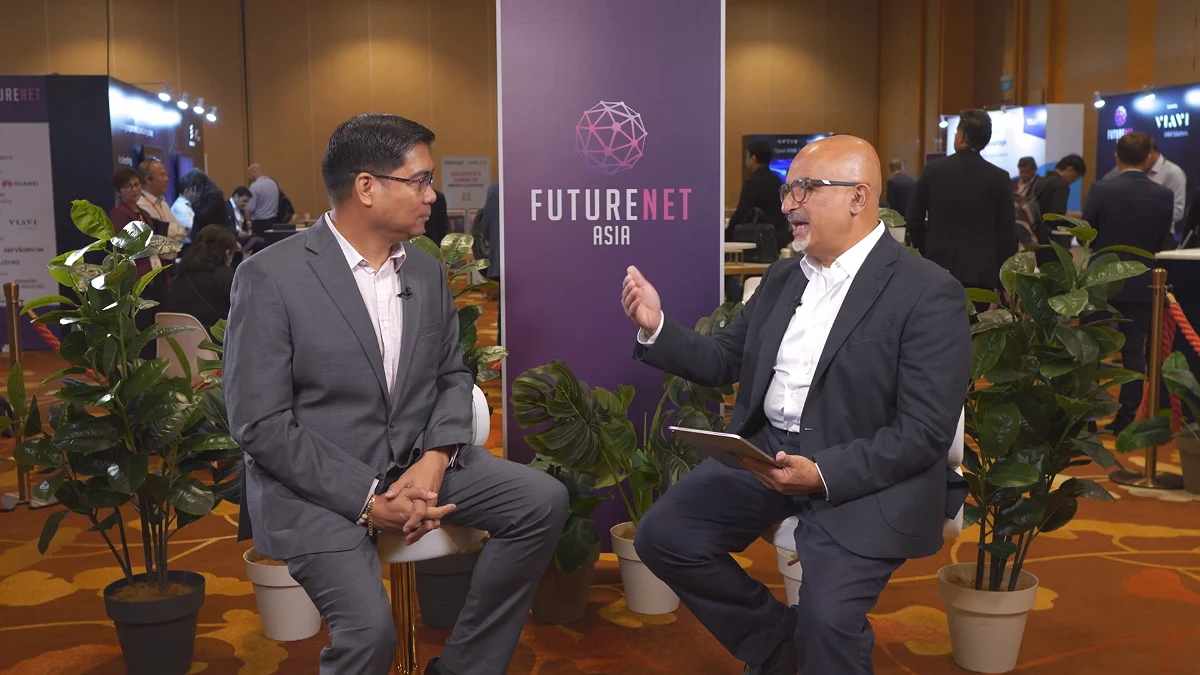
Hello. This is Scott Picheno, editor of telecoms dot com here at the Amdocs booth at Mobile World Congress 2026, and I'm delighted to be speaking to Scott from Verizon and Ganesh from Amdocs. To start with you, Scott, can you talk us through some of the conversations you've had on this first day of Mobile World Congress regarding shifting customer expectations? Absolutely. We're already off to a fast start here on day one at Mobile World Congress, and I think the conversations have been really centered around outcomes, how to drive outcomes versus just delivering pipes as a service provider, and really the role that the network has in enabling AI at scale, which is so critical for our customers as they think about their next generation networks. And so you mentioned AI. Perhaps you could also talk about AI in the context of product development. How's that affecting it? So when we think about AI within Verizon, we think of it through three lenses. One is applied AI. What are we doing to elevate and enhance both employee customer experience and drive operational efficiencies? Second is how are we embedding AI into the products that we're bringing to market to deliver value? And third, how do we enable the new AI ecosystem with our customers? So we look across those three landscapes, and it's really about simplifying the customer experience, providing better customer care, and also more personalized experience with customers. And then finally, it's around the work that we're doing with proactive retention of our customers as well. Okay. Great. And and over to you, Kenosh. On a similar theme, talking about AI and product development, could you give us an Amdoc's perspective on that? Of course. There are two ways of product development we can talk about. Right? One is an internal, you know, within the the Amdocs ecosystem. One is for our customers. Right? Let me focus on the external piece of it, for today's context. So we wanna help our customers' customers be able to get the right, products, the right solutions, and getting it right the first time and understanding what an SMB customer wants, what an enterprise customer wants, helping our customers package the right solutions with the right ecosystem and the right experience and switching all of that together and making sure the customer experience is seamless. Right? And AI is helping with that. Okay. Thanks, both of you. So now back to you again, Scott. I think I think a big theme, you touched on it in in your previous answers, is simplification and modernization. Could you just expand on that concept a little bit in the context of customer expectations? Yeah. A great example of that is with our managed network service portfolio where we're truly delivering a digital interlock experience with our customers because they want to work with us in the way that they wanna conduct their business. So whether it's managing ticketing, inventory, change management, they wanna do it in a digital construct. And by us leveraging our new OSS, BSS models, it allows us to infuse AI ops into it. It allows us to drive a seamless, automation through the customer experience and digitally interlock with them in a new way. Okay. That's great. And, similar question to you, Ganesh. From from an Amdoc's point of view, this this concept of simplificationmodernization, can you can you give us your perspective on that? Of course. When you talk about simplification, right, again, our focus is our customers as customers, where when a customer from the point their customers engage, we wanna make the entire buying process as simple as possible. And the simplification is always the holy grail. You know, today with AI, simplification looks something different. Tomorrow with the new technology, simplification gonna look something very different. So we strive to get keep that entire customer journey as simple as possible for the end consumer, be it, you know, b to c, b to b consumer as seamless and as simple as possible. Okay. And then just finally, enterprises tend to want integrated solutions, and presumably that involves interacting with the broader ecosystem. Scott, starting with you, can you tell us a little bit more about your your approach to the ecosystem play? Yeah. So at Verizon, we really sit at the crossroads of all of the different technology partners, OEM providers that are out there, as well as software as a service providers. So we really look as the glue that connects this new ecosystem together. And you will look at what's coming. Do we really think the smartphone is what's gonna drive the next wave of innovation? It's gonna be humanoid robotics. It's gonna be drones. It's gonna be new device ecosystems that are gonna come into play. That's gonna require new currencies within our network, whether it's up new uplink or network slicing, and that's an area where we're partnering with Amdocs to leverage their service orchestration layer. So when a customer uses a network slice with us for four hours to deliver a unique outcome that they need, we can appropriately bill leveraging Amdoc correctly and change the commercial construct for Verizon as well. So I look at us as really the glue that connects the new ecosystem of the future. Makes sense. Well, Scott's almost done my job for me there by referencing Amdocs. But just to finish off, Gynes, can you again give us Amdocs perspective on the similar concepts of how the ecosystem works in all Of course. And I think Scott hit on the nail. Today's world ecosystem is extremely, extremely important. Right? It's not just about one partner trying to bring one solution to your customer. It's got to be a ecosystem of different partners because today's customers wants different things, and a lot of organizations out there are coming up with solutions on a day to day basis. And with AI, it's just getting that much more accelerated. So having that, you know, going back to the old saying, one neck to choke and being that glue that stitches all different solutions together to provide the right product to your end consumer is very important. And I think AI being that common thread helping orchestrate all of those different products and solutions is is key. Okay. That's brilliant. Well, thank you both very much. Thank you. You, Scott. Bye.