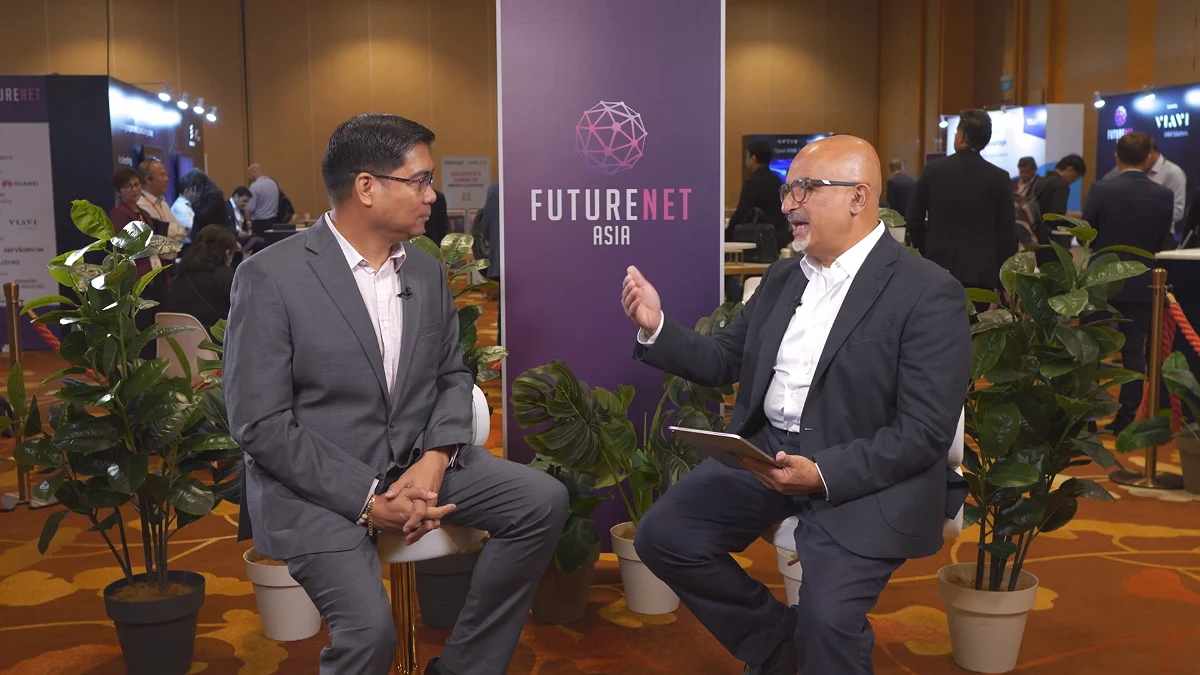
Hello, everyone. My name is Mehrdad Ekbatani. I'm Amdocs' product marketing manager for networks and for OSS and 5G. Today, we are very fortunate to have Roderick Santiago, CTO, Enterprise Business Group from PLDT Smart. Hello, Eric. Hello, Roderick. Hi. Good morning. Good morning. Thank you for having me. Oh, you're welcome. So we are actually in a very good situation where we had a conversation last year about this already and it's really nice to be able to see what progress we've made since last time we spoke. So, when we spoke last year, you described the importance of bringing data together, contextualizing it, and turning it into fast actions. I'm just wondering, one year on, how has that vision translated into PLDT's autonomous roadmap for the for the coming future? Well, thank you. Thank you. Yes. So it's been a memorable journey. There's some challenges that we encountered because of the too many legacy systems that we have. We need to ensure that we have the right data and the accurate data Yeah. So that it will be trusted and it could be able to scale and transform things. Right? Yes. Into a business outcome. So with Amdocs helping us with our OSS modernization, we really need to to work on a daily basis to ensure that we have the right datasets and the right, framework to be able to do this. So the short answer is that it's still a work in progress. We realized that the data platforms, the data lakes would need to align and we need to have a structured data to be able that later on, once we build it for the future generations, that it is sustainable, it is accurate, it is trustworthy. Okay. That's actually quite good because obviously we've had a major milestone for PLDT and Amdocs. We've established a unified cloud native AI ready operational foundation which has spanned the inventory, the orchestration, and the customer engagement. From a network strategy perspective, why has this connected end to end view has been so important for PLDT and SMART? Absolutely. As I have shared in the panel discussion a while ago, it's important for us not to just be the pipe, but at the same time to be able to to provide that connectivity layer end to end. Right? So it is important for us to look at it from the connection of the devices, the APIs that we're using. Right? And the actual customer experience. So that end to end orchestration and visibility, we need to have that kind of assurance visibility to be able to see what really would need to improve and where is the pain points of the customer. It's... We need to look at it holistically as part of our network strategy to determine also how we prioritize the budget that we're going and the projects that we're going to deploy. Once we exactly know the right pain points and measurable outcomes will be more cost efficient. I see. And as we progress and you are are seeing all these results, that creates the trust that you were talking about before. Yes. For example, the the program is already delivering measurable operational results Yeah. Including faster issue resolution Yep. As well as avoiding high incident... High intensity incidents. So how does these outcomes help you build this trust and so you can move from AI powered insights and guidance towards more autonomous decision making and actions? Yes. So we have the infra. Right? But it should not stop us from just the megabytes and exploring the APIs that we're deploying Now right it's really time for us to have that measurable KPIs that will translate it into business outcome. I mean, we were discussing about ROI, what's the right model. What will really benefit us? And that's why it's critical to have that data points. Yes. If we do not have that end to end visibility Yes. It will be... We'll probably be spending on areas that we probably don't need right now. Yes. Yes. And there could be other legacy systems we don't need right now. Exactly. Right? As Kim also said. Yes. And then, so this aggregated network could be transformed a lot of options from access that we could implement the right technology and better than probably the license spectrum on the access layer. We're going into transport. We could implement a lot of innovative options right now. The core is being more modernized on our end Yeah. To ensure that we could be able to deploy systems quicker because that's what the customer wants. Exactly. Right? So we we spoke a little bit already about what we've achieved this year and how the operational results have enabled you to gain that trust that you're looking for to to live... To deliver what your customers need. Now looking a little bit further into the future, like... So we... As we said, we spoke about this AI native operations across the customer experience. You mentioned the network. You mentioned the core already. So, as you... As PLDC builds on today's operational results and moves towards the agentic era, so what does this AI native operations mean in practice for PLDT? What does this AI native actually would mean to you as So we move I just wanted to emphasize that we are building it on the three t's. Right? So we have... We we are continuously investing on the technology, the infrastructure Yes. The trust Yes. And the talent. Talent. Exactly. Right? So that's the three things. I think Yeah. That will be our differentiator moving forward. Right? Exactly. So now being AI enabled is to be able to now know really the actual pain points and what the enterprise would love to deliver. We need to enable that outcome. Yes. And we need... In order for it to be sustainable, we need to make sure that it's also intelligent, secure, and measurable. Right? Of course. Because, and that's where Amdocs, the OSS system, is going to help us with our other partners to have that end to end observability. Right? Yes. On the actual customer journey Yes. Is significantly important nowadays. I actually love that trust, technology, and talent. That's really wonderful. Thank you very much, Frederic. Very welcome. Thank you for your time. Thank you. Thank you. Appreciate it. Thank you.