
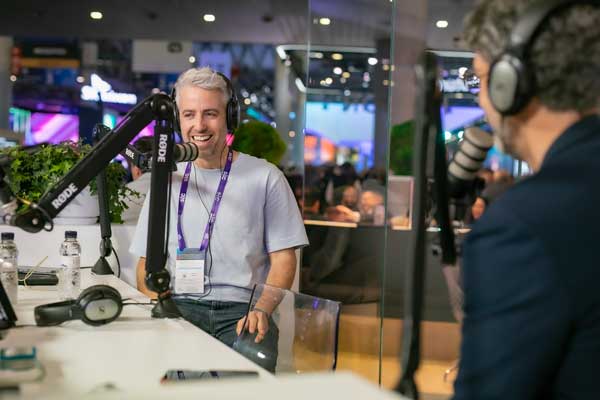
Launching your own MVNO: Navigating the new world of telecom monetization
Matt and his special guest hosts are joined in Barcelona by industry leaders from AWS and Appledore to discuss digital transformation, telecom monetization and more.
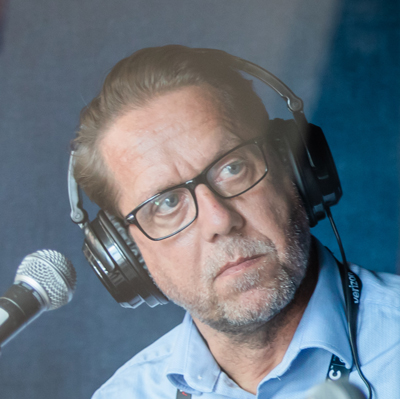
Matt Roberts Head of Customer Marketing, Americas, Amdocs
S8 E5
45:08
04 Apr 2024
Please provide your details
Asterisk (*) indicates required field.
Thank you!
Your submission has been forwarded to the appropriate contact.
Mar 4, 2024
Launching your own MVNO: Navigating the new world of telecom monetization
Join Matt Roberts and guest host Galit Dan, Head of SaaS Business Development at Amdocs as they sit down with Antonello Arpino, Head of Operations Simplified at AWS, to explore the impact of cloud technology on digital brands and MVNOs. Antonello elaborates on how digital transformation is now fully enabled by the advanced capabilities of cloud technology.
Later, Matt and guest host Tomer Gingold, Head of Amdocs Monetization Experience Business Unit at Amdocs interview John Abraham, Senior Analyst at Appledore to discuss all things telecom monetization, making systems more efficient and more. Don’t miss this episode!
It's MWC twenty twenty four. We're back. The great indoors. It's day two. It's busy, and I'm delighted to welcome, two guests to this episode. Although one of the guests will almost be co hosting with me. So mister Anton Alpino, Head of Operations Simplified AWS and Galit Dan from Amdoc. So Galit, you head up our digital brands business unit, correct? Exactly. Okay, so welcome both of you. And before we dive into things, Anton, let's start with you. Give us a bit of your history and the role that you have currently at AWS. Sure. Well, I'm an industry veteran in a way, which makes me feel sad because I'm an old guy. I've been working in the telco industry since ninety eight. So more than twenty five years, most of my career has been in ESS and SS systems, dealing with this stuff. And I joined AWS four years ago. And when I joined AWS, telco was kind of a known thing. And I was one of the lucky guys who had to start the telco business for AWS. And I because of my background in BSS and SS, I naturally fit into leading the go to market activities for these type of solutions. And that's what I'm still doing now globally, essentially, for all telco operators out there. Because AWS, we don't really build software, these type of applications. It's essentially a big partnership. Excellent. And Galit, for our listeners, give a little intro. I know you of course, and everybody at Amdocs knows you, but for the greater world, maybe give a quick history of yourself and the role that you do with us here at Amdocs. Yeah, sure. Happy to be here. I'm also like you and since nineteen ninety eight, need you to be a little bit closer to the microphone. If you can. So if you talk now into the Now it's better? That's much better. So I'll ask the question again. I wasn't believing I was deaf. You were gonna say turn my mic Which might be the case given you. So Galit, we know you of course at Amdocs and but for our listeners, give a bit of a history and a description of the role that you do here at Amdocs. Yes, sure. So I am also a veteran in this telecommunication industry like Anton since ninety eight. I'm a technology lady started as a developer, many years of experience in the industry, in the telecommunication industry and the recent few years, very busy of generating the technology and the platform for the SAS. What we call a BSS in a box business. And our partner AWS doing some great magic recently together with us. Very exciting. Okay, excellent, excellent. So great to have you here. So we're going to talk about digital brands. And I'm going to ask you this question first, Khalid. What is a digital brand? Well, first it's about brands which are digital, which means the sub brands or the B brands of the MNOs as well as the MVNOs and MVNEs. Actually it's the wholesale business. Those who are looking to launch very quick and fast on board a new brand, digital brand, being able to scale it up with a full alignment of their investment and the actual business growth. That's in a nutshell what this is all about. Okay. That's great. Tell me, ask Anton, I'll ask you this question and then Khalid, you answer also, but talk about the partnership that AWS and Amdocs have right now for building out new digital brands. What's all behind this? Well, the partnership with Amdocs is not yesterday. So we started partnering four years ago and these old telco things started in AWS. And Amdocs was essentially the first one we we wanted to partner with because of the historical background, the success in the industry. So we actually wanted to learn from them how to do proper stuff for telco players. And this partnership has been evolving in the last four years in multiple direction. And the the the digital brands with this is actually one of the latest born from from this great partnership we've been having. Capturing what is a trend now in the industry of doing things differently. Right? And the digital transformation per se is not really a new topic, but has never been really delivered in full because of lack of technology or complexity in the organizations or business model, which were not there. But now with SaaS becoming more and more prominent, it's actually removing some of those barriers. And we have found in in with Amdocs, a perfect alignment in vision on how to build these things using modern technologies, which are based on cloud native implementation principles, which actually exactly fulfills the requirements for a digital brand, which is needs to scale fast, needs to be deployed in minutes, and needs to provide a full end to end digital experience. So all the interactions are actually happening through one non human assistant type of channels because that's what people is used to today dealing with digital navy business like Airbnb or Uber or Amazon itself. So we want to provide the same type of experience also in the telemedicine. Okay. Excellent. And Galeet, is there anything you'd like to add to that? Yeah. So it's very clear, like the transformation about has to be on cloud. Right? And when we say cloud, it's about native platform, cloud native to be developed. And it had the digital brand. Actually, we just recently named it ConnectX. The ConnectX platform is serverless platform. And we have this approach where like we split the entire paradigm into three. We want our customer to focus on sale and marketing and the business. We are focusing together with AWS on technology. So we need to make them free up from the need to have in place an infrastructure, right? Actually in the SAS business, they buy a service. And with a serverless cloud native, it's actually, it's an open API platform. The sky's the limit from technology perspective. So this setup that we have created with AWS is a perfect match to free up our customers, to be focused only on business and to leave us the technology entirely from product through the infrastructure up to the operation. It's all encapsulated in this price per unit or price per sub. And this is a perfect fit, especially for the MVNO and for the MVNE businesses who are really have their own segment and are very busy to create their voice and personalization to bringing those subscribers and everything related to technology. They don't want to be on top of that and they need to be able to move fast. Right? And fast time to market and fast onboarding is the key is an essential and that's what it is. No, I think that's so I'll paraphrase. You're gonna take care of all the difficult technology stuff and let the entrepreneurs, marketeers, business people launch a brand basically. I know that this partnership is already, obviously it's active for some time. Can you point to some examples of customers that we jointly have Amdocs and AWS in this domain? That's for you, Anton, sorry. That's okay. Well, when we want to talk about customer, I think the biggest example, this has been one of the first lighthouse customers for both companies has been T Mobile and United States. There we are running a large cloudification of their BSS together, really bringing the legacy to the new world of the cloud native implementation. And that's delivering a lot of benefits in terms of agility, TCO improvements, elasticity of the infrastructure, as well as freeing T Mobile time to actually deliver and create new product and offering in line of what we're trying to do with DBS as well. That's one essential part of the cloud way of doing stuff. We know by a fact that normally companies or enterprise, they invest eighty percent of their time on running existing business, and they have only twenty percent of time to invest in innovations and create new product and try to capture new market. In the cloud, this proportion is actually flipped. So we want them to invest maximum twenty percent of time in running the business. Eighty percent of time, they should invest in creating and capturing the business. And that's the part that we use, we are using actually T Mobile US, and we want to use in DBS, and in many others implementations, right, that we have so many customers together. Vodafone Germany is another one. I mean, it's just a big number all over the place. Astra in Malaysia, like amazing things we're doing there. Globe in the Philippines. It's all over the place, and it's actually a way which keep growing and growing every year because the customer, they see the van. They see that actually, yes, they can really put their effort in building new business and and create innovation for they and customers. And just let us do the Do the hard work. Heavy lifting. Yeah. That's it. That's fine. And that's what we want because we will be as much as successful as our customer will. Ankali, can you point to a digital brand that AWS and Amdocs have enabled collectively? Yeah. We have actually multiple examples. I will choose two. Yeah. One is the greenfield and the other one is brownfield. So we have in South Africa, the Mellon mobile. Yeah. Started as a greenfield. Actually, we pretty much fast. We're successfully integrating to the relevant network and going live. I think it was a record time and, we have a very successful engagement there like the request for the features and richness of the products keep coming. Yeah. And, we, as I said, we want our customers to focus on business. We will focus on technology and we trust everything related to infrastructure, the AWS. So we are leveraging almost like everything needed, any service that AWS can provide us. And that's what we are actually the approach that we take. And it works very well because we are introducing in a very agile way, very frequently, almost daily based new things and features. And the other example is, more of a brownfield customer that we just recently engaged with, in Spain, actually here in Spain. Oh, wow. Yeah. The fee network, which is also very cool, engagement, which is over there. It's like a multiplayer. It's about fiber and TV and mobile. And like, well, very excited about the richness of capabilities that we need to deliver to fee. And again, these guys, they are very busy on their business, how to make money. While we are busy on technology and the engagement that we have with AWS, for them, it's seamless. Yeah. Leave the technology to us, focus on business. Tell us what you need. And we will continue to evolve and productize and make the features very rich every need that you will come up with. It's really, really cool. So let's put that to the test. This was going to be the fun part of the podcast because when we first met last week, you got me thinking Anton Uncley. And I started thinking about creating my own MVNO brand in Canada. Really? And I'm a marketeer, as you know. So I figured out the brand. I figured out the segmentation. I figured out my value proposition. I basically want to start an MVNO that goes after hockey fans in Canada. Oh. Now, it's a big market, everybody loves hockey in Canada. But particularly, I want to go after the market of sixteen year old to thirty eight. So a fairly young demographic. I've done a deal with the NHL as far as content and commercialization. And that's as far as I've gone. That's what I've done right now. So how can you help me? Have you got your investors already? Got the investors all lined up. It's all Oh, wow. My wife's family are very generous. They're gonna help me Congratulations. So where do we begin and what are the steps to make this dream of mine a reality? Okay. So while you're focused on identifying your target audience, this sixteen young hockey savvy, okay? Yeah. And brainstorming and thinking what exactly your offering should look like, we will engage and we will establish immediately your brand, a tenant for you. Like in a matter of minutes, you will have a very first version. We'll give you the name, Then we will start to generate with you a potential offering, an AI based offering suggestion, not necessarily the ones that you will launch, but we will have a very, you know, not a white page start. And having that in your hand, you will be able to start trial and test it and then configure and see how the system works, how easy it is to configure your offering. We will also start to collect all the information related to the ecosystem integration to get ready for you to start. Then we'll see what is your tipping point where you wanna launch? What is the event, the business And accordingly, will bid together a plan. And together, you know, with a small team, I have to say, on your side, definitely, from our side as well, this engagement will evolve on a daily and on a weekly base. And all of a sudden, two, three months after you might find yourself selling to this younger sixteen teenage. Yeah. Cool offering with your own specific personalized voice. This is very cool. So you'd help me with the marketing as well there. Know if you said what event you could launch this at, what name. There's a marketing component as part of this whole service as well. Yeah, definitely. MDocs have the ability to host and to work with you to build the actual experience. We have the relevant team doing so. So we are going actually to be your partner to help, your success is ours. So we will team up any needs related to technology. The AWS team are there for us. It's like goes without say. Yeah. So it's for you, it's seamless. Just let us know what you need. Focus on your business. Yeah. And let's make it up. Wow. And and how does AWS get involved then? Well, first and foremost, I'm a little bit sad because you are not targeting by age. Okay. I'm sorry. I'm I'm not I'm talking to I'm not talking to my age either, by the way, just to let you know. Well, a Galit You like hockey. No, but I would like to be sixteen years Jokes jokes apart, as Galit was saying. Right? That's a little bit secret sauce of SaaS and and and cloud deployments and the amazing technology. We want to make sure you can try and experiment. That's where the innovation comes from. Have an idea, but if you don't try it, you don't know if it's gonna work. So other than giving all the tools and the gears for you go and get it, we want to also make sure that you can experiment in a controlled and affordable. That's why serverless is super important. Because you don't really need to pre provision any capacity or do any specific investments. You just go in the marketplace. You buy the DBS. You do the basic setups with the support of Amdocs. And then you try your campaign because that's the only way you know if for you to know if it's gonna be successful or not. And the easier we can make this process for you, the more chance you will have to try, the more chance you will have to be the next viewer in the cloud. And that's pretty much it. And that's why we work with DAMNOX to enable all this magic happen. That's the real magic. And because we can't really invent the business for you. But we can invent the methodology for you to invent. And that's what we're focused And will you stay with me beyond just the initial launch and setup? Are you with me as a partner now in this journey as we take it forward? Absolutely. We have our customer success that are engaged from the very first minute, even before you sign a contract with us. Yeah. Then when you go live, we walk together with you ongoing link to make sure that it's works well, that you're doing money. Life's things needs to be changed, to be updated, to be added. The first one to know is our customer success. So your success is ours. Yeah. And we do everything that you will leverage well, everything that we can offer on one hand. On the other hand, you are actually successful. Yeah. It's very it's like your your win is ours. It's a win win. It's a triple win actually. Yeah. Engagement. Well, that's good to know. That's good to know indeed. Because who knows how this idea is gonna pan out. I'm gonna need some extra advice. And you mentioned it before, Galit, but how does generative AI now play into this model that we're talking about? Again, I'm here at the show. I'm pitching my ideas to people. I see generative AI everywhere. I see generative AI on the Amdocs booth. I see everybody talking about it. Where does that help me and how does that supercharge me even further? So I mentioned the fact that when you're establishing a new tenant with us, immediately, we have this AI that's introduced you some options. As I, and as I said, it's not necessarily the ones that we walk for you, but this is a start. You know, we have this notion of just do just start. Yeah. Then and to mention experiment, see if that works for you and then doesn't, you know, make money fine. So let's refine, let's see what works better. And all those things really recommendation, with all the automation behind the scenes comes with this generative AI. So generative eyes is embedded seamlessly, but definitely help you to kickstart and actually ongoingly, to introduce more options, for you either to choose or to trial or even not to do anything with. But the whole idea is like, it's an enabler for you and you will help us to shape up your version of it. Yeah. That's good to know. So that's it. So I'm going to launch this business, deal done. Let's get started. Oh, exciting. I know. Where can I buy it? At the Toronto Maple Leafs stadium is where we do a lot of the marketing is what I'm thinking about. But thank you, that's a great fun example to help illustrate for our listeners this incredible partnership. And I think going back to the show that we're in now, Anton, we're only in day two. Is there anything you've seen so far that has been really significant for you? Anything really profound? Well, I mean, Mobile World Congress is always a place you find a lot of innovation and there are multiple items. Of course, this year is, I would say, not really a hundred percent, but ninety nine percent all about Gen AI. And more or less everywhere you can see how people is experimenting this technology and how they find value out of it. The things that actually amaze me the most is that you have immediate feelings about the potential of this. Yeah. You see an outcome basically in few minutes, right? Simple things like having a more responsive chatbot is very easy to think. Or having, as Gillette was saying, how comes a world where I actually need to launch a new product and I can just ask the Gen AI to create a prototype for me with all the related marketing materials, communications, and pricing schemas and whatnot. Yeah. In the thirty second, you really understand the impact of this. These are processes that normally takes three, six months, if not more. Yeah. You can do this in thirty seconds and in a proper SaaS environments, you can experiment this in another thirty seconds. And after two minutes, you're going to know if you're going to be a rich man or not. Yeah. And this is simply crazy. Yeah. Mind blowing. Yeah. And what about you, Glee? What have you seen so far at the show? So, you know, it will sound maybe to say the obvious. Yes. It's about this. Everything is generative AI has to be embedded in everything that are actually being done. Everybody are looking to make complexity to make it simple. Right? I think a key element this year is, you know, we have this notion of just do. Yeah. We really encourage, you know, technology is these days is enabling a lot more comparing like even to last year. And then everything happening with AI, it's going to blow up. So I think just do. Yeah. No, that's Now this is a question I'm gonna throw in for my own sort of personal market analysis. And in every guess that we've had on this year so far, we talk about generative AI at the show, what it's going to do for telecommunications, what it's going to do for our customers, etcetera. But Anton, I'm going to ask this question. What does it do for you as an individual? Where do you use generative AI, whether it's ChatGPT? No, sorry, AWS bedrock, of course. Same. Where in your everyday life do you use it now? And the reason I'm asking this question is because every single answer I get is very, very different. And it's very interesting. I will have to spoil myself a little bit. Of the first thing I actually started doing by leveraging AI being a chat, TTP or whatever else, has been actually doing the hard work for pulling in me notes and narratives. Because that's I'm not really a great writer myself. Right? Right. I really wanted to leverage that and give it a try. I have to say, brings amazing results. That saved me fifty percent of my time when trying to pull my notes and get some content out there. It's just crazy. I mean, saves me a lot of time. Can do much more things like that. And that's one basic thing. Don't know how many people actually do that, but if you are not doing it, give it a try. Should try it. That sounds good. That sounds a good use case. Khalid, where have you used it in your everyday It's not that different actually. We know that there is no replacement for the human touch, but to be inspired, like when you're searching for a specific text or notes or whatever, like even when sometimes we are a bit lazy, we used to use it and then be, you can be inspired and then ideas would come. So it's really all over when it comes to text, when it comes to, you know, information that you need. Yeah. Absolutely. You know, it's like your new friend. Yeah. We see the results we have. We also responses. Like it. I don't like it. Come on, get improved. Yeah. It's a new personality in our life. Right? Yeah. So my approach is enjoy it. Yeah. Leveraging it and like make the best out of it because it's amazing progress. And yes, generative AI is here now and has to be, in Amdocs we have all the know how of this industry and who is better than us to create the telecommunication version of it? So it's exciting days, Indeed. Indeed. Now we're almost out of time, but we finish with our TGI to go quick fire round. And what I'm gonna do for both of you is give you a multiple choice question and you give me the answer based on your preference. And basically the idea of this is just to have a bit of fun to close things out, let our listeners learn a little bit more about you. So we shall you know, it is a fun thing to do. It's a nice way and I think we've had a great conversation. So I'm going to start with ukulele. You're going go for dinner tonight. Would you have tapas or would you have Chinese food? Definitely tapas. Hello, we're here in Barcelona. And Tom, what about you? Tapas, yes. And the reason that question's in there is that by the end of the week, you'd have had a lot of tapas, right? I think so that, know. Next question. You could go on vacation At the end of this show, after a successful show, would you go to Thailand or Ibiza? That one's for you, Anton. Sorry. Well, despite I would be tempted to go to Thailand, I would go to Ibiza simply because it's closer. And you don't have to do another flight, basically. A big long flight. You can take a boat and go there. Gillette? I'm going to Kilimanjaro, my friend. Alright, wow. Well, tell us a little bit about that. And when's that happening? Actually next week. Oh, really? Beware of the lions. So my mind is all over there. Don't ask me about Thailand or any other So that sounds incredible. And you're going next week to climb Kilimanjaro. Yeah, I am. And have you completed a feat similar to this before? We will see next week. Yeah. And you've been training? Are you ready to? What do you think? Well, hope so. I wanna just say it's been a pleasure to know you now. Will always remember you. Definitely. Well, sounds that sounds incredible. So best of luck with that. Thank you. Yeah. Yeah. Anton, do you like football? I mean, you're you're Italian. Football or basketball? You would be surprised. I like more basketball. Ah, okay. Definitely less. I'm surprised. Yeah. Yeah. That's because I'm a short guy. I don't like to see all these tall people. No, honestly. My hometown is back in Italy, back in the days, basketball was kind of the prime sport for some weird reasons. Yeah. Maybe because we were not really good in soccer and so we used a different sport to show off. Right? And it comes from there. Wow. Excellent. Excellent. Khalid, same question. Football. Why? I have a son who was a soccer player. Excellent. My world was for a few years all over it. Definitely. Alright. Is there a team that you admire or follow? It's mainly my son's admiration I'm following. So it was all here. Yeah. The Barcelona, the UK, he has some. Oh, excellent. Cool. Don't remember even. Well, there we go. Listen, we're out of time. I really enjoyed our conversation. I think we learned a lot about the partnership between Amdocs and AWS enabling my own digital brand and my own MVNO. Getting your insights on what you see here at the show and the impact of generative AI. So I'd like to thank both of you, Galit and Anton, for joining the show today. I hope you have a fantastic week. And Galit, best of luck again with the climb up Kilimanjaro, it sounds incredible. Thank you very much. Thank you. Thank you.
Launching an MVNO in minutes: Amdocs & AWS make it possible
It should be. So welcome back to the great indoors. We have an analyst now who's gonna join us, mister John Abrahams. You're based in London. Right, Charles? That's right. Thanks, Matt. Great to be here. Okay. Awesome. And Tomer from Amdocs. Hi. Great to be here. John, thanks for joining us for this exciting podcast. Yes. I'm Tomer Gingold. I'm part of the Amdocs product group, and I'm leading the business unit that handles all the exciting monetization product that we have to offer. Wonderful. Great. By the way, a quick introduction from my end. I'm John Abraham, I'm a principal analyst with Appledore Research. We are a telco media technology focused research and consulting firm. And I lead the digital enablement research at analysis at Appledove, which is basically all the BSS related solutions and functions that are being deployed by Telco Sudet. Okay, great. So let's get started. So, John, you know, and we had many conversations about that over the years, but We're still aiming. You know, billing was relatively stagnant for quite a while, but we do see things changing now. What would you say are the main reasons? Why would anyone you know, change or reconsider the way that they, you know, they handle billing today? Well, look, telco billing has always been one of the most complex systems deployed. It has also been a segment that has seen multiple waves of investments. You know, even before customer experience was a thing, telcos believed that billing was the most critical function that they had to invest in. I'm talking about front and back office function, not the network. So we have seen multiple waves of billing investments, and in the past, if you go back a decade or more, many operators, there was a lot of M and A going on, and many operators believed that when you buy a billing system, it has to fit in into their process models, which meant that there was a lot of extensive customization on these systems. And given that they are mission critical and they remain in use today, it meant that over a period of time, the cost involved in supporting these machines went through the roof. So today, when operators look back, I think one key aspect of why there is a continued investment into these systems is to drive up efficiency. You know, they want to make these systems more simplified, they want to make them cheaper, simpler to run. And then you bring into the equation the other factors. There's a lot of change going on. Five gs deployments are underway, we're talking about API monetization, we're talking about gen AI. So there's a lot of change happening right now, and at the same time, through it all, we want to improve the customer experience. Over fifty percent of the traffic into the call center is because of a billing issue. So there's a lot of investment into try and simplify, improve efficiency and improve the customer experience. So that's very interesting because over the past couple of days we had a chance to meet a lot of customers here in MWC, is very exciting. And one of the things that indeed we saw that each of the customers, a lot of the service providers keeps expanding their offerings. So if you compare it to what used to be ten years ago, when a cable provider was just providing cable services and wireless was just wireless, now everyone are doing everything and keep expanding and not just to their offering. You see cable providers launching MVNOs, you see everyone providing TV services and so forth. And then goes all the over the top services that they start bundling. And on top of that, they realize that it's not only what they can provide, they need to be much more open open to the ecosystem. So a lot of them, I believe, realized that the traditional billing systems that they had, which were built for purpose and were very stiff and siloed, can no longer sustain. Correct. And adding to that, what you mentioned about the experience and seeing that we're spoiled by the Netflix of the world and Apple and everyone that, and our customers are expecting a much better experience. Absolutely. Much faster, much more immediate, much more transparent. So in order to do that, include the, or, and cater for all the expanding offering, they can no longer have those types of traditional billing and they need something else. Yes, yes. Just to add to that, Thoma, it is not just about bringing on board all those partners, which as you said is a very important thing, but also to do it quickly, right? The time you take to respond is actually a big factor in all of this. Know, if it takes six months for you to launch a new product offer, you probably have lost the benefit of launching that in the first place. There's a lot of competition and it's not just the traditional telcos that you're going up against as an operator. You are also now battling it out in many domains with OTTs. Know, in some ways you're cooperating with them, in some things you are competing with them. So it becomes all the more vital that you have a system to launch off us. You know, to actually go and experiment, you know, we often use the word fail fast. But to fail fast without burning your pockets. Right? To actually have the freedom to try new things and not actually have a huge bill to pay if that doesn't take off. Nice. And can I ask a question that I think is interesting? Because you, it's something that comes a lot a lot. What are the customers' expectations now as we move through the demographics Yeah. Of their billing? Yeah. Well, look, Tomo made a good point. The fact that the OTTs have penetrated so much, they have changed customer preferences. Right? By default, I mean, we don't think that Netcrow, in this case Netflix or Amazon doesn't have a call center number. Right? We know how to get support without actually having to go and call dial a number. So that's precisely the kind of experience and preference shifts that we are actually seeing now. So billing has been, in the past, a bottleneck. It has been a visible problem for telcos. Whereas if you look at OTTs, is an invisible function that just does its job. And I think that's where we need to go to, where it doesn't become a friction point, but it just stays underneath, it doesn't cause you to have a headache. I think that's a fundamental expectation. Definitely, and I think I would add to that the flexibility. I think the flexibility or freedom, I think me as consumer customer, and definitely as a business, I want to be able to have the freedom and the flexibility to choose all the different monetization models that I want, different payment options. No longer bill at the end of the month. I want a variety of things, I want to pay immediately, I want to use subscription, I want to change a lot of different things, and I want that flexibility and freedom. So for the service provider to be able to cater for that, they need a much more robust system. Another thing, by the way, which is very interesting, is what are the things that they monetize? Because many of the service providers over the past few years invested heavily in rolling out five gs networks and many new infrastructure. Yes. And they need to monetize it. Way they used to monetize it, counting minutes, counting data, is not good enough. They need to innovate, and they're looking for other currencies or other things to monetize. And this is where API monetization comes along, quality of service, slicing, you know, as part of five gs. There are more and more assets for them, or ways for them to innovate and monetize the network. So I think that combination creates, I think, a fascinating era for monetization. Yeah, it's a very interesting point. I think one of the paradigm shifts that five g brought to the table, especially as far as monetization is concerned, is that telcos, until then, always had a clear idea what they wanted to monetize. So every time they had a new technology deployment, they knew who the target market is, they knew what the use cases are going to be, and they knew how they would monetize it. It was a very well defined, very well parametrized monetization model. Five g opens up the door to infinite possibilities, but it also causes problems now. You don't know what you're going to monetize. So when you try and define a system that can monetize anything, how do you write the spec sheet? And that's where there has been a shift in how both operators look at and assess solutions and how vendors also bring their solutions to market. So it's become a far more, I would say, not a use case centered approach, but an agility, a software agility centered approach to new monetization models. Okay. So, know, one of the things that probably we're not the only one, everyone, and you know, looking around in MWC, it's all around JL AI. Yes. Now, JL AI has a huge impact on localization as well, yet, you know, we're debating and looking into different areas. What's your thought around the impact of Gen AI on the monetization? I think it's going to be quite significant. I mentioned earlier how the traffic in the call center, a good chunk of that is actually because of issues with billing. Right? So what I see across the flow today is that there's a lot of activity in Gen AI, no surprise. But much of it is actually focused on trying to improve the efficiency at the back office, which is by either improving how agents support call center traffic, or maybe try and deflect those calls in the first place by giving customer an insight, like a summary of why their bill is so much. Know, bill shock often is a key factor why calls come into the call center. So there's a lot of emphasis going on in trying to make that more efficient. At the same time, there is also, I've seen some use cases including here about how to improve the efficiency of the people who are responsible for that process. You know, giving them more tools, give them more guidance, more recommendations on what they should be doing to improve the efficiency of the processes they're responsible for. So I think this is still evolving, but it's going be fast. Know, a year from now, we're going to be talking about the next phase. We won't be talking about, oh, this has become mature, this will already be widely deployed, is what my expectation is. Yeah. So, for people, we've seen a lot of such customers looking into this area, and we're already working with some of them on different use cases. And I think what's interesting is that it's not just about identifying the use cases, which are almost endless, and you mentioned all the different service providers, call center, and network planning and operation, a lot of different areas where the efficiency, making it more effective, more efficient, more proactive is definitely going to be helpful, And on top of that, helping using Gen AI or harnessing Gen AI to elevate the experience of the end customer, and maybe moving more and more capabilities to self-service type of thing. But I think the key is how do you make it in order for that to work, and in order for that to make an impact, you need all your Gen AI's engine to be relevant, to give you the relevant answers in that context. Absolutely. You need to train them and they need to understand billing, they need to understand service provider, they need to understand telecom. I think this is the key. Absolutely. Think it's absolutely important. Telco context is going to be the secret sauce that differentiates true experience and the mediocre ones. For good or for bad, telco data is not publicly available, which means the LLM models could not crawl through them so far. And that also means that vendors and operators actually have a huge responsibility in trying to train up these models so that they have the relevant context. I mean, if I say, if I were to go and type in, you know, what's a good plan for me? That could be taken for anything. Right? But in the context of what I am typing, it means something. You know, to a telco that means something, you know? But he also needs to know what my past is, what my usage is, and how do you train the model to look at that. And it has to be done in the span of a few seconds. So there's a fair bit of work to be done, but I do think that the LLM story that we are seeing today, being talked about, much of it is outside of telco, but there's a lot of value to be added within telco. And I think some of us will be really surprised by how much of a improvement in experience we are going to see through GenAI and other LLM models. Excellent, indeed, truly exciting period. Definitely we're going to meet next year on MWC, look back and see how fast this thing was rolling out and making a difference. So, John, thank you very much. Thanks for taking the time and having this discussion. Enjoy the rest of MWC. Great. Thank you. Thank you, Matt. Thank you, Tomar. Brilliant. A lot. Tomar, I'll just add on the record. I think you can be the next host of the group. You did a fantastic job. And I just had a nice little break. So thank you very much. And I was listening in fascinating stuff. So thank you, man. I appreciate it. Thanks.
Harnessing AI for telecom: Elevating billing and customer experience
“All the interactions are actually happening through non-human, system-type channels. That's what people are used to today when dealing with digital native businesses like Airbnb, Uber, or Amazon itself. We want to provide the same type of experience for telco customers as well.”

Antonello Arpino, Head of Operations Simplified, AWS
"We know that there is no replacement for the human touch, but when you're searching for specific text, notes, or information, or even when you're feeling a bit lazy, you can use AI to get inspired. Ideas will come to you. It's really all-encompassing when it comes to text and the information you need."

Galit Dan, Head of SaaS Business Development, Amdocs
“Telco context is going to be the secret sauce that differentiates true experience and, you know, the mediocre ones.”

John Abraham, Senior Analyst , Appledore
“In order for that to work? And in order for that to make an impact, you need all your AI engine to be relevant, to give you the relevant answers in that context that you need. So you need to train them and they need to understand billing. They need to understand service provider. They need to understand telecom. I think this is the key.”

Tomer Gingold, Head of Amdocs Monetization Experience Business Unit
More in this series

Matt Roberts, Head of Customer Marketing, Americas, Amdocs
S8 E4
29 Mar 2024

Matt Roberts, Head of Customer Marketing, Americas, Amdocs
S8 E3
53:28
21 Mar 2024

Matt Roberts, Head of Customer Marketing, Americas, Amdocs
S8 E2
14 Mar 2024

Matt Roberts, Head of Customer Marketing, Americas, Amdocs
S8 E1
07 Mar 2024
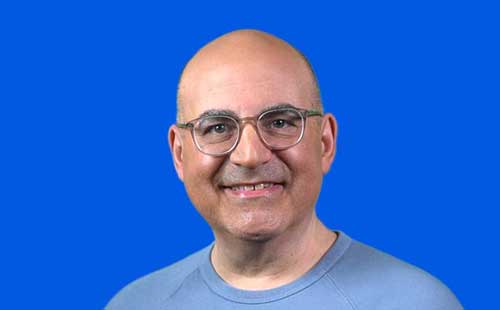
Matt Roberts, Head of Customer Marketing, Americas, Amdocs
S7 E10
21 Dec 2023