
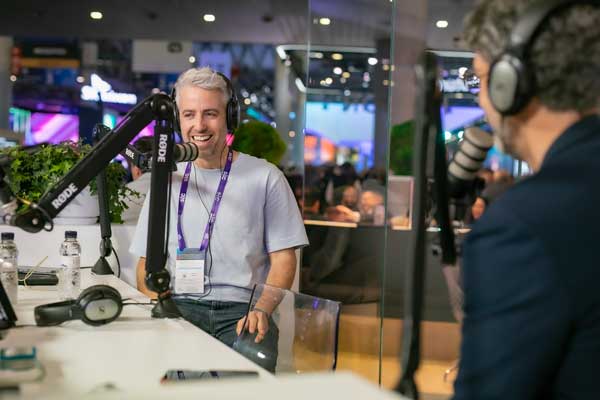
Unleashing the power of private 5G, Edge, and Generative AI: Insights from MWC Barcelona 2024
At MWC Barcelona, Matt and his special guests from Intel, AWS and Amdocs explore the evolving landscape of network cloudification, and the latest advancements in tech showcased at the event.

Matt Roberts, Head of Customer Marketing, Americas, Amdocs
S8 E2
14 Mar 2024
Please provide your details
Asterisk (*) indicates required field.
Thank you!
Your submission has been forwarded to the appropriate contact.
Mar 14, 2024
Unleashing the power of private 5G, Edge, and Generative AI: Insights from MWC Barcelona 2024
Join host Matt Roberts for this series of interviews direct from MWC Barcelona! Tune in as he sits down with industry leaders Caroline Chan and Bhupesh Agrawal from Intel, diving into the intricacies of 5G monetization, Open RAN, and beyond. Later, Matt sits down with Chris McKenna, GM at AWS, to explore the evolving landscape of network cloudification, and the latest advancements in tech showcased at the event. Wrapping up, don't miss Matt's chat with Ragu Masilamany, offering insights into Amdocs’s presence at MWC and the exciting initiatives underway at the Amdocs Lab. Join us for a journey through the exciting tech at MWC!
Speakers:
- Caroline Chan, VP, Network & Edge Group, Intel
- Bhupesh Agrawal, General Manager, Global Business Development & Sales Enablement, Intel
- Chris McKenna, WW Head of Business Development - Private 5G, AWS
- Ragu Masilamany, General Manager, Global Head of Solutions and Labs, Amdocs
So welcome back to the great indoors here at MWC Barcelona twenty twenty four. This is the penultimate recording of the show and I'm delighted and excited to welcome Caroline Chan who's been on the podcast before from Las Vegas. She's the VP of Network and Edge Group at Intel. And Bupesh Agrawal, the General Manager of Global Business Development and Sales Enablement at Intel as well. So welcome both of you to the Great Indoors and welcome back Caroline. You for having us. It's a pleasure. It's a pleasure. And this is the first time we had a stand in for me in Las Vegas. Long story, tell you at the end, it's quite amusing. But let's get into it. Caroline, for our listeners, just give a brief overview of yourself and your role at Intel currently. Yep. So, I have been in Intel for fifteen years, one five. Long time Intel person. And from day one, I've been focusing on doing virtualization and desegregation of the network. By that we meant cellular network. And now, eventually, you may have heard names like OpenRAMP, Virtualized WAN, desegregated network, virtualized network cloud native. And all of that really is a way for us to drive a much better economy of scale by using the general purpose compute to do what traditionally has to be done with a ASIC, a purpose built hardware, to drive a much better return and total TCO, total cost of ownership for our operators. And drive a much better participation of our suppliers. Yeah. So now, are here we are. We have five g. We are in mobile congress. Five g is being widely deployed. We we we do have a problem that is that five g monetization has yet to take hold. Lot of times, we're still using five g just for the consumer for iPhone download and Android, so on. We need to take that and combine that with all the AI that's happening and get it into the digital transformation space in the enterprise. So, kind of that's like where I'm focusing my energy. Okay. Excellent. Excellent, Caroline. Upash? So, Caroline is my boss. Oh, what's okay. Yeah. So, whatever she said, I do a subset of it. But my day to day role is focus on private five g. Yeah. So I focus on working with the solution providers, system integrators like m docs. Yes. And even the enterprises directly to create a push and pull for private five g. Okay. Perfect. Perfect. So welcome both of you again. Let's get into it because you said something right at the beginning there that I'd like to dig a little deeper on, Caroline. That's about five gs monetization. So we've been coming to this show for many years, many other shows, five g five g five g five five g. We speculated about all these ornate exciting use cases that are going to take us to the next level. And like you mentioned Caroline, other than the regular services consumers and enterprises consumed by the network, fixed wireless access has been successful for many of the US operators. What's holding five g monetization back? I think number one is that we see we need to stop talking technology. When we are doing the selling this into the operators, we're speaking among ourselves. This familiar language about uplink, downlink, coverage, cell edge data, so on and so forth. But when you're going to talk to a CIO, for example, you're gonna come, wanted to deploy a private five g inside Intel factories, you are talking to our factory general manager. We are talking to our CIO in IT group. That's not the language they wanted to hear. They they are they have the different KPI. Production quotas, security, god forbid we ever gonna get hacked. Like, a a downtime of ten minutes in a private network can result in if an auto manufacturer is a seven cars lost production. Wow. So, there's a deep penalty to it. Way more than what you will see today in a consumer market where you, you know, pick up a cell phone, you can't make a call. Okay. I get into WiFi, do a WiFi calling. There are obviously penalties for the consumer side. But the penalty for a enterprise who shifted their production system to a private network is much much bigger. Yeah. Yeah. So, in in that environment, we need to stop talking technology. We still talk about the business problem we wanna solve. Talk about how do we improve their production, speed, improve efficiency, safety for workers, security, and drive a much more autonomous decision making. One example, was listening to yesterday at another event. They were sharing the private network penetration in China is ten x. Yeah. Yeah. Ten x the rest of the world combined. Yep. They started early. It was a government mandate, a strong persuasion. And many of the enterprise have already gone through the digital transformation. Rest of the world is falling behind. My point is that we the people still asking, do we really need private network? Is it really gonna help me? Look at another the world's second largest economy. That's China. They're doing it. They're continuing to invest in that kind of number. I think the proof point is over to say whether we need it. The question is how do we do this in a different type of political environment, like in the western world? Without that kind of government mandate, how do we pull a ecosystem together in a in a to address the digital transformation people wanna see? Now, by the way, China is not doing it just because for the sake of. They do it because they need to uplift the manufacturing environment to a state of the art. Yeah. Right? There was a video showing the event. There was a the busiest port in China. There's nobody working. Yeah. Yeah. All you see is every autonomous. Not just automatic, autonomous decision making. That kind of close loop, meaning connectivity plus AI on the edge, it really transform. It's unbelievable. Think about all the injury to avoid. The speed, efficiency has improved. We need to get there. Yeah. So that's where we are today. Right. Now, it's interesting and and and it was Chetan Sharma who went to China on a tour and he came back and he said exactly that, I cannot believe the adoption, the usage in China. Now, to you, Bob Pash. So, as far as you're concerned, the technology is sound, but the language we're using, the way we're marketing it, probably needs tweaking. Matt, Caroline used some key words I think that industry should focus on. One is the digital transformation. It's not about private five gs or private six gs or private LTE or something like that. Right? It's all about the digital transformation of the enterprise. And the needs that they have when they are doing the digital job. Remember, what enterprise needs? They want to see higher productivity, lower cost, they want to see better customer experience, and a better environment for their employees. Yeah. That also needs it. Those are the KPIs that are driving the digital transformation. Yeah. Now enterprises are also realizing that in this journey of digital transformation, the existing connectivity frameworks that they have, whether it's a Ethernet or whether it's a LoRaWAN, whether it's a WiFi or not, it's not sufficient. But the challenge that we have in this industry is that this industry is so fragmented that everyone wants to go and talk about why five gs? Why, and then there's some question, when somebody asks like, okay, why not LTE? If we start going beyond those ones, looking at like what Caroline was saying, even looking at TCO. TCO is very high right now. Looking at those things and say like, hey, how can we reduce it so that it makes it so simple for the enterprise? Like, were working with one of those shipping companies, right? They want to move from the next to the next generation WiFi, and they realized that for that, they also have to take away the existing backhaul infrastructure. And then they said, if we have to do that thing, why not we move to the private networks? Yeah, yeah, yeah. It's a clear business value problem. Yeah. This is what, I think we just have to, the industry has to continue driving it. Otherwise we are going to face the challenge where everyone is going to say like, Hey, how can we monetize it? Yeah. So what do you think, Caroline? Do you think fundamentally the solutions and the technology is sound and we just need to change our approach, our language and the way we're positioning this with, like you said, enterprise IT departments that don't want to talk telco. Yeah, correct. I think the technology's here. We need to package it. We probably need to fine tune it. That's where system integrators role really coming in places, healthcare versus retail versus logistics and manufacturing. We probably do customization. I I personally think that we are at a point is probably eighty twenty. We have the eighty percent of the technology is south. Five g is secure, has high efficiency, has the ecosystem supported. The twenty percent is to customize it for a particular industry. And importantly, also is to bringing the application developers for that vertical to welcome them into our develop application on top of us. That means that we need to provide a common API. No one wants to develop something for one and not can be not can not be used for others. That's why the the iPhone, the Android is so popular, but there's a two. You do it for I'm Android, you do it for iPhone, then you you get all the the rest most of the world. We need to get to that point to Try to get to we can probably get to two, but we probably gonna can get to something that's eighty, ninety percent there, three ten percent. That is much easier for the software developers to embrace. And then the other thing is obviously to have several successful use cases. That way the CIOs, factory owners, and people that don't necessarily do telco network roll off for living are comfortable with the idea. Yeah. Yeah. And and and same question, a different question rather, Caroline, but from what you've seen in your experience globally, where's the low hanging fruit from an industry perspective in the United States? What industry should really be looking at China and saying, hey, we should be doing that. It's pretty clear what they're Some just There must be, what's the word, more, must be a ranking on who can benefit from this right off the gate, right out of the gate. Well, right off the gate, what we already seen revenue coming in is from oil and gas. Oil and gas? Yeah, because they, many times they are unconnected. Ah, okay. Offshore or or at places where less human, more machine than than human. It makes it's difficult to justify, say, for a operator who gets their money from human SIM cards to deploy them. Yeah. Alaska is a very good example where there's bulk of the oil is coming from from Alaska in the United States, if you know the geographic area. But there's very few I think the entire state has less than a million population, and the state is twice the size of Texas. Yeah. In sparsely covered, and yet they produce the the most needed commodity, you know, oil for So in those cases, when this unconnected, it's very it's relatively easy to justify providing the private network, a dedicated network for the provider coverage. So for the workers, push to talk, for the machine machineries, connecting sensor sensor status and feed it up. Because most of oil and gas rely on seismic data to determine where to drill, which angle to the drill bits are. The cost of missing that is very high. So we that's why how we're seeing the oil and gas first adopt. The second thing that's happening a lot is the utilities. There's a lot of mandate to do so called smart utilities, smart grid, because we are facing an energy crisis. So that's another part that government's actually providing funding. Education is another one, coming out of people expecting remote learning, rich learning, not just barely learning Yeah. But rich content, multimedia content. So so in return, we're seeing something called neutral host. In that case, university, hotel, large casino coming in and pay for a private network. And then inviting the operators to come in and participate in it. So in so instead of everybody going to build out their indoor coverage, there's a coverage in our country built by the enterprise, paid for by enterprise. Because that way they can enrich their own, you know, students or guests experience. And but at the same time, operator benefit. We see that as a fast growing segment and actually generating real revenue, not just trial and POC. Wow. Wow. What are your thoughts on that, Pupai? Yeah, Matt. If I can add a couple of points here, right? In twenty eighteen, twenty nineteen, when all the buzzes start around private networks, it was all focused on industry four dot org. Yeah. Because everyone was talking about the digital transformation from that context. We have learned over the period of last four, five years is first, as I mentioned, and Caroline also touch upon it, that it's not about five gs, it's about digital transformation. That's number one. Right. The second one is the use cases, like, as now we can divide the primary cases. I would say, like, three big category. One is basic connectivity. Yeah. Like, airline touch up on, like oil and Yeah. Where you have those connected worker use cases and all. But, you will be surprised to know that seven out of ten warehouses have no connectivity. Wow. And those who have connected And they're in the United States, is that And those who have connectivity, seventy fifty five percent area is not connected in those warehouses. Thirty percent of the farms have either zero connectivity or very poor connectivity. Wow. Wow. Very good point. Very good point. As we are moving from industry four dot o mindset in twenty eighteen, twenty nineteen, now, as Caroline is mentioning that it has been scaling to different verticals, you look at it and you're like, how would you drive the digital transformation of this thing? Yes. Yeah. Right? So, basic connectivity, like what Caroline mentioned, and Caroline also touch upon neutral host, which is very important for smart campuses, healthcare, hospitals and all, education. And the third one is edge AI, which is like all these industries. In some cases, these are mix and match. But this is how, when you look at the verticals and map those things, it's very clear where the verticals are going to solve the problem. So let's switch topics a little bit. That's really interesting. Thank you, Upash. What's I think it's pretty clear what this show is all about this year, right? And if I I'm hearing it in my sleep now and I've talked about it so much. But if we go back in time and look at some of the other things that this show has presented, five g was a big topic, still is a big topic but I don't see it written down in as many places as it used to be. Metaverse was like a couple of years ago, everyone went all in a little bit on that. And then obviously this year, again I paused slightly because we'll talk about it in a moment. But one of the other things in the last few years that got a lot of attention was OpenRAMP. And that's something that you do with, you know, we participate with you as partners in that area. What's the state of play right now, Caroline, with OpenRAN? It is scaling up. So, they were just announcement before Mobile Congress, fourteen billion dollar contract awarded by AT and T to Ericsson on OpenRed. Yep. And just it'll be running on Intel platform from Dell. And for a relatively brown large operator like AT and T, Brownfield, to take that bold step is telling you that this is a mature technology, ready to scale. I think the rest of the pace is that, as they roll out the new network, oh, by the way, Vodafone also announced they have it in UK near I think outside of London. They just announced Romania. There's a large RFP. They already announced starting twenty twenty five to convert up to thirty percent of the Europe their European footprint into open red. Verizon's running it in the United States. We have Dish, we have Rakuten in Japan, and they just now roll out in Germany. So, in the private network space, we see open rent as advantage. Now, we don't go talk to the CIO and say, do you want OpenRAN? We don't say that. We said, what business problem do you have? And and then we talk about the security, we talk about the ISV that come in. Open RAM, what it does is it open up the interfaces. It it also create an opportunity for AI because there's something called RIC, the brand intelligent controller. That's a big part of where AI comes in. And we in our Intel booth, we actually demonstrated we're using AI to improve power consumption significantly up to forty percent Wow. In existing network. Using using closed loop AI to learn and when do you when does the machine silicon needs to be taken out different sleep states into the active states just because you can learn the traffic patterns. And that kind of improvement is nothing to sneeze at. So I think for me, Open RAN is ready to be rolled out. It's a matter of when the operator is ready to add capacity and so on. And the next step for us is to take advantage of the open end, the open interface, and the data that's being provided from the most fundamental silicon upwards in this through an open API to develop edge AI use cases that can benefit accelerate the digital transformation. We also released something called Network AI Developer Kit. It's a it's a developer kit that will further accelerate this. Yeah. Wow. Wow. Well, sounds pretty good, but it's Bupesh, do you wanna add? Yeah. Just one quick point. So Caroline touched upon some of those technical aspects like rate and then the sleep state and all. I would I would say like, what we can do is also we can take a ten thousand foot approach and see like, why do we need open ramp? The number one thing is flexibility. Yeah. Like, we have this mix of vendors so that from both the technical perspective, like what airline touch upon or the business perspective, the guys who are deploying it, they have the flexibility. How many in the public five gs or public LTE, that's in the open end, how many vendors are there? We know like those top three, right? And then you have some in ERC. When you compare it, the state, this one, with the state of private five gs, how many players are there in private five gs ecosystem? There are thirty, more than thirty, like it core vendors. There are probably more than twenty, twenty five RAN vendors. Yeah. Right? And then, all the things that Caroline touched upon, the ISM ecosystem and this and that and all. So, if open RAN is the right thing to do in the public side, the macro side, it is absolutely critical to do it, otherwise it's going to be very, very challenging. Otherwise, have to create a open blueprint. Yeah. It will be very tough. Yeah, yeah, yeah. So, slowly, maybe sooner or later, industry has to, as the the five gs market is going to pick up, I think then the players would start looking into that one, like, let's start doing that That's a good point. Good point. Now, not one of these episodes I cannot perform this year without talking about generative AI. And, you know, we've come to the show for many years, like we talked about some of the previous buzzes and the state of them, particularly open RAM. What are your personal thoughts, Caroline, on all the noise, hype, excitement about generative AI? Is it justified? For we all have seen it already in the network. The two two aspects of generative AI will benefit us. Number one is improve the network operation efficiency, such as energy management that is already been rolling out. The second aspect is that using data generally more use cases to for on top of the the private network dedicated or even public network. There is a little bit of level of hype. However, where AI really benefits is on the edge. And we look at as just just take example of Intel. We we already have two hundred thousand instances of edge across because we've been edge business and better business for a long, long time. Yeah. We announced a edge platform, edge AI platform that's going back to n minus four generations. That means this year's CPU and four years they're all supporting all the way up to CPU four years ago. That allows people who have already rolled this out in the factories to still be able to roll out the edge platform so that you so you don't have to, you know, swap out everything in order to to run AI. I won't call there there's there's a degrees of hype. However, we are seeing the real benefits now. And I think there's a long way to go for AI to truly deliver what it needs to be. But the the cycle is definitely accelerating. And I I'm saying with connectivity, private network plus edge AI will significantly accelerate the b to b revenue, the digital transformation. I'm very hopeful. And I'm I'm gonna ask you a sort of off piece question now because I've managed to extrapolate some free market research through this question. That is for my own personal gratification, but it's also, it shows the breadth of generative AI and where people are using it in their everyday life. So Caroline, where are you using generative AI right now? Writing articles, writing essays. Yeah. My boss wants me to write press release, I'm using that. And you're using that? Yeah. Did I just I just disclose my secret? I was like that Caroline's a wonderful writer. Look at this. It's incredible. Look at that long email that I just wrote. But Matt, I would I would say like, when we talk about gen AI, one of the thing that I think everyone is a little bit challenging is like, the thing that it's like, they try to put gen AI in everything. Yes. We are making a mistake, right? Yeah. Because we have to look at from the But also, sorry, sorry to interrupt. Also, one thing that I want to add to that is, they're not just trying to put it in everything, but there's a confusion between AI that we've known for many, many years from the bit, and generative AI. And generative, yeah. Right, absolutely. And you're right. And when I say they're trying to put, that mean they're trying to insert it. Like you brought up the topic of Jet AI. Right? What is happening is, and then there is a confusion. I think we have to look into these new technologies from the consumer standpoint and the business standpoint. Yeah. Consumers, like, we know that there are some concerns about the privacy, about all those kind of issues, right? Like, the, not only the individual privacy, right? But, with deep fake and all, but also like, how the data is sourced. Can I talk about her blogs and white papers and all that, like the articles she's publishing? If she's using generative AI, who knows what the source is for the Or even if And this was a word I learned yesterday from a conversation. But what if the LLM is poisoned? Yes. Right? So then, if you get it wrong, you can't undo the wrong. And this happened recently, like just two weeks ago, right in the US, a big case happened on that one. But going back to the point on the business side, let me give you some data points, right? Defect detection. You can save, the enterprises can save somewhere between fifteen to fifty percent, fifteen, one five to fifty percent, depending upon how early they can detect the defects. Yeah. Using the AI technology. If they do it, it's all good. Yeah. Right? It's a positive side. We work with the agriculture startup, right? They use AI, and it increase the productivity by forty percent. Yeah, yeah, yeah. Right? Not many people know that the trucks in the ports, right? They spend twenty to thirty percent of their time sitting idle there. Yeah. Because everything is manual, right? They do not have any connectivity because it's all metal out there, there's no WiFi and all those kind of thing. So, all those time using AI and using a connectivity like private network, like what Caroline talked about, it's a huge benefit. It's all positive. So, from the business standpoint, when you look at some of these technologies, it's really good. Yeah, yeah. The negative side only is that no one, everyone is talking about the benefits and of generative AI, no one is talking about how much it costs to train their models. Yeah. And it's in millions of dollars. So unless and like everyone is talking about it, but when they are going and trying to train it and it costs like multi million dollar, there is a question mark there. No, I saw a demo, I think it was down on Dell, which was the cans of beer that are using generative AI to do defect detection. Yeah. Right? And it's based on a private network in a brewery in Boston. So do you think if enterprises, this is just completely from the top of my head, but if enterprises see the hype, know what generative AI is, could that expedite their move to private networks? Yes. Carol? I think so. I I think this is definitely one of the accelerating factor that we're seeing for one one of the interesting for a for AI is AI is data. And because the fact that the the inferencing data does have expiration, not just date, but expiration seconds, The speed to be able to ingest the data is very important. Connectivity, or I should say connected data becomes essential part of making AI language training, language model training successful. I think this is probably one of the biggest accelerating factor we can see. Excellent. Wow. Awesome. Now, we're almost out of time. The time has flown by. And I think Caroline you'll know this, but we like to finish on our TGI to go quick fire round and it just helps our guests learn a little Our listeners learn a little bit about a little more about our guests and we can finish with a bit of fun and laughter at the end of this long and arduous, but incredibly uplifting week. And I think you know this this format. So I'm gonna give you two choices, you're just gonna give me your preference. Preference. Okay. Matt, start with Caroline because I want to see what you're gonna ask her. No. Because she's boss, need to give the same answer. That's the question, you know? Okay. So first question, Caroline, if you had to sit down to watch basketball or football Football. American football, not soccer. Okay. Which is your who's your team then? Dallas Cowboys. Oh. But you live in Dallas, right? Correct. Oh, there you go. There you go. Soccer. Oh. Good. Okay. Germany. Germany. My favorite. Oh, really? Yes. Oh, wow. Wow. Yeah. I'll tell you about I had a very interesting answer before that I'll talk about in a second. Now, you're flying home, you're gonna relax, you're not gonna be preparing for a presentation or a press briefing or something. Would you rather watch a drama or a comedy? Comedy. Yeah. Have you seen any good comedies recently that you could recommend to me before I head back to Toronto? Nothing came to mind. Okay. Something's been I think there's a lack of the the the comedy we used to know has been way better. Chevy Chase. Yeah. Love him. Yeah. Right now, I don't see anything that's really good can compare to what he has. No. It's a good point. It's a good point. Vapash. Yeah. I mean, first of all, as I'm flying back, I'm just gonna hope that I'm not getting any text message from Caroline. The second one is I like to watch serious movies and all. Right? So, I think and and my wife does not like to sit with me while I'm watching the movie. Okay. So yeah, I will I will just go home and then watch some movies in the night. Yeah. Yeah. Okay. I've asked this question all week and and had some very strange responses. But ChatGPT four or Gemini Advanced, Which which one is your Or are you using another? ChatGee PT. You are using ChatGee PT. Yeah. I'm not using anything. And the reason is because The reason is because your boss is sat there. The reason I See, it's it's a personal thing, right? Why I'm not using it and because I also read about it that every three searches of chat GPT, you use sixteen ounce of water For the data center. Really? Yeah. So, imagine like we are just sitting there, we are doing the queries and all those things, but we are not intentionally or unintentionally, we are not realizing how much impact we are making on our planet earth. Because of the processing required. Because the processing, all the electricity, everything required in data centers and everything. So every three searches Right. Has helped in sixteen But is there an argument that the benefits in efficiency from generative AI offset that power consumption? So for example, in my home, I've got the Google Nest thermostat, it optimizes everything I have that too. Yeah. To be ecologically friendly. Could generative AI, and I asked an environmentalist, play a part in helping climate change? He was like, yeah, I think so. So there's, there may be, we don't know, but there could be an offsetting positive on the environment. That could be, yeah, I'm sure you are I think it's more of maybe what is there, what is happening in the short term. In the short term, what is up? What can be possible in the long. Yeah, But it was a concern raised by Chris Antlers from TBR when I spoke to him yesterday. The first thing he said is power. That's the problem. That's the problem. Yeah. Yeah. Okay, so we're almost at the end of the show. We have a bar over here. Would you drink sangria or kava? Kava. Have you had much kava this week? Every day. That's what gets me through the day. Bhopad? I have a principle that on business trips, I do not drink liquor. And the reason is very simple. When I want to get up in the morning Because your boss is up there. She sends a message six o'clock in the morning, seven o'clock in the morning, but on the serious side. Right? I come here for business, right? Want to be fully fresh in the morning, right? And so, that's my point. No, I'm the same. I'm absolutely the same. But at the end of the show Yeah. And when I've done my last, I may have a cheeky beer or something, I don't know, we'll see. So I will take whatever Caroline is going to take it, yeah. How about that? And so you can have a free vacation paid for by Amdocs, I've just offered that up. After the show, would you go to Thailand or Ibiza, Thailand? Thailand. Yeah. The food is wonderful. Oh, Of course. Weather. Of course. Ocean, the sea. Yeah. I want to go to Thailand, but then after that I want to go to Angkor To? Angkor Wat. Okay. Yeah. So that whole thing, like the Southeast Asia Yeah. Is my dream thing where I want to spend some time Oh, wow. Yeah. Angkor Wat temples and all. Like, here also, right, like, or five years ago, right Yeah. I took my son to Peru, right, we did the Inca Trail, right? He was eight years old then, and then we saw the Spanish architecture. And then welcoming, this is my first time, but looking at the architecture of Barcelona, it was connecting those two dots. Fascinating. Wonderful. Wonderful answer. So we're out of time, but I've really enjoyed the conversation, really had some fun. Thank you very much for joining me both of you and for partaking in our Great Indoors podcast. Are there any last notes of wisdom or things you would like to impart on our listeners before we close out today? Positive. Stay positive. I think the world is going to get better because we have now connectivity and much more than more prevalent than before and we have AI. I think this is gonna improve our livelihood and our children's. Awesome. Right? That is correct. Right. We have the connectivity now and we have the intelligence. Right? I think it's good. On the lighter side, I'm looking forward for the voucher for the paid vacation that you talk about. Okay. Well, we'll close it out there. But thank you so very much. It's been a pleasure. We'll see you in twelve months time. Yeah. Thank you for having us. You.
Unleashing the potential of private 5G and generative AI
So here we are. We're back. TGI, the great indoors at MWC twenty twenty four this year. And it's Monday afternoon. It's the busiest day, I always say, of the show. And I'm now gonna be joined by a fellow Brit. His name is Chris McKenna. He's the head of business development private five g at AWS. Oh, how great. Welcome. Welcome, Chris. Thank you. Thank you. Yes, it's Monday, crazy show, but super excited to be here. I lead business development for private five gs, which is a big domain here in the World Congress. Lots of people doing it, lots of partners, lots of customers, lots of competitions, it's all good fun. But yeah, the main aim is to really get the word out there that private five gs is big, it can really give customers good, amazing benefits, and hopefully we'll dive into some of those. No, we will for sure, we will. And let's begin now. Give us our listeners a bit of a history of yourself, Chris. Obviously, you live in the United States. Now you're at AWS. But how did you get what was your journey, basically? Yeah. Actually, it's it's interesting that private five gs is kind of like the intersection between telecoms and enterprise IT. I come initially from an enterprise IT background, and I went into telecoms. I did IT inside telecoms for a number of years, probably more than I'd like to admit. And then I moved into telco and telco networks. So I sort of naturally span both, which is why it's kind of relevant that I'm now working in private five gs, because it's very much the intersection of both. So we use telecoms network technology to provide private networks, but we provide private networks for operational use cases inside enterprises. So it's very much that enterprise IT, and that's morphing today to AI applications. See AI and Gen AI spoken about here just constantly in every conversation we have, That really sits across just about every enterprise, industry vertical, and every market segment. So my journey really has been sitting across both of those, most recently specifically in the token network space, in the cloudification of telco networks, and if you look at what we're doing in the public cloud is we're working with our telco customers to take those telco workloads, their own networks basically, and move them into the public cloud. So it's a big change in the industry, I think as cloud plays a more prominent role in five gs, you're seeing more of the network operators than you see here. Just looking around us, I mean, you see some of the logos from Vodafone to Zittimi to Microsoft, all intermingling now, and the convergence of cloud with telco is becoming a real thing. So we have a presence here. We're upstairs as you come into the center, we've got a nice whole bunch of demos there. Three different demo topics. One is about how we're helping to transform telcos. One is about how we're helping them to reimagine their customer experience. But the one that I'm most focused on is how we're digitizing industries. So we're working with the telcos and with systems integrators, with guys like Amdocs, of course, to help their customers to digitize by adopting cellular networks and running artificial intelligence applications at the edge on those networks. Now, I want to talk about cloudification traditionally. We focus predominantly, maybe it's because I'm a ArmDocs in the IT domain. Yeah. Lifting and shifting everything from their mainframes out into the cloud. But the cloudification of the network itself is a whole different beast, right, in many respects. Very good. How mature and advanced is the cloudification of networks versus the traditional IT move to the cloud. Where would you say they are on a scale, you know, as far as parity? Is there any parity or is is is one ahead of the other? No, I think parity is definitely not there yet. Think IT have been virtualizing applications for a couple of decades already now, both in the public and private cloud. I think we started our cloud in two thousand and six, so even our public cloud is already eighteen years old. But network cloudification inside telcos is something that's It has been around. It's been spoken about probably for a good six or seven years now, but only in the last eighteen months to two years are we really seeing this happening. So definitely nowhere near the same level of maturity. But that's changing every day. Think one of the things I've really realized in this show today versus previous years is that it's becoming real. It's not all about proof of concepts anymore. We're no longer grooming the technology. The technology is proven. What we're now showing is real world deployments and real customers really ramping up their use of the public cloud. And we've got some great demos upstairs. We're showing anything from five gs core scalability to IMS workloads to customers leveraging AWS to run their radio networks, which is really interesting because that's true edge. You can't really get further towards the edge than the radio sites. So that's the real difference now, but we can only say that's happening now this year, last year. We announced that DISH Networks were building their whole entire network on AWS a couple of years ago, and that was the first time that's ever been done in the world. So if you look at IT virtualization and cloudification, it's fifteen to twenty years old, and Dish were the first people to build a token And Dish were two years ago. And it wasn't like Dish were moving from the traditional legacy. This was a brand new build based And that again comes into play, so that's what we call greenfield, where everything is brand new. It's an easier environment to say, well, we don't have subscribers to worry about, we don't have a network to keep up, we don't have service penalties if we have problems. We can really build this and architect this and create it from the ground up, so it makes your life a little easier. So really, that's not a very common occurrence where you come across a network, is pure greenfield. The vast majority of the guys here are brownfield, so they do have their business to protect while they're also going through this process. So, it's a little different, and it's definitely a more cautious approach and a slower approach, but we are seeing production networks moving production traffic into AWS today, which is really pleasing, and it gives them benefits. They're able to, all the benefits that you see in IT, so it's more convenient, it's faster to deploy. They'll reduce time to market, reduce cost, you only pay for what you need. You scale up, you scale down when you don't need it. We see interesting use cases where telcos are still deploying things in hardware. They have to dimension that hardware for peak traffic. Otherwise, the peaks come, they won't be able to manage them. So if you were to say to the IT industry now, go and dimension your hardware for big traffic and then leave it there when you don't have big traffic, they would probably laugh at you. Whereas in telco, it's still being done. Our mission is to sort of bring those same benefits that the IT industry has enjoyed and bring them to the telco industry. And then specifically in private networks where I focus, it's about then bringing, through those telcos, bringing those benefits out to the end customers to run their operational workload. Now, you mentioned DISH there, and that's a unique case and a big customer of ours, obviously, in the US. Are there any geographical sorry, not geopolitical, but anywhere in the world? Are there more areas that are embracing this quicker than others? Yeah. And there's also a geopolitical aspect. Yeah. I mean, spectrum is the key here. So we do see a direct correlation between those countries that have opened up spectrum for this purpose and the growth of the industry in those countries versus the countries that haven't. What we see is the US led the way with CBRS and really made it simple for customers to, in an automated way, request and gain access to the spectrum for this purpose. And some of our partners, Amdocs, Amdocs are one of the players in spectrum access management and real other partners like Federated Wireless, for example, who supply that. And it's all done in an automated fashion. So for the end customer, it's great. You can get access to what used to be impossible spectrum to get access to. We're seeing that proliferating across the world now. But there are a lot of countries still where we have to go through CSP partners, the telcos, and we're not seeing the same level of adoption there. I'm not necessarily saying it's because of the telcos, but I think the lack of ease of access to spectrum, it does slow things down. And do you think it will be a wholesale move to the cloudification of the network, or do you think there will be a coexistence with the traditional world? Well, obviously, we would love it to be a wholesale move, but but the reality says that that's that's not the case. I think telcos are heavily regulated. They provide essential services to people. They cannot take risks as some other industries can, which means that we will see a careful migration. I think what we see is telcos adopting use cases that really bring good value to them. So disaster recovery, for example, we've got a lot of customers putting workloads into AWS that are there for disaster recovery purposes. And the reason that's useful to them is that they can deploy it with a minimal footprint and then use our tool sets to scale those when they need them. So they're not paying one plus one. They're not deploying the same amount of infrastructure of deploying just a minimum amount, and then our tool sets can automatically scale those if they have an event where they need it. So there's a really useful and interesting use case that's taking off fast, and that gains trust, then they see how we work and how we can perform in those environments, and then we're seeing more and more customers start to move live traffic in small batches and then ramping up those batches all the time. So no big bang, but that's fine. Risk appetite is just not there to take those big bang approaches. And how is the IPW program bringing benefits, accelerating the monetization of the private networks? Yeah, so we launched this program here actually last year. So we're one year in. And the program was launched entirely based on customer feedback. So customers were saying to us that private networks are too expensive, that they take too long to deploy, they're too complicated, and they involve a lot of technologies that, to be frank, a lot of the enterprises don't understand. So in the telco world, we're all throwing around acronyms because we all know them, and we're all complying to standards that come out from the standards body, from 3GPP. And we take that to the enterprise world, they say, what? So, you know, we're going through this journey of making these solutions more friendly for enterprises. And in talking to them, they've told us a few things. So they've told us that they want them to be easier to consume. Right now, they're too complicated. They want them to be more integrated into their enterprise networks, so the data that comes off them can be used in their enterprise systems. And right now, you you hear people talk about IT and OT convergence. Right now, are two very separate domains. So your operational technology domain generally sits separately from your IT domain. So they really want to bring those together, make them easier to manage, make it easier to see what's going on across the network, both in the IT and the OT domain. And that's really where we started thinking about building a new partner program and creating an ecosystem around this where we can enable all these things. We can make it faster to deploy, faster for customers to understand the use case, the solutions we have in their industry vertical, make it easier for customers to consume it by pre integrating core and radio applications across our edge, by pre integrating over the top applications to process the data. We have a bunch of edge infrastructure solutions that we bring, and we do all that pre integration. And it means that we can work with guys such as yourselves at Amdocs to take all those building blocks, build something fast for a customer, but crucially build something that's repeatable. So when the next customer comes, we say, Well, hey, we've already done this. It's already ready to go, and why not just Drop it. Assume this in an easy way. That was the thinking. Year on, we've got tons of CSP partners, ISV partners onboarded. We've got real life deployments. We've got a great use case down in Mexico with WinAmdocs, where we're doing an augmented reality solution around World Heritage Site down there using web networks. So we're really seeing exciting growth. And just switching to the enterprise domain. Just out of interest, just And and I hear cases, and I was speaking to Dale about the private enterprise network that I put in for a brewery, and they're demonstrating it on their booth and they're using AI with Nvidia and How is the demand from the enterprises to deploy private networks? Because you talked about that it's a bit complex. They don't really understand it. And that's why you went into, you know, the the IPW in many respects. But is the demand there significantly? The demand is there, and we also believe there's a lot of demand that the enterprises don't yet know that they have. And that's part of the purpose of the IPW program is to help enterprises to understand what they might be able to do. So as part of the program, we deployed a portal. And as that portal evolves, it's taking on a more industry verticalized approach where we're exposing these solutions so that customers can go in and see what other customers are doing. So if you are a brewery, you don't necessarily have to be a telco guy to see the benefits of private wireless. We can improve their productivity, we can improve their supply chain, we can deploy AI toolsets, as you mentioned, to have them to automate simple tasks to speed up their factory flow. We can do defect detection at a rate that we couldn't do without AI. We released a case study last year where we deployed a single AWS instance into the edge, and it was analyzing sixty four elements of a production line, that it would have taken the same amount of time for one person to analyze one element. So very simple business case, sixty four times one, or sixty four versus one. So, there's real business benefit today, and I think that's where we've really come a long way in the last two or three years in private wireless. It's gone from this very esoteric sort of imagine what we could do with five gs sort of conversation to, you know, we have real business problems to solve and we have real solutions that are solving those and those solutions are in production today. And and what's the sales process? So just to paraphrase what you were saying, Chris, is many of the enterprise don't know the benefits that this can unlock and unleash for them. And the more you deploy and the more you have these almost standardized models or scenarios you can drop in, the more they'll realize the benefits. Obviously, you play a key part in marketing and and and promoting and making people understand the virtues of of Yeah. Of private networks. What about the CSPs? Are they all in as far as this technology for their enterprise customer base? Yeah, and that's a very pertinent question at the moment, I think. What we're seeing is that many of the CSPs have identified this as a new revenue source for them. Mean, so to talk about Eris Mayer from Verizon, the Chief Product Officer, called it out just about two hours ago. Oh, really? Yeah. And and actually, we have a Verizon demo in our booth Oh, okay. For for the ports industry. Nice. So, yeah, we're doing lots of great work together and and, you know, and and likewise with many of the other CSPs that are here. Because we're working with CSPs all across the globe, I think they identify it as a new source of revenue for them. It's somewhere where they can leverage their network expertise. So CSPs know how to deploy networks, that's unquestioned, that's their business. In many cases, CSPs own spectrum that they can leverage and monetize here, so that's another case. CSPs have had to spend many billions in spectrum auctions to get that spectrum. And they have the relationships. And they have the relationships with the customers, yeah. So the CSP channel is a very important channel for us. We're working with them to build these solutions on AWS using those building blocks that I mentioned before, making it really easy for them to build, and then we go out to market together. And one of the crucial things with the IPW program is that when we build solutions with CSPs, we expose those solutions to our internal sales teams. So we have an industry verticalized sales organization with more than ten thousand people in there who are talking to those end customers every day, and they're gathering that feedback from the customers. What do you want? What do you need? What do you like? What don't you like? Where are your pain points? And then we're trying to solve those with our partners, with our CSP partners and SI partners. But I think one thing to call out here is in every single engagement we have, there is a role for a systems integrator because these these solutions are not easy. So we want to make them easy for the end customer, but they're still complex to build and put together. So we need systems integrators, and that's where Amdocs comes in. So Amdocs can play two roles here, or do play two roles here within the IPW program. Amdocs is actually the first systems integrated to be officially certified and exposed on our IPW program. Oh, wow. Didn't know that. Wow. Yeah. It was about, maybe about six months ago, I think. Yeah. So the two roles are, role number one is Amdocs and AWS go directly together out to customers, and customers buy from Amdocs. That's role number one. And then role number two is helping CSPs to build and operationalize and productize their private wireless solutions. So, you can think of that as a CSP subcontracting the SI role to Amdocs to help them to build and scale. And Amdocs play both today. Cool. So you answered my next question now. I was gonna talk about Amdocs' role, I think that's pretty clear. And it would be remiss of me not to mention generative AI. Of course. That's exploded. Mean, it's seventeen minutes into the conversation. I'm gonna have a sweet step, sweet step and see how long I can keep it to the end. But, obviously, everybody's talking about it. AI is nothing new, but generative AI almost reignited the discussion on AI. So how is it helping you as AWS and the customers that you serve? How are you putting that to practice now? So, and you're right, Gen AI is just everywhere and it's in every use case and every conversation we have with every customer. It really just starts and ends with Gen AI. It's quite incredible. I don't think I've ever seen anything in my career that's just come along and swept everything away. You know what's really interesting about you just saying that last statement? I've had many people who have been on the industry twenty five, thirty years. One question I say is exactly what you said. What's the biggest thing that's come along in the last twenty five, thirty years that's transformed everything. So you've just mentioned, as far as you're concerned, this is the biggest step change, technology, transformational, cataclysmic, call it what you will, innovation that you've witnessed. It is. Definitely. And it's very relevant to private networks as well. So if you think about the purpose of private networks, it's really to deploy something in order for a customer to achieve a certain business benefit. Yeah. Now, know that sounds really broad and vague, but let me give you some examples. If a customer says to us, I'm transforming my organization, I want to digitize, and as part of that, I want to automate more of my factory floor than I do today because I want to yield the financial bottom line benefits of that. Well, how do you do that is the question. And you don't do that just with a network. You do that by deploying sensors, cameras into your production environment, and then doing something with the data that comes off those devices and those cameras. And doing something could mean assessing the images or assessing video and making decisions, and this is the crucial part, making decisions based upon that data. That's all AI. So we're just seeing this massive proliferation of AI through just about every use case you can imagine because without AI, it's hard to show that real business benefit. So what we're trying to do AWS is make sure that everyone has equal access to gen AI and AI technology, because we don't believe it's something that should be in the hands of the few who have the deep pockets and the financial muscle to really exploit it. So our approach is by saying, and it's a little different from some of our competitors who you hear more of in the industry, Our approach is to say to all of our b b to b customers, we will give you the tool sets to to build anything you like, anything you can possibly imagine using AI and Gen AI. So and by tool sets, mean, we have this three layered approach. We build custom silicon for training and for inference. So that's custom chips coming out of our foundries, they go into our cloud, all of our customers have equal access to that now. On top of that, we then have a bunch of large language models that expose to customers through a framework we call Amazon Bedrock, which we released a few months ago. And then on top of that, have a bunch of developer productivity tool sets. So things like Amazon CodeLisperer, Amazon Q. These are tool sets that anybody can leverage to do things really easily. So Amazon CodeWhisperer will generate pages of code for you based upon text inputs. So it really simplifies the process. So what we're seeing is we expose all of that to our developer community and we see a sort of explosion in productivity that we ourselves would not be able to do, that we expose it to developers globally and they come up with weird and wonderful things that we could ever have imagined. So that's kind of our approach. And as part of the IPW programme, we leverage all of the AWS tool sets, so anybody that engages in the programme will have access to all of that right on the game. Cool. Now, this wasn't a question I'd planned to ask anybody today. Okay. But I asked it in the first interview and it gave me such an incredible response and then I got a completely different response from somebody else. So we talk about generative AI, how it's helping the business, how it helps organizations, how it's helping telecoms, how it's improving the customer experience. Yeah. But for you personally, since OpenAI is ChatGPT Yep. What's it done for you as an individual? And and the way I look at this, I used to head up the marketing for big data at Amdocs. Right. And we were always, when it was the top of the hype cycle, searching for the killer use case. Yeah, of course. Right? You remember these days at the top. To me, the killer use case is generative AI and the large language models that are trained on the big data sets that can now be analyzed. But for you as an individual, what are you what have you done with it in the last twelve months? Just interesting or creative or Yeah. Interesting you ask this question because I am doing something this year here, this show, differently from what I've ever done before. Okay. Now, next to me here is a tablet. Oh, well, doesn't work. On that tablet, I have a virtual assistant who's coming to me in every meeting and taking notes and transcribing the meeting and turning those notes into action items at the end and summarizing the content of the meeting for me. I'm not entirely sure how successful I'm gonna be at the end of this week. So it's the first time you've the first time I've done. Okay. And it's the first time that I personally have felt that it's not a toy. It's a real productivity tool that has made a difference to me. So I'm, you know, if I was not using this, I'd have two options. I could be scribbling down notes from every meeting. Or I could wait until the end of the day or the end of the week to do that and forget half of what we talked about. Or you could let someone else do it and completely mess up Yeah. That too. The better off. So, yeah, my hope is that I have, you know, accurately captured everything, that it has allowed me to do that in a super efficient way. It's not replacing me, it's augmenting me, which I think is a key message. Think a lot of people say, oh, AI isn't psychological as well. Sure, there will be some of that, but I think we should think about it as a tool like any other. I don't think Microsoft offers many people's jobs, it probably did a few. But we use it, it just became a tool that became ubiquitous in our everyday lives. So that's where I think Gen AI will be and this is just one example of it. But for me personally, I'm hoping it makes a huge difference to me in the next couple of days. No, but you said something really interesting there. It's not a case of generative AI replacing your job. All you have to worry about is your colleague or the person sat next to you who's using it better than you. That's right. Or who's using it when you're not. And then that being infinitely more productive. Exactly. Exactly. And I think that's really interesting. By the way, I've asked that question eight times already today and every single time I've had a different response. So it's a really cool That's amazing. Yeah. Yeah. We're coming to the end, Chris. I've really enjoyed the conversation. It's gone it's gone really quick, which at this stage of the day is is novel. Now, how we finish the podcast is a quick fire multiple choice called TGI to go. And I'm just gonna give you You probably heard this on Radio One many years ago when you were in the UK. But I'm gonna give you two options and you give to me your preference and it just helps our listeners understand you a little bit and we have a little bit of fun. So if you're ready, Chris. I'm ready. Let's do TGI to go. Who would you go back? Favorite city, London or Paris? London. And how often do go back, by the way? I've only been in the US for a year and a half. Oh, okay. So, and I've been back a few times. I'm actually going on Thursday. Oh, really? Looking forward to that. You know, I went back for the first time in eight years last Wednesday. Oh, wow. I hadn't been back for that long. Blew my mind a little bit. I didn't go to London. I flew into Manchester and then I went to visit my mother in North Wales. But it was really good to be back. Yeah. Well, it's always good to be Question number two. And no one has given me an answer to this. I don't know why. But do you prefer ChatGee PT four or the new Gemini Advanced from Google? So you're asking an AWS guy if I prefer Microsoft or Google? Well, it's a well, yeah. It's a good what would be your preference? I'd probably have to say Bedrock from But is that available? Can I go and download? Yes. Yeah. Really? Yeah. Oh, okay. Cool. It's available today. Oh, I didn't know. Because I I listened to a few podcasts last week from the New York Times where they were getting a little bit excited about Gemini, particularly the pay version, Gemini Advanced. And obviously ChatGPT is just synonymous with consumer, yeah, generative AI. So it's good to know that there are I mean, I know there are more options, but of course you would recommend Bedrock. Oh, of course. Yeah. I mean, look, they're they're all absolutely incredible. The stuff that is happening now. I mean, I was looking at the text to video stuff the other day, it's just mind blowing. How fast we can create real content now, it's amazing. I have used them to, you know, not, I was gonna say write documents, but played with them to write documents. And they're just incredible. Blows my mind still. No, it is. So I was at the Boston Consulting Group, Generative AI Summit in New York back in November. Right. And they had a plethora of speakers from all different parts of media and entertainment and how it's gonna revolutionize video creation, movie production. There was an analyst from b c BGC basically saying the next Avatar will come from two kids in a garage in Illinois. Right? And and then showing some examples of where it is now and it's just like, it is mind blowing. The the only thing that scares me a little bit is this blurring of the truth and reality. At some point, you don't know what's real and what's not, and that's a bit scary. And I do wanna get into politics. I always look around when I say that, but I saw Donald Trump talking on one of the cello in Spain now. Yeah. I would spell it out. Okay. I'm going to in the US. But he I thought, my god. That's a deepfake. Somebody's Yeah. And you never And guess what? It wasn't a deepfake. He was actually saying that. But it you know, it made me even now question the veracity of of the sources that you're seeing, you know. The deep tech probably would have made more sense than that. That was not. And and that's why I questioned whether it was real or not. Answer this question. It's an existential question, and obviously, you're you're British. Who was the better footballer? Messi or Ronaldo? Oh, that's one of the all time great dilemmas. Only one of them has lifted the World Cup, and I think that's probably the pinnacle of anything. And he lifted it by dragging his entire team towards that World Cup. He's just incredible. I also think if you look at the way they've ended their careers, I think one of them has sort of slumped off, and the other one has gone and completely changed US football in an incredible way. So, yeah, I think Messi is just an absolute legend. That's a good answer. But and you are a football supporter, football. Very much so. Liverpool. Oh, you're good company. I'm a big Liverpool supporter. Yeah. Good. It's the one thing I miss in Canada. I was a season ticket holder all my life. Nice. And it's the one thing and I missed the game last night because I was here working. Sadly, me too. Yeah. But when I I saw the VAR decision against Van ****, thought, oh, the writing's on the wall here. Right. And then, yeah, can't complain about a hundred and eighteenth minute winner. So we'll take that. Do you know Gary Walker from AWS? I know Gary very well. He's an ex m doctor. Yeah. And he's a really good friend of mine. He's a big Liverpool supporter. He is. He and I live in the same area. Oh, really? We love to go a lot. Yeah. Cool. He's a great guy. He's a great guy. And my final TGI to go today, Chris, it's a bit nerdy, but Star Wars or Star Trek? Oh, that is a difficult one. As a kid, I was a Trekkie without without doubt. Always a Trekkie. I've always loved Star Wars, of course. I think these days, my kids are so into Star Wars that I haven't been able to get them into Star Trek. So our family is much more Star Wars these days, but Yeah. For me growing up, always a tricky. Awesome. Great. And so that's it. I wanna thank you for joining us today, It's been a brilliant discussion. Really enjoyed talking to you and meeting you. I hope you have a great a great week here and Thank you very much. Can't believe it's still day one, but that's know. Good. I know. We're almost at the end of day one. We're almost there. We're almost We're We're Almost at the end. Alright. Thanks. Thank you very much, Chris. Cheers.
Empowering enterprises with private 5G and generative AI
“We need to stop talking technologies. When we are doing the selling into the operators, we're speaking among ourselves this familiar language about uplink, downlink, coverage, cell edge, and so on. But when you go and talk to a CIO, that's not the language they want to hear. They have production quotas, security concerns... We need to talk about the business problems”

Caroline Chan, VP, Network & Edge Group, Intel
“It's not about private 5G or private 6G or private LTEs, right? It's all about the digital transformation of the enterprise. And that means they have and they're doing the digital transformation. What enterprise needs - they want to see higher productivity, lower cost. They want to see better customer experience and a better environment for their employees”

Bhupesh Agrawal, General Manager, Global Business Development & Sales Enablement, Intel
“Gen AI is just everywhere. And it's in every use case and every conversation we have with every customer - it really just starts and ends with Gen AI. It's quite incredible. I don't think I've ever seen anything in my career that's just come along and swept everything away.”
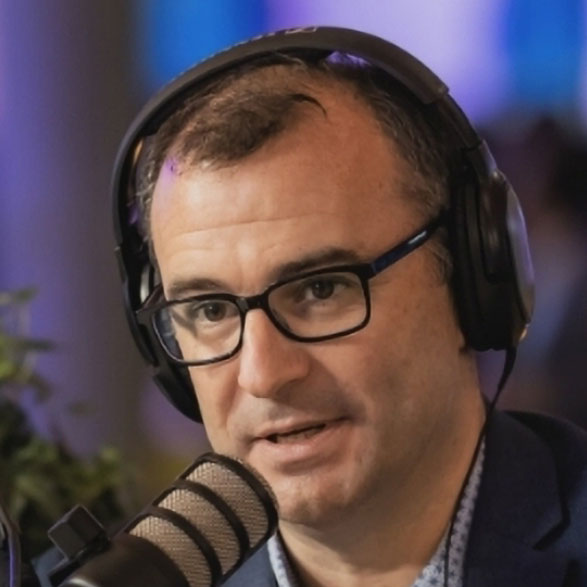
Chris McKenna, WW Head of Business Development - Private 5G, AWS
“The core of the labs function is to help the sales teams to essentially demonstrate what we do in the company and in a fun way, also in a technology way, so that it can showcase. The second one is to imagine. Make the customers imagine what they can do with the possibility with technologies.”
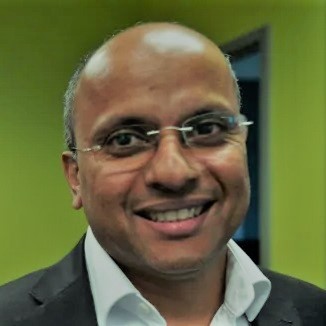
Ragu Masilamany, General Manager, Global Head of Solutions and Labs, Amdocs
Recent episodes

Matt Roberts, Head of Customer Marketing, Americas, Amdocs
S8 E1
07 Mar 2024
Matt Roberts, Head of Customer Marketing, Americas, Amdocs
S7 E10
21 Dec 2023

Matt Roberts, Head of Customer Marketing, Americas, Amdocs
S7 E9
45:19
14 Dec 2023

Matt Roberts, Head of Customer Marketing, Americas
S7 E8
07 Dec 2023


Mike MacDade, Chief of Staff, Amdocs
S7 E7
30 Nov 2023