
The Spirit That Stays With You
Matthew Roberts, Head of Customer Marketing, Amdocs
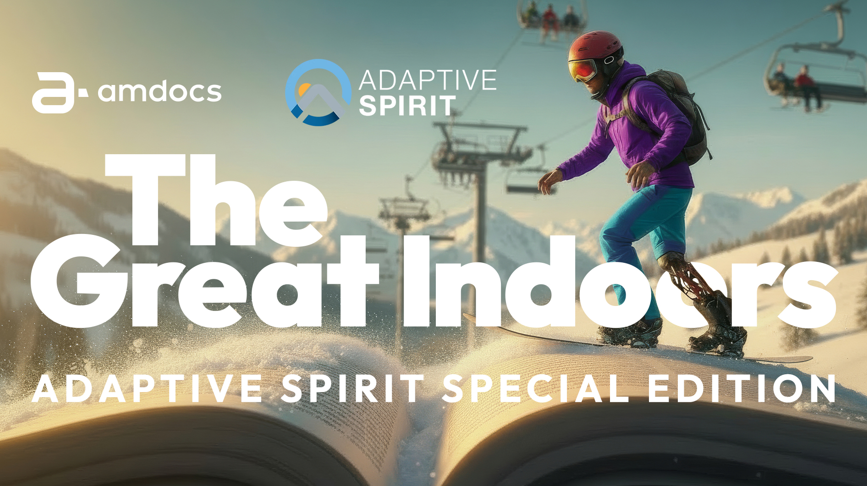
The Great Indoors Adaptive Spirit Special Edition, E3
05 May 2026

Please provide your details
Asterisk (*) indicates required field.
Thank you!
Your submission has been forwarded to the appropriate contact.
May 05, 2026
The Spirit That Stays With You
In Episode 3 of The Great Indoors, Adaptive Spirit Special Edition, we explore the powerful role of family, community, and purpose behind the Paralympic journey. Recorded live at Adaptive Spirit, this episode shines a light on the unseen support systems that make elite performance possible from the sacrifices of parents and the pride of shared victories, to the deep sense of belonging that brings people back to this community year after year. Beyond the mountain, we hear how Adaptive Spirit is driving real impact from advancing accessibility in technology and business to reshaping how Paralympic stories are told, with athletes leading the narrative on their own terms. This is a conversation about more than sport, it’s about legacy, representation, and the collective spirit that turns individual achievement into something much bigger.
Guests in order of appearance: Alex D’Addi, Ravi Drugan, Michael O'Hearn, Audrey Crowley, Patrick Halgren, Nomi Bergman, Lyann Humphreys, Bart Garton, Steve Raymond, Rich DiGeronimo, Brenna Huckaby, Dani Aravich, Andrew Kurka
Welcome back to Vail, Colorado. Now over the past two episodes, we've explored adaptive spirit from two perspectives. First, the why, the origins, the intent, the people who built it, and then the who, the athletes themselves, their stories, and their journeys. But in this final episode, we bring it all together. Welcome to the great indoors in an age where information moves faster than meaning, where we're constantly connected but not always truly in conversation. I'm your host, Matthew Roberts. And as always, I'm joined by my trusty, reliable, humorous producer, the one and only Laura Segui. What becomes clear when you spend time here is that adaptive spirit isn't just an event. It's in a community, One shaped not just by athletes and the cable industry, but by families. Families who make extraordinary sacrifices to support these journeys, who travel, who invest, who believe, often long before the results ever come. And when those moments do arrive on the Paralympic stage halfway across the world, they're shared. Not just as individual achievements, but as collective ones. And that sense of shared experience doesn't end there. Because what you see at Adaptive Spirit is something quite rare. People returning year after year. Not out of obligation, but because something here stays with them, something that connects. And over time, that connection evolves into something more than community, becomes impact, not just in the lives of the athletes, but in the way the industry thinks, builds, and behaves. From advancing accessibility to opening up entirely new ways of thinking about talent, technology, and inclusion. The influence of this event extends far beyond the slopes of fail. And perhaps more importantly, it challenges a fundamental misconception. Because the athletes you've already met across this series are not defined by disability. They are defined by performance, by character, by ambition. Their stories are not about limitation. They're about possibility. So in this final episode, we explore what adaptive spirit ultimately represents. A coming together of families, industry, of purpose, and a reminder that when these things align, the impact can be extraordinary. One thing that struck me and is clearly unique about Adaptive Spirit is the importance of families. The families making the sacrifices to help their children, the athletes, realize their dreams, but the families of the organizers and the families of the companies. This is a family event. Here's Alex DiAdio from the Adaptive Spirit video team, someone who's been a part of this event for thirty one years. I think one of the things that also I feel great about is the community that has developed around Adaptive Spirit. And as you mentioned, family, it's also a loyalty. We've had sponsors that have been with us for most of the thirty years, thirty one years. Yeah. And that's pretty amazing when you build that community. And we've had a great front row seat to building relationships with the athletes Cause we get to tell their stories and now we're to the point where every year we feature three different athletes, one from each discipline, snowboard, alpine, and Nordic. And that's a big part of this. So the people that do sponsor, get to see who they're sponsoring. And just being part of someone else's dream, being, you know, small part of their dream is pretty amazing and a very special feeling. Here's the inspirational Ravi Druger from Team USA Al So we met yesterday, but you were with your parents, and it's so great that your parents can join you at this event. How has it been for them, and how has it been for you with them being here? I mean, it's it's amazing having my parents here. So, you know, and they came to Cortina with me, and that was the first time they actually got to see me ski race in person, probably in like ten years. Wow. So, you know, when I first started ski racing, my you know, I didn't have team or a coach or anything, so my dad would come with me to races. So the first few years was super just like me and my pops or me and my folks hanging out. And so to have them here and be able to, like, bring them here and let them see the support of, like, actually the community behind the sport I do is really nice because, you know, Eugene, Oregon isn't a big ski town. Right. So when you say you ski there, it's kinda like, cool. Have you seen the football game? I'm like football. Come on. So to be here and be around like so many people that show the love of our sport and want to spread that love and actually enable us to do what we love to do. Yeah. Yeah. And that's just it's it's there's no place like being here at Adaptive Spirit. It is special. It's super special. Here's Mikey O'Hearns from Team USA Alpine. Yeah. My parents have sacrificed everything for me to get here. Think where I felt hopelessness, they really found hope and, you know, they were a beacon of hope and possibilities for me. And so I got my my parents were out there, my siblings were out there. And this journey is so much more than mine. It's a shared experience. I could not have gotten to this level of sport or elite athleticism without them. So they were there to celebrate, cheer me on. It was really emotional moment for all of us. Oh, wow. Here's Audrey Cowley from Team USA Alpine. My mom and dad have come to every adaptive spirit with me, so it is kind of like a family event. And with, the sponsor that I'm paired with, it feels like a family in that too. And they bring their daughters and sons, and it's really special to, like, have all these families from all across the country, like, come together and celebrate adaptive spirit together. And I don't have family here, but I have my best friend here from college who's also a retired professional snowboarder for US skiing snowboarder. Oh, wow. So very dynamic duo there. Perfect. And does it feel like a celebration, Adaptive Spirit? It does. It does. It's it feels like you know, it's been phenomenal. It's exceeded my expectations. This is my first Adaptive spirit and it has been Oh, my god. Jam packed, fun filled, and super meaningful. I mean, this is the time to celebrate and we feel really seen, visible, and celebrated. The one and only charismatic Patrick Halgren from Team USA Allied. I think a team, a family, you know, if you're working with a, you know, whatever you want to call it, a team, a, you know, party or discipline or, you know, just another department at work. Yeah. That's your family. Yeah. Rubbing elbows. Yeah. And and especially at their worst and best too. And you see Yeah. You know, if people are misunderstanding you, which we all misunderstand each Yeah. I know is Patrick Algren, you know? Yeah. Yeah. Yeah. But it's like the closer you are, the more deceiving it feels. And it's like, can you be kind when somebody is deceiving, is misunderstanding, is being mean to you? Yeah. But if you could do that, that's that magic power and you really learn that with your family, with your team. You bring that into the team then, those attributes, those those qualities that are instilled in you. It's like, hey. Yeah. Take your job serious. Bust your butt. Yeah. But everything else kinda don't take serious and like just spread love. Yeah. And then you'll build that village, you'll build that family. Yeah. Yeah. And yeah, you'll try to It just kinda Not you know, we're all so bad at controlling our mind. When anger comes into me when somebody cuts me and my van off. Yeah. There's anger. There's real anger there. You know, it's like once you recognize that, you can kind of put that fire out. Yeah. But it's just it's so hard to do that in so many situations, right? That's kind of life and Yeah. Yeah. And I was just really fortunate to kind of have to deal with that on an extreme level with the one leg I think. Yeah. So, it's like made me kind of reveal my character and be like, oh no. Yeah. I was just such a jerk. Like, I gotta not do that again. You do a consistent routine of that and you get better at it and better at Yeah. More people give you love. Yeah. And I almost feel selfish at this point going around and just being genuine and loving people, but, like, you can use their love and then it's this beautiful thing Yeah, yeah, of family too and It's what's the word symbiotic, right? You're feeding off everybody else. The impact of adaptive spirit is so profound. It's no wonder people return year after year. I started, about twenty 5 years ago coming to the Adaptive Spirit event. The wonderful Nomi Bergman, board member and president of Advance New House Investment Partnership. I started coming I have three daughters, and I started coming with my oldest daughter, Rebecca or Becca. And she probably came with me for about ten years. Wow. So she knew the event and the athletes, you know, as well as as well as I did. It was a very formative part of her growing up. Yeah. You know, and I think it's I've heard that. I I we had a guest on Leanne yesterday. She would come here with her mother every year. Really? And it was part of her childhood, and now she's working at the event for the marketing team. That's beautiful. Leanne Humphries used to attend this event as a child. Now she works at Adaptive Spirit. So I used to attend, or my my mom, my parents would attend and I'd get to run around and be a kid. Yeah. But now, I'm actually part of the registration staff. Yeah. So, working the event, helping with check-in, and those sorts of things. For, yeah, for as long as I can remember, we've been coming up here every year and Yeah. Getting to And how are the memories? You have some good memories of this event. I do. Yes. Well, obviously, when I was a kid, I wasn't fully understanding everything. But the past few years, I've gotten to attend some of the panels or those, like, kinda fireside chats. Yeah. And it has always been really cool, you you find all these little commonalities, and you see the the strength that these people have. Yeah. It is. I would agree because sometimes emotional. Yeah. But it always is very inspiring. You know, to show them for for them to meet the athletes and learn the adversity that they had to manage and, you know, how they embraced whatever whatever their disability was and made it made it, like, into almost a shining feature of them. Yes. You know, and made something really wonderful come of that. Yeah. And I think it was it was a really terrific thing for my kids to see. So anyhow, I first came with Rebecca, and then I came with Allie for about, you know, twenty years ten years. And then lately, been Dory, my middle daughter, here with me now and has been here This is him with you this week. Past few years. Yeah. Oh, wow. Excellent. Really excellent. So it's great. Yeah? Yeah. Yeah. And they enjoy it? Oh, they love it. It's the older ones ask you questions about it in in sort of because they weren't obviously Sure. They remember the people. They ask me about them. They follow them in the Paralympics. Oh, Quite a a number of the people that we, like, really cherish Yeah. Were in the Paralympics this year. Oh, wow. That's really special. It really is. Yeah. Bart Garten from the Adaptive Spirit video team. This has happened several times because we've been here for so long. Sandy Dukat was one of the sweepers of the Alpine event. The the ladies Alpine Yeah. Swept the podium, gold, silver, bronze. And we just remember that moment was so fantastic. Sandy was a young, kind of new to the team and just killing it. But then we got to see several years later, Sandy retire. Then Sandy got married. Then Sandy had a baby. And now Sandy is running this organization or she's she's running the event. Yeah. Yeah. So it's really great to see that whole circle of what the the athletes' progression. Really cool that we got to be there for the whole thing. You know, maybe one one of my favorite things is the team makes videos highlighting, you know, the telling one of the athlete's stories. And because I really I really cherish the athlete's stories, those videos are are particularly remarkable for me to see because you you you get to learn, you know, they they just do a a beautiful job of bringing the whole athlete's story together Yes. And telling it in such a brilliant way. Things always come alive Yeah. In video in such a brilliant Right? Yeah. Sometimes sometimes some scene in video is better than in real life. Right? But so one of my daughters, Allie, the youngest, when we would come home, we would we would get a a disc of the videos, and she would watch them over and over again. So, you know, so we really that that athlete became like such a larger than life figure in her life. Yeah. Right? So then when we would come back the next year, she was so excited to see that athlete in person having watched that video so many times. So I think that's one of the really special memories. Adaptive Spirit isn't just a fundraising event, however. It has tangible business impacts, especially around accessibility. What are the common misunderstandings in the industry as a whole, do you think, around accessibility? It's big question. From a business perspective, do you wanna build your product for everyone, period? That means anyone. Steve Raymond, Adaptive Spirit Co Founder. Make sure that anybody can access, you know, wireless phone, video, voice, data, and so the other side of that is we wanna make sure that the tools we have internally can be used with people with disabilities. It opens a whole new set of hiring opportunities for us. Yes. Because the disability community has a higher percentage of unemployment, but there's so much talent. If you put together the right technology and the tool sets, you could have a royal royal population of disability talent. Rich DeGeronimo, President, Product and Technology at Charter Communications. I think the experiences at Adaptive Spirit have helped me lean in and invest deeply in accessibility technology. You know, I had the good fortune of having my own product design team. As part of that design team we built an accessibility lead and over time we bought built an accessibility center of excellence. And I think a lot of my motivation to invest in those areas actually stem from these experiences. And the beauty of our accessible technology is, I hate to say it this way, but you don't have to be, you know, blind to be visually impaired. You don't have to be deaf to have a hearing impairment. You know we might be old and I hate to say it that way but as we age you're able to leverage a lot of this accessible technology that doesn't just serve people with disabilities, it actually serves the masses. And when you can do that it's a much easier investment case to communicate to the company and then as we I think it also through that investment we've been able to invent a number of things and we've you know we've had teams go to Washington DC and accept like a Helen Keller award that, you know, is really meaningful for them but it's also really meaningful for the company and I think it gives a lot of people a sense of pride in what we do. It's not just a corporation. It's a corporation that can also, you know, invent and help. And so anyway, it's a long winded way of saying like Yeah. That a lot of that's rooted Yeah. Actually and spawned from this event. Yeah. And I think that's the key especially, know, look as industries change, as companies get bought and sold, as you know the world just changes with some vendors that are in or out, it's important that we try to bring in new faces every year so that we can continue to diversify the audience. Because once you do feel it, you tend to get hooked. And we just wanna make sure that this, yeah, this can last for a really, really long time even as technology and media, and communications industries change. The quite fabulous Brenna Huckabee, Team USA snowboard, and now part of the amdocs' team. Disability and being around people with disabilities, which I don't know if you've ever been in a space where there's this many disabled people around. Probably not. No. I think there's like a certain level of vulnerability that's just naturally expressed. Yeah. And so, like, maybe there is this, like, opening within yourself of, like, wait, I can connect to a human just on a different level because there's just an inherent vulnerability within disabled I think it is. I think it's really, really remarkable. But to me, even when we were speaking with Patrick, but that that video of him crossing the line when he won the silver, right, but and he was showing us the video. With the that that was the story because it was so incredible. Exact exactly. That's the story. Yeah. That's what took my breath away. Yeah. Right? Exactly. We are here because these athletes are adaptive, But that is so such a small part of what these these kids, adults, athletes are. Yeah. It's it's for one, it's amazing because they are elite athletes. They're amazing. Just as amazing as the the able-bodied Olympians that we all see. These ones are just missing a wheel as one of them told me. Yeah. Know. And so, they are incredible athletes, but they also are to to a t smart, knowledgeable. They've they've got great personalities. They persevered through some serious stuff. Yeah. Yeah. A lot more than most of us have. Yeah. So that has really strengthened their character. And they are by no means just someone in a wheelchair who's done amazing things. They're also unbelievably interesting to talk to. Yeah. I would add on to what Bart said is, and this comes from the words of some of the athletes we've interviewed over the years and done stories on. Whatever their disability might be, that does not define them. And for most of them, they'd wanna put that secondary to the people they are. Danny Arovich, team USA Nordic. One of the things though that I think makes me unique alongside Brenna is we actually started a media company called Cultured to try to elevate Paralympic stories and Paralympic athletes. So outside of our training and competing, we run a business together in the media space. Give me some of the background if you could, Danny. Yeah. Would you like to start? I I I guess. Yeah. About a year and a half ago, Danny was doing these Instagram videos and they were called Paralympic Roundups. And she was posting it on her page and I reach out to her and I'm like, I love this, but why are you the one that is doing like the Paralympic media Right. Of other athletes. So it wasn't like her career, it was other athletes' careers. Yeah. And I was like, why aren't like bigger media brands doing this? I didn't know about these athletes and how they were doing. And this was on your webpage? This is just Instagram. On my Instagram. Yes. Okay. Right. Yeah. Wow. And I was like, I don't know. I think it's like maybe a very unique thing in the Paralympic space, but so many of us have had to advocate for ourselves very hard in in so many different facets of our lives. So when I saw what she was doing, I was like, well, if nobody else is gonna do it, why won't you? And that's like kind of how it started. We started brainstorming from there and built it into what it is today. But yeah, it was about, like, media collective getting Paralympic athletes to share their stories in a way that they're proud of and being an athlete first. That's another part of our mission I can let Danny speak on, but yeah. And so are you creating video or case studies? How how do you take those stories? How do you then package them and how do you distribute them? So far we've focused a lot on social media channels. We do have editorial work with writers to do written pieces for our website. We actually consult on documentaries now. We just worked on a documentary that came out on Peacock Wow. Right before the Paralympics about a historic Paralympic team. And we are trying to get potentially into the podcast space, do more in documentaries. How we could help you with do you guys know anyone? Yeah. And then just gonna continue to try to build it. We do merchandise and gonna try to work with brands and other media companies. But what one of the core ethos of the company is is we want to get the stories out there, but we want to get them out in the right way. Because often when Paralympic stories have been picked up by major media outlets, it's often told in a way that can actually be quite harmful to the athlete or to the disability community. Right. It's something that we Is that because they tend to sensationalize or catastrophize Yes. On those stories. Right? Absolutely. We call inspiration porn and it's kind of this idea of taking people with disabilities and putting them into this light that's very, like, focused on the inspiration of just being disabled rather than putting that sport and the athlete first. And so we want to educate the greater media on how they can tell stories in a way that's actually athlete first focused on high performance sport rather than the disability narrative that's often the despite narrative. So we see a lot of headlines if they make major news saying, you know, despite losing her leg, despite being born without her arm, they did this. But it's not despite Yes. At all. Yes. It's she won the medal. Yeah. She went to her third Paralympics. Yeah. It's it's not because of in spite of or it happened because of it. It's it's That's just another factor in the Right? Exactly. Yeah. Wow. I love it. That's great. Thank you. Yeah. And so what's next then? Where do you go with it from here? There's a whole bunch of stuff going on. Oh, yeah. We just covered our first Paralympics because we started right after the Paris games. Oh, sure. And so kind of with what we're focused on these coming months is there was more attention and eyeballs on para sport because of the games. And there was more media covering it, but now the sports continue. Yeah. They don't stop. Like, people have World Cups and World Championships. Yeah. And there's sports, you know, summer, winter, sports that are not in the Paralympics that still have elite levels. So we're really trying to remind people who might have finally paid attention during the games that it doesn't stop, it And so we're gonna try to cover as many of those, and then hopefully do some cool stuff for LA twenty eight. Yep. I think the way you guys conduct yourselves, the way you articulate the stories, it it feels much more human to me than, you know, when I hear other sports people in other parts of the world. Maybe it's just some of the sports people I met, but I that's I think that's a credit to to to yourselves. I think, like, it's also important to just remember. We're not saying, like, disabled athletes can't share those stories or they shouldn't share those stories of how they became disabled and whatnot. Like, for some people that's really cathartic and, like, healing and it definitely is helpful to somebody going through that as well. It's just how and when you wanna share those stories. I jumped into, like, the Paralympic media space just Yeah. Came came with the wave of the growth of And when I first started, it was expected that my cancer journey was going to be what I told. And it just felt like I was exploiting a part of myself before I really got to understand point. Yeah. Yeah. Yeah. So, yeah. I think, like, a part of cultured is we want people to not feel like that's the only story they have to tell. Like It's a chapter in the book. A hundred percent. But it's not the only chapter, and it shouldn't be the chapter that's first and prominent. Exactly. If it's not for you, then you don't have it doesn't have to be Yeah. What you tell. And our final thoughts. I think for me, it's when I ski with some of the para athletes who are in a sit ski, okay? And when they're in a sit ski, meaning it's one, it's really one ski underneath them, they're seated in it, They use their poles, know, also as like a very short ski. And the first time I skied with someone who was going about sixty 5 miles an hour. Yeah. And then there was like a roller, you know, where I'm gonna slow down and they just launched off of that and landed it. And I was like, this is a is different type of athlete. I think that's that's been big. I think for us as a sponsor, you know Charter, we've been involved as a platinum sponsor for a long time. It's one of the big events that I, you know, try to place a lot of emphasis on. I'm thankful the company is willing to support, you know, me and this, this event. We've been able to sponsor athletes over the years. You know, this this past year, we sponsored Kendall Gresh. You know, Kendall won four medals at the Paralympic Games here in Cortina. Yeah. We've gotten to know her, you know, not just as an athlete, but our whole exec team has gotten to know her as a as a human, as someone who is tireless in her pursuit of greatness. That's been big. I'll give you the last one. You know, we're watching the my family was watching the Paralympics on Peacock. And I gave NBC and Peacock a lot of credit. You know, they have they air all the events. Yeah. It's accessible now for us to see it, which in the past it wasn't. And, you know, we were watching the games at dinner with my family, and my my fourteen year old son, looked over at me as we're watching the alpine racers come down. And this was the visually impaired category. So these racers, you know, they alpine ski at high speed with a guide in front of them. Just communicating, you know, in a microphone into their ears so they can know how to get down that course at really high speed. I mean, it's, talk about trust. And, one of the athletes was going down. Her name's Meg. And my son looked at me and he goes, I skied with Meg last year. How great is that? And like Yeah. Yeah. Yeah. That connection. Another one was Andrew Kirker coming down on a sit ski. He was a medal winner. Yeah. And he's the man. And having my kids say, oh, we took a photo with Andrew. And like, it's been really intertwined into our family. So there's not just one. It's kinda all those moments together. I was just thankfully in a a little photo shoot with Kendall because we, you know, we sponsor her and she had her four medals. And I'll tell you what, like, I was more nervous holding her four medals as she was getting adjusted than I was like my wife's wedding ring because, you know, like that's there's and I'll tell you what, there's a lot of weight Yeah. Literally in that. It's that's a beautiful thing. So we're sponsoring Brenna Huckabee. Oh, I love We took it for dinner last night, and we're looking at, you know, with Brenna doing a campaign to help bridge the AI divide across the United States. Oh, terrific. Wow. So you know where remember the old digital divide? This is almost the successor of that in that there is an uneven distribution of AI usage and knowledge across the population. And the people that have some sort of advantage are gonna get ahead at the expense of others, maybe on economic factors or Yep. Other demographics. So it's a campaign that's hopefully gonna try and address that situation. Do you think that's wonderful. Should be great. Brenna will do a great job of making it very, very approachable. Very and yeah. And I think it's when you look at again, going back to sort of the the children of AI natives, and they adapt it, they start using it, but there's no playbook, there's no instruction. This thing is moving so fast, It's changing so quickly. Right. So how do we ensure that everybody else keeps up young, old, in every industry, in every Absolutely. And I think, yeah, Bren is a would be a wonderful ambassador, think, for us to help, you know, get that initiative moving. You know, we have people that have been here for thirty one years. They they keep coming back because they get the movement, they get understand the the impact we make, and fund the athletes in their journey. So, think you're right. People feel good about it. Not only have you bring your business partners, you can spend times on the hill, but you all feel good about what you're doing. Yeah. And a lot of people now make personal commitments, besides their company sponsoring. Exactly. We started an endowment probably twenty years ago, and now it's over 3.5 million. All that money goes directly to athletes. Wow. So there's there's multiple ways that we can support the athletes through this The silent auction, I think, is probably one of the largest and most important events for us as a team, and that's why I donate to it every year. Andrew Kirka, Team USA, Alpine. And, yeah, so I own a bed and breakfast in Alaska. It's a hunting and fishing lodge. I'm a pilot up there and a boat captain, and I take people with disabilities out fishing and out hunting and out into the great outdoors of nature. And I must say that I'm looking forward to having people visit, maybe. Yeah. It'd be very cool. It's called Bullen Standard B and B, and I built it with my earnings that I got from the games in two thousand eighteen with Yang Chang. I won a gold and silver Yeah. In the downhill in Super G. And I took all of that funding, and I built a cabin on 5 acres Yeah. With his own two hands. Oh, wow. Why do my listeners find? Is it a webpage or Yeah. What? Golden standard b n b dot com. Like bravo Nancy bravo. Golden standard. Whereabouts in Alaska are you? It's in Palmer, Alaska. Okay. I'm on a little airstrip in Palmer, Alaska near Hatcher Pass. Wow. Sounds heavenly. Yeah. It's very nice. Yeah. And, you know, it started with one little hillbilly cabin, and then I built it into something quite nice. Wow. That's worthy. Sounds great. Yeah. And a lot of wildlife up there. Right? Oh, so much wildlife. Yeah. Yeah. Yeah. Moose in the yard every day. Oh, really? Oh, yeah. Yeah. Yeah. Yeah. That's cool. We don't just utilize, you know, vendor sponsorships. You can also, you know, donate individually as well. That's yeah. I think it's important to know that the US Paralympic team, none of their funding comes from the US government. Zero dollars. Yeah. It all comes through through donation. And and so look, think it's important even if you're not here as a with with a company, you can you can potentially come out and donate. That would be great. To the extent you're listening and you wanna kinda nudge your corporate marketing team to to potentially reach out, you know, we're we'd be happy to chat with you. And so as we come to the end of this series, what began as a story about an event has become something far more meaningful. A story about people, the people who built it, the athletes who give it purpose, and the families, partners, and communities who make it all possible. Because when you step back, adaptive spirit isn't defined by a single moment, single year, single medal, or even one of those single stories. It's defined by connection. Unusual connections between sports and industry, between performance and purpose, between individuals who choose to show up and make a difference for something bigger than themselves or their organizations. And that's what stays with you. Not just what these athletes achieve and can achieve, but how they approach it in their mindset, their discipline, and their perspective. A reminder that performance isn't just about outcomes. It's how you respond and how you adapt and how you keep moving forward. For me, this was the first experience of adaptive spirit. It won't be my last. Because once you've seen what this represents, it has a way of staying with you. Until next time. This has been The Great Indoors. This, actually, I might get this tattooed. You should. I'll get it tattooed. Yeah. Next year. Bring bring tattoo stuff. We're on it. You know? My wife would kill me, but I want no help. Amazing. Thank you so This is beautiful.
Featured Podcasts
Episode 1: The Power of an Adaptive Mindset
This episode of The Great Indoors brings us inside Adaptive Spirit through the voices of the athletes themselves, sharing firsthand stories from the Paralympic Games and the journeys that define them
Episode 2: More Than a Moment: The Movement Behind Adaptive Spirit
This episode of The Great Indoors tells the story of Adaptive Spirit, a purpose-driven movement that, over 31 years, has raised more than $25 million in support of the U.S.
More in this series
Matthew Roberts, Head of Customer Marketing, Amdocs
S12 E10
14 May 2026
Matthew Roberts, Head of Customer Marketing, Amdocs
S12 E9
07 May 2026
Matthew Roberts, Head of Customer Marketing, Amdocs
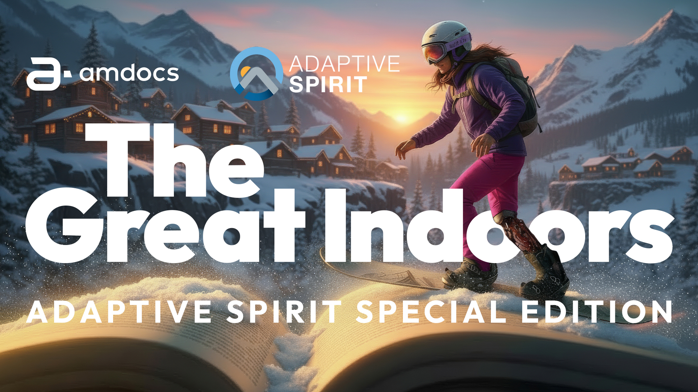
The Great Indoors Adaptive Spirit Special Edition, E3
05 May 2026
Matthew Roberts, Head of Customer Marketing, Amdocs
S12 E8
30 Apr 2026
Matthew Roberts, Head of Customer Marketing, Amdocs
The Great Indoors Adaptive Spirit Special Edition, E2
28 Apr 2026
Matthew Roberts, Head of Customer Marketing, Amdocs
S12 E7
23 Apr 2026
Matthew Roberts, Head of Customer Marketing, Amdocs
The Great Indoors Adaptive Spirit Special Edition, E1
22 Apr 2026
Matthew Roberts, Head of Customer Marketing, Amdocs
S12 E6
16 Apr 2026
Matthew Roberts, Head of Customer Marketing, Amdocs
S12 E5
08 Apr 2026
Matthew Roberts, Head of Customer Marketing, Amdocs
S12 E4
02 Apr 2026