
Smart Homes to a Smart Planet: IoT's intergalactic upgrade
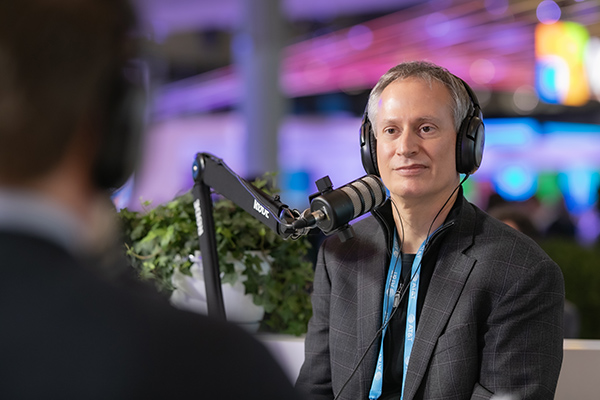
In the Season 8 finale of The Great Indoors, Matt hosts Cameron Coursey, Vice President of Connected Solutions at AT&T, and Anton Monk, Former CTO at Viasat. Cameron and Matt explore the realm of IoT and its evolution with the advent of 5G and Generative AI technology.
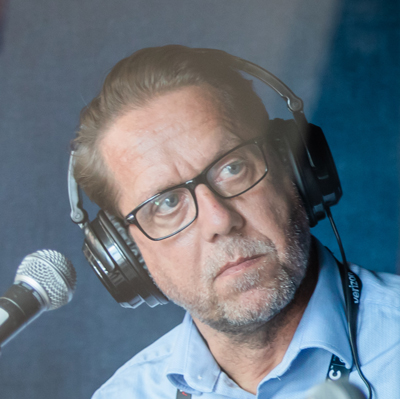
Matt Roberts, Head of Customer Marketing, Americas, Amdocs
S8 E10
09 May 2024
Please provide your details
Asterisk (*) indicates required field.
Thank you!
Your submission has been forwarded to the appropriate contact.
May 09, 2024
Smart Homes to a Smart Planet: IoT's intergalactic upgrade
In the Season 8 finale of The Great Indoors, Matt hosts Cameron Coursey, Vice President of Connected Solutions at AT&T, and Anton Monk, Former CTO at Viasat. Cameron and Matt explore the realm of IoT and its evolution with the advent of 5G and Generative AI technology. They also delve into the existing barriers within the IoT landscape and how they can be overcome. Next, Matt speaks to Anton Monk all about the future of satellite technology. Matt dives into the convergence of satellite and connectivity, and how satellite companies are navigating these changes and gearing up to be in a good position in the market. Don’t miss the final episode from MWC Barcelona!
So we're back. Another episode of the great indoors here at Barcelona MWC twenty twenty four. Really excited to introduce my next guest. This is a fascinating space that we're gonna talk about. So I'd like to introduce mister Cameron Corsi, who's the vice president of connected solutions at AT and T. So welcome to the great indoors, Cameron. Oh, very good to be here. Feels wonderful to be in the great outdoors. Indoors. Indoors. Yeah. Exactly. And what do you think of our setup this year? It's It's wonderful. You've got two different levels here and you're in prime real estate for the World Congress and this is the busiest I've ever seen it, honestly. Yeah. Yeah. I think they said ninety eight thousand people. But I'm gonna validate that number because I have the GSMA later this afternoon. So they'll give me all the latest numbers, etcetera. But yeah, you're absolutely right. The days of the pandemic and when we started the great indoors are way behind us. So ninety eight thousand of your favorite people. Yeah. I just need them all to tune into this podcast and then we'll be really, really up and running. So Cameron, thank you again for joining us. Tell us a little bit about your history, your journey and your role at AT and T currently. That's great. So I started on this journey of Internet of Things. Let's just start there, not farther back. But in two thousand nine, we called it back then emerging devices. Was entirely new. Yeah. We did not really know what it was gonna turn into. But we knew that from a cellular operator perspective within AT and T that we were reaching about a hundred percent penetration of smartphones. Yeah. And we had our network with the ability to serve additional customers. Right? Yeah. So, we saw that the future being in different kinds of devices, not smartphones. Yeah. And ultimately, that became Internet of Things. So I started out doing, product realization and development, leading that organization. And, since then, it has migrated into leading all of, technology operations and product for AT and T's connected solutions. And we call it that because to deploy Internet of Things these days, you really think of it as a solution. It's more than just the device. You need to help the customer along the way to engineer things and Yes. Make sure it all works. Yeah. No. And and you're absolutely right. It's that coalescing of different technologies and things together to realize the solution with IOT that's been talked about for so many years way back even when it was M2M and as you said it was emerging devices when you came in to own it. Now and then obviously IoT and is the current definition of IoT, is it how far is it from the original definition and how do you think that's gonna continue to evolve as we move forward? I guess the question is what's the present definition of IoT? Know, I think it might be a little more focused these days. For a company like AT and T, it's really around cellular IoT. Yeah. A lot of the early numbers that were battered around in the billions, tens of billions of devices accounted for, devices that were connected through unlicensed means, Bluetooth, Wifi Yeah. Many others. Was it Zig Zigbee, all these different protocol. Yeah. Yeah. So now, of course, there's a there's a big ecosystem of them. But from an operator perspective, we're really focused on how can you deliver this over the cellular network. And that limits the the number of devices that we're talking about to some extent. Yeah. But it's still a massive number. And so we've seen great growth over the years. And I think we've narrowed down on certain verticals that really drive the industry faster than others. Yeah. And it is interesting as we look at standards and protocols move forward. One of the I remember speaking to an analyst who was very bullish and thought that five g was going to be the thing that vaulted IoT forward. What what are your thoughts on that, Cameron? No. I think, actually, four g has vaulted us forward significantly. Right. Once we got to GSM based standards with three g, now you've unified the world. With four g, you get every operator in the world on that. Now you don't have to worry necessarily about, which technology standard to use to work in a cellular environment. So that has helped more than anything. And in four g, we specified, two low power wide area solutions. They're called narrowband IoT and LTE M. These two allow us to get to very low cost points for the devices, and, that has helped to stimulate the market a lot. So they are actually considered, in some ways, five g because they meet some of the definitions from massive IoT perspective. Yeah. Although they aren't the five g waveforms. I think what five g will do is broaden some of the capabilities that IoT will provide as you get into mission critical kinds of use cases that require maybe low latency and maybe edge compute capabilities. Those will help broaden the perspective of what we can do within IoT. Yeah. And what barriers do you think you're, you know, you're still coming up against that are a hindrance right now with mass proliferation of IoT? First thing is it's still too complex. I talked about the fact that, you know, we need to help our customers. We need to make it simpler for them. First of all, we need to simplify the whole certification process for devices around the world. It's very complex. You gotta go to every country, and meet their requirements. And then each, each carrier has their own. And that includes the SIM card as well. Right? The device and the SIM. We gotta simplify that. We gotta make it easy for the customers to know which device to purchase or which module to purchase. Right now, there's so many SKUs out there. They need to know what operator they're working on, what country they're in. And they have to know too much about cellular, quite frankly. They just need to use it. Right? That's not their desire is to have to understand our technology. They want to solve real use cases. And and we have to simplify it and then make it simpler to provision. Because I think at the end of the day, that's what's gonna make IoT take off to the next level is simplification. Yeah. Talk about When we talk about simplification, my previous guest just this morning was the head technology officer at ViaSat, one of the satellite communication companies. And on this podcast over the years, a lot of the satcom guys have been deploying IOT use cases. There was a gentleman, I think I talked to you about this when we first met Cameron who's from Australia and they were tagging the cattle in less How is Satcom impacting the proliferation of IoT? How does it coexist with the the the a company like AOT offering, these solutions as well? No. I think until now, it has been an augmentation. Think about connected oil wells, mines, you know, locations that are very rural, even across the ocean, you know, big Yeah. Freight liners across the ocean, I would say. They need some kind of connectivity where there is not cellular. And so that's where satellite came into play. But it was an expensive augmentation to, what they were doing otherwise. And what we're all trying to do now with satellites is provide, you know, a direct link, with devices that that don't have to have a lot of modification to them in order to work over satellite, actually work on cellular protocols. So Yeah. The way we're we're handling it is working with a company that we've been doing testing and validating that today's devices, starting out with four g and they'll become five g, can operate without any modifications on the cellular network coming from space, essentially. Yeah. Yeah. And when you do that, then it looks like another roaming network. So it'll augment coverage in areas where it's hard for operators to get service delivered for a couple of reasons. Is like in the United States, we have national parks that they don't allow us to build cell sites in. Yeah. Of course. Secondly, there are there are very rural areas that it it's it's just not economical to put a cell site. So in in areas like that, satellite augmentation can give you that a hundred percent kind of coverage for IoT that you might need for various use cases. No. That's really interesting. Really interesting. And and which industry right now? IoT is one of those subjects that there's always massive Sorry. There's there's a wealth of interesting, exciting use cases. Right? I think that's one of the the amazing things about I IoT is you can really dream or speculate and think about just such wonderful things. But which industry right now do you think is benefiting the most? And and from your perspective, what's one of the most exciting developments that you've been part of in this domain recently? You know, I think the biggest industry that has benefited has been automotive. Right. Yeah. More and more vehicles are getting outfitted with connectivity embedded in them. And and somebody might ask, well, why, you know, a customer can just bring their smartphone into the vehicle? Well, these radios embedded in vehicles can do a lot more than what you think. They can help you remotely start, lock and unlock, and you won't have the phone in the car when you're doing that. In fact, you might be doing it from your smartphone. Right? Yes. Yes. Yes. So that's one use case. Another, there there's a term in the industry called software defined vehicles. Right. And what that means is, really, the auto industry is going through a rapid stage of innovation. They're they're becoming a lot more like smartphones on wheels, where they're software controlled. And when you do that, you're able to upgrade the vehicle over time, fix bugs. Yeah. Tesla does this and others all the time. And that's gonna grow in use cases. And that requires cellular connectivity in many cases because the vehicle might be on the road. It would be hard to establish a connection with a WiFi Yeah. So that has really been a, you know, a key differentiator, I think, And I think it will continue in the five g era to to grow. And it's an exciting area because we can we can do more than just the telematics kind of things for an automaker. We can help the driver. Number one, we can set up a WiFi hotspot in there where they don't have to use their own smartphone to do that for kids in the backseat on a long trip. Yeah. I know about that one. Yeah. Yeah. Yeah. Yeah. Yeah. Yeah. And then in the future, the industry is moving into our into an area where this whole cellular protocol is gonna be used for vehicle to anything Yeah. To deliver a level of safety that, will help to save lives on the road. And so what's exciting to me are are use cases like that where you see IoT used for good. Right? It's obviously good to make money on it, but it's good to have a great societal impact as well. No, absolutely. Absolutely. And you know, with all with everything in IoT, talk has always been the billions and billions of new connected devices that are coming on, the data that obviously comes out of the exhaust, if you will, all the new devices. How do you ensure security, privacy of data when the magnitude becomes just phenomenal? You know, that's one of the things that differentiates cellular connectivity, I think, from certain unlicensed ones. Yeah. It is really the fact that that we have a SIM card that provides, first of all, a level of authentication that it's very hard to to cause fraud as a result of that. Yeah. It's very difficult to hack. And that sim card can be a root of trust as well that can help make sure that there are the right certificates on the device and you can do end to end encryption. Keeping the the Internet of Things devices off the Internet Yeah. And having a private connection is also something that we do all the time. Why we call it Internet of Things Yeah. Maybe it would be better to call it non Internet of Things. The private network of things. That's That's it. P n O T. It doesn't really have As a marketeer, I need to work on that one. But I know exactly what you mean. That's really phenomenal. And again, with the data that is generated by all of these devices, Of course, there's more devices being generated. Right. That's right. Just generally. And I've had some fascinating conversations on this podcast with companies who's There's one in Canada just recently where they take care of the disposal recycling of all sort of used devices as they come to end of life. What are your thoughts on that in the world of IOT and the environmental elements? IOT for good, but also IOT for the environment. I've just come up with another marketing slogan that I need to work on there. What are your thoughts on that, Cameron? You know, as part of sustainability, I think one thing is, regardless of the disposal of the units or anything, IOT is being used today to make more efficient use energy in the homes, in the businesses. Oh, absolutely. Right? Make sure that we use less less energy and use it in a smart way. That's that's I think that's just fundamental, the part of Internet of Things. But then, you know, as you do talk about making sure that, you know, the environment stays safe, there are environmental use cases for IoT also, right? Yeah. That are have been very effective, you know, at making sure, for example, that leaks are detected in in water pipes in cities and elsewhere. Yeah. Delivery drone delivery of of different things to very remote locations. And then, I think it is very important that we consider environmental impacts of any devices and making sure that we can recycle them as much as possible. So we are working in that domain too. No, but you're right. The sustainability upside of some of the connected solutions, I mean, offset even I think offset the externality of just thousands of unused devices that will be recycled anyway. That's right. All of us now have smart thermostats at home, etcetera, that provide those sustainable benefits. Now, my next question, and I pause when I've done this because there's only one thing going on at this show right this it has two letters, it's a two letter And it's not five gs. And it's not five gs this year. And it's not metaverse. And we know what it is, it's generative AI. I in my twenty five years in the industry don't think I've witnessed just the euphoria should we call it around generative AI. I'm really interested to get your thoughts Cameron on how that plays into IOT and how you're thinking about how it can help in that domain. And whether you've been either a technologist that's been in the industry for many years. Is it as profound as we're all getting as excited about? I think we need to be pragmatic about it and find and just like any new technology, there is a lot of hype to start with, and then you find the real niche areas, and they might not be niche for long, but they're the areas that that actually the technology benefits the most. I think we're in that environment where there's a lot of enabling AI capabilities that are being talked about. Frankly, probably some of the AI is really data big data analytics just in the in another terminology. Yeah. Exactly. Yeah. Which has been there for a long time. But the explosion of data, you mentioned it. Being able to analyze that data, you cannot do it as a human in nearly the time that it takes a, you know, a machine to do it. And so that is gonna fundamentally change a a lot within the entire society, I believe. Yeah. I heard one person who studied this a lot say that they they will typically tell their customers to hold off on new technologies until they become a little more mature. In this case, he said, you need to hop in with both feet into AI because you need to know how you're gonna use it both for your own as a as a company, internal use cases, and then also, you know, how you can use it as a revenue generation. Yeah. Exactly. And I think the interesting thing that I've seen at the show and I know we're still only on day three. I think it's pretty clear what it's gonna do for the industry. I think it's pretty clear and obviously we've had our announcements this week and it's exciting and everything. But where I find it most interesting and at the beginning of our conversation I talked about the one thing that's exciting about IOT is just this broad amazing spectrum of potential opportunities and use cases that get you excited. Right? I think the same could be said of generative AI because somebody said to me this week, it's only limited by our own imagination. That's right. So the question that I've been And it's a bit of personal market research that I can use this. As just an individual in your everyday life or your everyday working life, Cameron, where were you using it since it came on the scene just over twelve months ago? And by the way, ninety percent of the responses have been absolutely unique. Is that right? That's correct. Honestly, and that's the thing that's kind of made me go, wow. Every individual is using it in a unique way based on their own personality or creativity, call it what you will. So I'm interested to know where you're using it and and and what it's doing for you. So I'm probably gonna be very boring and give you a use case that you've already heard. But but really it has been more in this whole area of internet search, quite frankly. Right. You typically would plug in a question to your Internet browser and you'd get a whole list of information that you had to sift through. The first few entries are all sponsored and quite frankly, they might not be worth a whole lot. Right? So you really have to dig through mountains of information, whereas you can ask this question to an AI Yeah. And it gives you a more succinct answer. It might not fill in all the blanks, but you can ask ask it another question and get deeper. So that's what I've been using it for in a personal way. Yeah. And that is a unique answer. Honestly. Kudos. And and and I was listening to a podcast while I was walking my dog last week. It was one from the tech for the New York Times. And I can't remember the name of it. There's a startup out of the valley right now that is LLM is based entirely for that purpose to optimize the internet search. Also based on what it knows about you and learning about your preferences and anything. So it goes straight to what it believes would be what you're looking for. Can't I wish I could remember the name. Maybe I'll edit the podcast and then put the name in there as just just for our listeners. Well, here's one unique kind of AI use case that we've encountered that I find fascinating. It's really a personal AI. Right. So, if if you have all of your own information that you have, you know, put into this AI, then when you're not around, let's say this week, I'm in Barcelona. Yeah. If my team which is on many hours, different time zone, needs an answer for me, if may if my AI knows enough about me Yeah. That AI can answer the question Oh. Instead of me having to do it. There's a company that's actually doing something like that. Right. Wow. That is that's really interesting because I've heard in a more morose manifestation where when people have become deceased, their relatives can bring them back. And you should check out, there was a podcast by the economist weekend where they did that just that. And it was a really emotional, a really questioned ethics, but it was really phenomenal. I'll send you the link to this because this one, but I love that idea that you're almost creating a clone of you to take care of things while you're away. That's exactly right. But, you know, the the example that you gave. Today, we take memories from photos that may be in a shoe box somewhere and maybe we're digitizing them. Yeah. Or we're going on to some website that you could find your ancestry. Yeah. You know, be having something for two or three generations from now that really helps them to understand who the person was better than those photographs. Yeah. Is is really a fun thing to think about. Oh, is. It's incredible. And and also those use cases where, you know, they're bringing back like Winston Churchill to have a conversation with John Lennon and that they're building these things now and it's just fun and interesting to see. Anyway, we could talk about We could. For hours and I have been all week. When I get back to Canada, my kids really aren't going to want to speak to me because I'll be doing that. So we've talked about this already, but I mean the climate crisis that we're going through right now. I mean, IOT and many of the connected solutions we're speaking about is gonna go a long way to start making progress against the biggest existential threat to mankind. Do you you believe that right, Kyle? You know, I believe it will have its place. It's that is such a a large problem to solve that it no one thing is enough and IoT will definitely have a a place in the solution. I think about some of the things that already have happened in this space Yeah. That that help us. There is a company that after the Fukushima nuclear disaster started putting sensors that are connected through cellular into Japan to sense the environment around there to figure out, hey, is it, you know, is it safe to go into this area? Right? There are IoT solutions that are monitoring the environment, you know, even in cities to make sure that things are, you know, things are good and habitable for people. And so, you know, that's one thing that's already been done. And I can only imagine through the creativity of different individuals where this could go and how it could help. Yeah. No. Absolutely. Absolutely. So we're coming towards the end, Cameron. And and I've had a fascinating conversation. I could speak to you for hours. Really, I could. So I want to thank you again for your time. But the way we finished the podcast is a quick fire round called TGI to go. I'm going to give you a multiple choice question and you just give me your preference. Okay. And it's just a nice way to end and lets our listeners just know a little bit more about you. So let's start TGI to go. So football or basketball? Well, football, but American football. Yeah. That you see, that's the what I've been asking Europeans, they're like, are we are you saying soccer? But yeah. American football. And which team do you generally get behind? Oh, the Kansas City Chiefs. They're the closest. Yeah. But you oh, you live in you don't live in Dallas. I live in Saint Louis. Yeah. That's So I'm not the Cowboys guy. So you had a you enjoyed the Super Bowl then, of course. Oh, that was a wonderful Super Bowl. Yeah. Yeah. I I thought it was fantastic. Now we talked about your usage of generative AI before, but do you use chat GP GPT four or Gemini advanced from Google? Neither one right now. Right. Yeah. Yeah. I made the mistake of asking a guy from Amazon that question. He's supposed to be about I use bedrock, right, from Amazon. What are you talking about? I'm gonna stay neutral on that. Yeah. Singing or dancing? Well, I can't sing and I can't dance, but I like to hear people sing. Right. Oh, alright. So, I I So, like concerts or musicals or which one would be the the thing you would rather do? I would say listening to music on my phone. That's probably the best thing. Yeah. Now, hiking or biking? Hiking. Yeah. Is that one of your main pastimes that's It is. We have lots of trails around where I live and then this May, my wife and I are having an anniversary. We're going to few of the national parks in the United States and we'll do a lot of hiking. Alright. Excellent. That sounds wonderful. And then my final question for today, Cameron, a bit of one that gets fifty fifty back. Star Trek or Star Wars? That is a tough one. Cause I like both of them. I'm gonna say Star Trek though because I started watching that when I was very young, some of the early episodes in it. I think it kind of set the direction of where I was headed. No. And you know what's interesting when you just said that was one of our guests on the podcast way back was Rainn Wilson, the actor from the office who plays Dwight Schrute. And I read his new book recently called Soul Boom. There's a little plug for rain, But he talks about two things that shaped his life. One was Star Trek, the other one was Kung Fu. And then he goes into detail as to why those two shows just impacted his life from a very young boy watching both of them. It was fascinating, really fascinating. Now I'm gonna have to look that up and maybe read the book, but we could combine the two. Kung Fu on Star Trek. Well, thank you very much today, Cameron. It's been a pleasure to meet you. I'd love to invite you back on the show again and see how things have progressed. Maybe next year at MWC or it'll probably be renamed Gen AIMC or something Great. This time next year. But it will still be the great indoors. Exactly. That isn't changing right for now. But thank you very much, Cameron. It's been brilliant. Thank you. You too.
IoT for Good Driving Sustainability and Addressing Climate Change with AT&T
So here we are again, another episode of the great indoors at MWC 2024 here in Barcelona. Really excited to introduce my next guest to the show this morning. His name is Anton Monk, he's the VP and CTO of wireless initiatives at ViaSat. So welcome Anton. Thank you, pleasure to be here. And joining me, he's becoming somewhat of an experienced veteran podcaster now, is Mr. Pablo Cela, who's the divisional president of the CMT division here at Amdocs. So thank you both for joining me. It's fair to say it's been an incredible show so far. But just for our listeners, Anton, just give a history of yourself and an overview of your role at Viasat if you could. Sure. I don't know if it's all relevant, but actually from South Africa. Terrence moved to San Diego when I was nineteen. Made it easy for us. Went to school there, finished my PhD there, and got into the satellite business briefly in semiconductor world. And then in two thousand and one started a semiconductor company called Entropic Communications. We actually created a new technology and created a consortium and a standard around that called MoCA, which is actually deployed in some parts of the satellite community as well. And that's for a networking, video networking, high speed networking. And then went into the 5Gs world for about five years involved in standards, 3GPP and research and the business side as well. And then joined ViaSat about five years ago. I'll be working on a variety of topics there. Okay, wonderful. And the reason I'm looking forward to this conversation is because we haven't spoken anything satellite so far in this season. So it's a very interesting area. What do you think have been the big developments in the last say twelve months? Because I think there's been announcements from handset vendors, from service providers. There's been some geopolitical announcements and issues in the press. But what's been the big things that have happened in the last twelve months that have really lifted satellite in people's minds? Well, I mean, if you came last year and saw the number of satellite companies that are here, someone told me that there's, I don't know if this is true. Fifty, sixty plus satellite companies represented here in one way or the other. Right. The worlds are colliding. Yeah. I think is an interesting way to put it. And the reason is because satellite used to feed a separate thing. If you couldn't get coverage for emergency use, it was for backhaul. I mean, VSAT is made of big commercial business in the in flight connectivity space. If you fly the world's airlines along with Inmarsat, who we acquired last year, you're you're probably likely to be using VSAT coverage. But what's new is that standards have come along. Right. And that did not exist before. The satellite world has been somewhat insular and proprietary because at least in our case, we've always optimized the entire end to end network that we've built and run. What's changed is that three GPP has created a version of the five g spec that supports satellite supports the longer delays, supports the Doppler shift due to the satellite movement, the frequency shifts. All of this takes time. This didn't start in the last year, but in the last year, you've started to see device manufacturers, chipset manufacturers, OEMs start to make these announcements. And so there's been a lot of there's a massively accelerated effort and recognition that these worlds are coming together and devices that you've commonly associated just with terrestrial and cellular will be capable of satellite. And it's not just will, we're not talking five years ahead. We're talking about IOT devices that are essentially available now. Even some OEMs, some handset and other devices messaging that are available now as well. So I think that was a really good point that you mentioned there at the beginning. The worlds are all colliding now, right, with the handset manufacturers, the standards. And what about in the service provider space? How are they embracing the technology that's on offer here? I think in a significant way we've seen a huge interest in this show. There's been announcements by various companies. You can't do satellite without satellite service providers and you can't do satellite without spectrum. It's the king as always. Yeah. Satellite spectrum works in a different way to terrestrial spectrum. It has to be coordination. There's to be different types of licenses that are approved. We're in a vice app is in a strong position there through our MRC acquisition. And we hold the rights to global L band and S band licenses. These are critical bands for direct to device, which we'll talk a lot more about. And those are the bands critical because they're in ideally situated within the cellular bands. But also because they're already licensed for use and there are satellites that already support them. So there's no interference issues. We can talk more about the interference issues related to the alternatives, which is using terrestrial spectrum instead of satellite, licensed satellite And what have you seen here? You talked about devices and you said that you've interested me just in our earlier meeting about some of the devices and use cases that you've seen spring up that you think are really fascinating answer. There's a lot that are coming that are not announced. Would say the ones that have been announced over the last year includes sort of early entrance into the market. It's a company, UK company called bullet, for example, that has developed both a smartphone that supports NTM. But interestingly, I wish I brought it with me a little puck device. Like a MiFi device, but instead of connecting to wifi and Bluetooth to your phone, it connects directly to geo satellite. This little tiny puck, which some people find hard to believe, but it's it's physics, it's a link budget and it'll close the link to a geostationary satellite, thirty six thousand kilometers up and allow you to do messaging, not voice yet, but messaging and emergency services. And what the market is trying to do, you saw with the entrance two years ago, approximately of Apple. Yeah. So Apple kind of led the charge and said, this is going be a minimum requirement, SOS and emergency messaging. And their marketing in the last twelve months was revolving around that as well, right? Yep. And you know, it's a good story that you can tell when you can even if the even if the amount of traffic is small, when you can say you've saved lives, that's incredibly compelling. So I think what you'll see is that'll become a baseline requirement for smartphones in the future. Of course, we, as the service provider, we want to see traffic over our network. Very rare SOS messages doesn't make a market for us. So we want to help enable initially messaging and ultimately new services, voice and other services. Yeah. And that's a really interesting point is, the coexistence with service providers, the coexistence with handset manufacturers, what are those services that need to be realized from the monetization of VSAT to really take hold? In the near term, I mean there's two primary markets are IOT and messaging. In fact, there's more IOT companies that have made announcements than others. So going back to CS and MWC last year, companies like Quectel and Murata and Telet that have made some announcements. There are many others I'm sure that I'm not familiar with. They're part of the ecosystem that has to evolve. Yeah. That's sort of the chicken and egg that happens. Semiconductor vendors have to be there. The IOT module manufacturers have to be there. The device manufacturers, either these pucks or the phones themselves have to be there. The infrastructure has to be there. Right? The RAN side. So we have a partner named Skylo that has been an early developer of the MB version of the spec. Maybe we can talk a little bit about the three GBB specs in a while. Because there's different flavors depending on narrowband versus wide band or broadband. They all have to come together. And then if, and of course you can offer a satellite service, but the real scale of the market comes from the MNOs. Think there's a pretty clear recognition from the satellite companies that the customers and the massive customer base and scale is going to come through partnerships with MNOs. There are the models that are super interesting. You could imagine that app manufacturers ultimately like hiking apps, hunting apps, biking apps could offer an extension to their service. They've got very strong customer connections and engagement. They could offer maybe five dollars a month, upgrade your device so it supports satellite. But I think the real scale is going to come from roaming agreements and partnerships with global operators. And that's what we've seen a ton of interesting at this show. Wow, wow. And you talked about IOT there. And it's making me think, I have a number of IOT conversations today. And I think IOT has been one of those terms that has gone through the hype cycle. It's been up there, we talk about it. It obviously started as M2M and IoT and now how can that dream that we've prophesied about regarding IoT for many years really be propelled with these worlds coming together with satellite technology? I mean, I'm not an IoT expert, but from what I My understanding is that the fragmentation of standards has not helped. Right. And seamless coverage, vulnerability and logistics and tracking those kinds of applications are made more difficult when you can't, the IOT device kind of roam from a LTE M network to some other network LoRaWAN or something else. So with, at least with satellite support for 3GPP, which is NBNTM, which is narrowband IoT based. If the operators are supporting that, I think there's more, more reason to do that now because you can have global roaming for these types of logistical tracking or shipping applications. And there's a number of predicaments that arise as we take this journey forward, You talked about 3GPP and the standards starting to converge and obviously now there's a lot of talk still about 6gs and how that's going to play out. What's the ideal roadmap as we move forward that will make these things really take hold? What does it have to look like? Let's turn the clock forward three years from now in order for this to really I would say MNOs have to embrace this capability and market need, which we're all waiting to determine the range of market sizes, assessments from analysts is pretty massive, massive range, meaning ten billion to forty billion. Say lower, some say much higher depending on their bias, but the market it's very nascent. So we're all, we're jumping in trying to figure out what this is going to be, but the MNO is, I think they need to, they would need to recognize that their customers want a service that they're willing to pay for either as an insurance service. I'm talking now about non IOT piece. IOT piece will evolve. The part that grabs people's excitement is my smartphone can be connected when there's a major crisis or not. I mean, the AT and T network went down last People want to, they want to know, at least they want get notifications. They want to know just like we do all the time. And they want to be able to text them, respond to things or maybe get emails and so on. So there's crisis, but there's also out of coverage even in urban areas. We have coverage holes and it's pretty challenging to fill those holes in terms of network infrastructure expansion. So this will provide a mechanism to do that. Of course, there's the obvious use cases, which is I'm going to the Sahara Desert, you know, there's no coverage. Or actually I was, I was in glacier national park last year, within five minutes of entering the park, zero coverage. And I had this little puck device connected immediately to satellite. I was able to text people using their messaging app. So those applications are easier, but they don't have the massive scale. Yeah. MNOs that are going to bring that scale. And I think that's what those relationships are being forged now and success will come if, and when we all can convince consumers that there's something worth paying for now, either as a backup insurance policy to make sure that I can always, always talk to my kid, always connect with my child, no matter where they are, how many dollars a month will I pay for that? Or if I'm the type of person that is traveling and experiences these holes, but I still want to get my notifications. I still want to get my, I'm not hiking near my house. I don't have coverage. I want to know if I got my Taylor Swift tickets. Heard that use case last week, their daughter wants to get the Taylor Swift ticket. The MNOs are really key to take this forward. Where are you see? How active, how hungry, how aggressive are the various MNOs depending on And we don't need to call out the service providers by name particularly, but geographically, who's the more proactive that you see Anton in this domain? And we actually name the service providers. Well, some that have been vocal. Those tend to be using terrestrial spectrum for that use. T Mobile is an example. So this maybe now is as good a time as any talk about this two camps really in the use of spectrum. There's licensed spectrum, which is already approved. It's global coverage goes back decades of use existing geo satellites that can support it and we'll support the use cases that we're talking about right now. Our future use cases of broadband because the distance is significant, but certainly IOT type use cases, messaging, emergency services out of coverage, terrestrial use, which is being considered by the FCC. We have a process for doing that. They had some updates last week. Think will happen at some point, but there needs to be a recognition of the hurdles globally that need to be overcome. So terrestrial spectrum requires an MNO taking some of its spectrum out of use. In T Mobile's case, five megahertz up, five megahertz down. Yeah. They're able to do that on a national basis, geographically independent area that they have in the US. Still, because of interference concerns, have to be very careful. Can't interfere with other cell towers. So there has to be an exclusion zone, for example, between the borders, even though they've got all of the US between Mexico and the US and between Canada and the US. Yeah. Places like Australia, if an MNO has five megahertz available and they have very valuable spectrum, but they want to give it up for this purpose, surrounded by waters in those situations. But if you've got a country like Switzerland, which wants to adopt something like this and you have to draw a hundred kilometer exclusion zone so as not to interfere, there's not a whole lot of land left. Yeah. That's that's the interference issue. Then there's the regulatory issue. Well, the FCC are doing this and it's perhaps an easier task, not easy, but easier in the US. This has this has to be done country by country globally. And some regulators will be for this and some will not. And some MNOs will be for this some will not in different ways. So I'm not saying it won't happen, but there's a lot of hurdles that have to be overcome. And that's for five megahertz of capacity. No. L and S maybe now's a good time to talk about this new association that we had launched with some partners. This is the MSS association. Yeah. It's the MSSA, the mobile satellite services association. And it represents the goals of the L and S band spectrum holders. And they're significantly more available total spectrum from the Allen S band holders over a hundred megahertz. So you see the starting to see the distinction between the two paths to market again, not that one will happen and one won't, but there, and we're biased probably, but there, we see a lot of value in already licensed large quantities of spectrum moving forward. Not that it's all available now, but that's the intent long term. So this association has many associations globally, but this one represents the ecosystem. It's not the club for operators. There are many clubs for operators and satellite operators. This association will be successful when, and it has already started. We already have our first members. When we get infrastructure providers, UE and OEM providers, automotive companies, MNOs, chipset vendors participating and all moving the ecosystem forward together. Because as I mentioned, you've this chicken and egg thing. You know, you can't deploy if the silicon isn't ready. And as you look at the roadmap to future capabilities, everything has to come along at the same time. So the association will help promote that. It will help coordinate activities, standards activities and three d GPP and GSMA. It's not our goal to override or to do anything that those source that those standards bodies can handle, but it'll provide a forum for coordinating those activities. And we'll be able to do specifications as well. For example, our key key focus is roaming and interoperability with MNOs using multi orbit satellite networks, geo and LEO and everything in between. And a key goal of the association is really open. So I think that's something that's new in the satellite world. These MSS operators have come together and others are invited. Everybody's invited to join as well. The first five that joined a VSAT, Thales, Thales, sorry, not Thales, excuse me, VSAT, Thoraya is operators. Yeah. Thoraya was done by aOS at TerraStar Canada, Legado and Omnispace. So among those five, we represent a range of L and S band spectrum rights holders and geo and non geo orbits. Yeah. So you're, that's like you said, a club for the ecosystem. And you mentioned those five, how many MNOs, handset vendors, etcetera are expected to join the MSSA? I hope all of them. We just launched, we had our first in person board meeting yesterday. It was only launched a few weeks ago. The association will also support regulatory and space sustainability advocacy. It's a big vision and how to ensure that space is accessible by all. And as I said, it'll support specifications related to roaming and interoperability architecture types of environments. Yeah. Our goal is to really make space available to any entity that wants to be involved, including sovereign nations that would have a challenge getting involved in the new space economy on their own. So it's really not just equipment vendors and semiconductor vendors, but the whole And let's do a bit of real future gazing now. What does the future hold for satellite as a whole? Can it eventually replace terrestrial? Are they going to always coexist? If we take a real step into the future, what what are your projections? Satellite spectrum is limited and you can't scale it the way you can terrestrially by densifying the cells. You can do it to some extent with the types of beams you can form from the satellite. I don't think anybody has, well, I hope I don't think anybody has the expectation that we will compete with terrestrial operators. This is a means to extend coverage globally in a seamless way so users don't have no no idea that they're out of coverage. I think there will be a period of transition because users will have to somehow experience or understand how to experience something different. You go for an LTE network and you're watching video, you know, Netflix video, and now there's some sort of either crisis, network goes down, you're on satellite or you roam into an area where there's no cellular coverage and you've got satellite. User has to change their behavior because now they don't have access to, you know, two ks video or four ks video. They're doing messaging and voice and other things. So user behavior is learned. That change. Think that's But again, just to reiterate, we don't see it as a competitive offering, we see it as an enabler for telcos to extend their coverage through roaming agreements. But what we're making the assumption as well is the telco will own that relationship with the end customer, will do the marketing, the billing, etcetera. Is there a circumstance where if I'm coming here to Barcelona, I know that the coverage is a bit iffy, I can on my own unilaterally get satellite coverage independent of my MNO? Yeah. As I said, I think multiple business models. Yeah. I mean, satellite companies have offered services direct to consumers for many years, but wouldn't call it a massive market, not anywhere near that kind of scale. So companies know that they can go to satellite companies, but OEMs can also offer services. Bullets, a good example. They actually offer services, dollars five, dollars ten, dollars twenty a month. They get a different number of messages. As I mentioned, another interesting business model, which has not existed might be app providers. So if you haven't signed up for a service, you only want it occasionally, or you may be wanting for a different service. You have an engagement already with your favorite app. It's another path. I think, as I said, massive scale for this market to be successful will come primarily through the MMOs, but there's a lot of other interesting use cases and business models that will emerge. No. And I think about it in the context of things like eSIM, where now we're all purchasing data plans on eSIM and activating it quickly to cover us when we're roaming. It's independent of my MNO. I don't have a roaming plan when I leave Canada. So but you'll just my brain is is now thinking of various permutations of business models based on my own on my own thinking around this. But there are some there's so many use cases that could potentially come out of this and we talked about disaster, we talked about getting notifications and coverage, we talked about IOT at some point. What was the one you were talking to me about the car earlier? Because I thought this was was really fascinating. Yeah. I forgot about the automotive industry moves at a different pace than the cell phone industry, of course, IOT industry. But it's a massive market. And there is there's separate organizations, the five g automotive association, actually have a booth here. A lot of interest and focus on NTM, non terrestrial networking, and new use cases that are being evolved. So you think of something as simple as of course, emergency breakdown. Apple has announced, I think they announced the deal with AAA. Yeah. One of them more recent But even things like, you'd be surprised we've heard that remote door unlocking is a serious problem. People are not, he's in the car, they were remote area coverage out of coverage. How do you do that? That's easy. That's very minimal. But the auto industry is also interested in the evolution to enhance services. I saw term coined narrow. We usually think of narrowband and broadband. Wideband is something that sits in the wideband is basically a few megabits per second down. If you had a kill, think of it like three gs services. And I think that's what you'll see the next evolution of satellites. Five years from now evolved to that. That does require Leo constellations to get those kinds of data rates versus the messaging, the things that can be launched that are being launched right now. If I said the services that have been launched over our geo satellites related to message. So yeah, automotive is very interesting. I saw, MediaTek has some really, really fun demo where they're they've got a robotic arm and they're emulating a LEO satellite moving overhead with a horn antenna and emulating a car with a patch antenna that has that can do beam forming based on the location of the of the satellite and is showing they're doing it at band called Ku band. It hasn't been specified yet by 3gs, there is work on that. And they're showing fifty megabits per second or a hundred megabits per second to a car or live video. So I mean, it's a vision of the future that could happen. No. And I think once you get to that wide band and like you said, it's more like three g then that unlocks so many possibilities and new use cases. I know we're little bit jaded now. Think three g who wants that, but when you don't have anything else, it's pretty compelling when you No, absolutely. Look voice and pictures. Yeah. Yeah. Now, one of these episodes wouldn't be complete without talking about generative AI. Right? Don't think I can top your last guest that I heard from November. Was Shelley was incredible. And this show has been all generative AI this year. Of course Amdocs is, and we're proud of our announcements in the generative AI space. And I think it's pretty clear what it's going to do for the telecoms industry, what it's going to do for all our customers. What could it do for you, Anson? Put me on the spot here. We got a lot of things to get through in the satellite space before we get to generative AI. I don't know if I can answer that question in any kind of compelling way. Did see some interesting I saw something called RAM GPT. RAM GPT? Yes. I forget which booth it was at. I'm not here. Think that it was a way to control the network in a more language friendly language context oriented way. Yeah. But I don't know. I don't yet know how it'll be used at the network layer. Probably for network reconfiguration, there are things that'll make it easier to control the network. Yeah. That's one area that I can think of. Now let me ask you, you've been in the industry many years, we all have. Everything is generative AI this year, the hype and the marketing slogans that go with it are really profound. Do you think this is one of the biggest step changes we've seen ever in I heard the slogan, I've mentioned it on several episodes already, this is an inflection point, a change for mankind, all these really big sounding statements about what generative AI could do. As a technologist, Anton, how do you look at it? Does it I mean, I think it's a profound change for look for our lives. I I have I don't have anything specific to say about the network, the satellite network, at least the RAN and core level other than the easier ways to control things. It's not like you're going to ask GP to whatever GP, generative AI engine to generate a network for you. Maybe a configurable network, smart network that can be reconfigured easily. And it's a simple way to control it. But certainly, we can see what's happening from how it's influencing our lives and art and other areas like that. And this is where I have an opportunity to do some of my own personal market research, right? So we, like I said, we're still figuring out what it could potentially do in satellite. There's a lot of other things to sort out. We certainly know right now what it can do for our customers. But as an individual, what does it do for you right now? And the reason I'm asking you this question, Anton, I've asked this in every episode, this so far in this show and every answer, pretty much ninety percent have been unique. And think what it shows is that the breadth of things that can happen in this space. So just as an individual in your personal life, what are you doing with it now that I'm not sure my examples would be as exciting as some of your other guests. I guess as long as my wife isn't listening, I can own up to using it to write a Valentine's Day card. There you go. There you go. That's a unique one. Right? There you go. Yeah. And what about you, Pablo? Cause we had a big long conversation about this last night. Where are you using it in your everyday? So, no, our job is to try different applicability of the AI. Personally, I use it for Copilot for writing. Yeah. It gives me a lot of free time using agentic. I mean, the writing, but just I'm trying the part that really impressed me lately is the textual image. I mean, they're they're creating imaginary out of a prompt. That was mind blowing and and it's eye opening. I mean, is just we are less than a year in Yeah. And we created these type of things. Yeah. Not just images. Mean, you've seen the videos. Yeah, the videos. I couldn't get my hands into the video generation because I didn't get the application yet. Yeah. But I see the demos and it's amazing. Now, you see a lot of this when you try different applications, see the similar flare and all the images and all the videos. It's like a similar style. I think that's going to change, but the fact that you can tell with five words where you want to create a video, a set of images. Yeah. It's unbelievable. And this is just a, I would say a silly example. There are many, many other things that are coming. It's unbelievable. I think the inflection point of daily use will come when it gets integrated into Microsoft products and Google products and Siri. I think there's some announcement today. Yeah. Know it an announcement with Apple working on some of this stuff. When it becomes seamless and you don't have to download an app and play with it, and then you get tired of playing with it. Yeah. Same thing happened when I got my VR headset. Yeah. This is amazing. Play with it, show everybody, and then it sits on the That's not success. Yeah. So if but once it gets integrated into our everyday lives and helps us generate PowerPoint presentations and meeting summaries and word documents and that will change everybody's It becomes seamless. It was, I had Microsoft as a guest, Sylvia, just this morning. And she said, well the way they look at it now, it's just infused, infused in everything. Right? It's not like a feature you'll stamp on a product, it's just infused that And When you said about the Valentine's card, that's where, another guest to me this week and I spoke to Pablo about this said to me, the only thing that limits generative AI is people's imagination. Right? And how, where you decide to use it. And I was speaking to a gentleman from Google yesterday who said something really profound when he said, I don't believe that. He said, it's not just about people's imagination. He said, it's about the machines imagination. Because the machines are now thinking of the creative ways on their own independently to apply it. For a moment you kind of go, woah, woah, woah, woah. But I thought that was one of the really things that's gonna stick with me after this show. Still, I think it's easier for us first world, so to speak, to think about how it can enhance all of these already incredible things that we get to use, but maybe equally or more important question is how is it going to affect the lives of people? Billions of people that don't have access to these? I don't know what the answer is. I mean, have you heard any? Yeah. How does it affect a billion people that don't have connectivity? Yeah. Well, and I think the one thing that it was the CEO of Microsoft, Nadella said at the in Davos at the World Economic Forum with Sam Altman. He said And he's an Indian native originally. He said, normally when any new innovation or technology is rolled out, it starts on the West Coast of the US, moves across the Atlantic slowly. But the thing that he saw that was the most interesting thing was the adoption in India and developing countries and the way people were creatively using these new tools to improve their way of life. In human history has a technological innovation sort of spread so rapidly and been. And he kept referencing the industrial revolution that happened in England took two fifty years to reach India. But now we're at a point where it reached India within weeks. And I thought that was really interesting. And is it being used to generate wealth? Because when when it's used when it can be used for the purposes of new businesses, new business models by people that wouldn't have access to it before then I think. Yeah. That's the real inflection point. Point. Now of course the examples he used were people in a remote village that had limited connectivity and there was a guy there who was doing something great for the village and something water. So they were pointing to some societal things that were positive, but to your point, yeah. And it could be used by nefarious and unscrupulous businessmen to monetize for their own benefit, but it's a fantastic discussion as we go forward. Now we're almost out of time until I could have carried on talking. I mean Pablo and I talked about this for hours last night. It was incredible. But we finish with our fun quick fire round called TGI to go. Okay? These are just multiple choice questions where we get to, we don't need to talk about generative AI or GEO LEO satellites or anything like that. We're just going to get to know you a little bit better and have some fun to bring things to a nice close. So I'm going to give you a multiple choice question, you give me your preference, you'll both have the same questions. You don't have to agree with Anton, that's totally fine. And we'll start. So let's go, TGI to go, Anton. The Clippers or the Sacramento Kings? I'm a Warriors fan, but I love basketball. I love basketball. I love all. I mean, most primarily NBA. I didn't, I didn't grow up watching it in South Africa. Wasn't a big thing. Clippers are awesome. I could go on a little bit longer, but as a South African, so you left South Africa when you were nineteen. Yeah. So you must have been a rugby or a cricket. Oh, I'm not a very good South African friends. They want to know what's going on. Rugby, cricket, soccer. I'm a example of that, but I do love basketball. Yeah. Excellent. For me, it's a NBA from Larry Bird era. The new NBA, I don't know the big follower. I would rather say football, like a real football. When Pablo and I are not talking about generative AI, we're talking about football most of the time. Liverpool or or or so on. This is an interesting question. Question number two. Don't know where this one came from. But if you had to have dinner tonight with Elon Musk or Jeff Bezos, who would you go for dinner with? You know, I tell people that Elon and I basically say, we're both from South Africa. Oh, yeah. Our last name starts with m and end with k. I need two letters and like five or six zeros that differentiates us. Yeah. That's it. Probably pick Elon Musk. Yeah. Yeah. Yeah. Certainly an interesting Interesting character. Mean, incredibly bold. Yeah. There are markets that have been developed, no doubt either would not have happened. It would have taken a lot longer. Yeah. As an entrepreneur, and I have been one in the past, I know how challenging it is to do what he's done. Yeah. SpaceX is just unbelievable. I mean, to have to be that bold to, and I know the other, the other industries as well, but to take on the space launch industry And also just one thing to be able to launch payloads, but to say I'm an astronauts to and from space. Yeah. Life is at stake. Yeah. It's just incredible. Is Elon Musk. Yeah. Not because of the person, because of everything he says is handsome. Yeah. SpaceX, Tesla. Yeah. Everything is disruptive. Yeah. Anything he does is disruptive. Yeah. And definitely very interesting conversation. I'm sure he's going to go around a hundred different topics at once. We try to keep up with that. Now, we've asked this question in different ways over in the years. We've always used sort of a tech figure and we always have Elon Musk. Every single person says Elon Musk versus any other that we throw out there. So that's good. Right. So I'm sure you've had a lot of tapas this week and paella, etcetera. But when you get back home, would you rather have Indian or Chinese food? Oh, you've asked this one before, haven't you? Yeah, I have. I'll pick Indian food. Yeah. I don't have it. I don't don't have it often enough. I grew in South Africa. Had Indian food all the time. It's one of the largest Indian populations outside of India. It's where Gandhi. Yeah. Course. Yeah. And growing up in the UK, we had fantastic Indian restaurants. Right? It's a little bit different where I live now, but yeah. I think you're gonna ask what's the first thing you have when I get back from San Diego. So world famous for our fish tacos. So whenever I leave home, always free. It's is it lunchtime yet? Gosh. We always have to throw this question in at the wrong time. You do. You do. So, Argentinian steak, that's what I will get. I will put the Indian aside, Chinese aside, we'll get an Argentinian steak right there. Yeah. When I come back. Now this is an interesting question. I'll ask the question and then I'll explain it. So would you rather Going back to generative AI, chat GPT four or Gemini advanced from Google? My answer is easy. I'm not familiar enough with Gemini yet. So Yeah. Use chat GPT. It's in my phone. It's easy to access. Yeah. And this is the same to you, Pablo. Same question. Well, I'm both familiar with chatty PT. Yeah. But my daughter, she was for Google. She tells me the other one is better. So we'll try it. Yeah. Because there was a lot of noise before I got to the show about Gemini advance. I listened to the New York Times and they were going, it's just fantastic. Google are back in the game. And I've asked this question to every single person, every single person at ChatGPT. Haven't, I don't even, most people didn't even know what Gemini advanced was. I think ChatGPT is or available. And once you started with ChatGPT a year ago, you already have some kind of subscription and application. And there's enough to learn there. Yeah. It's early days in the adoption cycle. It is early days. And how seamless will it be integrated? Yeah. All use Google research. So Yeah. Things become integrated. I made the mistake of asking that question to a gentleman from Amazon. Anyway, but do you think I'm going to use Microsoft or Google? I said, He said, I use Amazon Bedrock. And I said, oh, of course. I said, is it any good? He said, yeah. And the final question just to close it out today, singing or dancing? I love singing. I I grew up singing. I would do that. Would I a singer. Yeah. It seems to, it seems to solve all moods. When you're in the car and coming home from work or it doesn't matter what happened. Music has that way to change your change your entire outlook. For a brief Definitely not singing. Dancing maybe with the help of a few drinks, but I'm only quite sorry. So we're out of time. We've gone way over time, but it's been a great conversation Anton. I want to say thank you for joining us on the Great Indoor's today. I want to invite you back now, next year, wherever we may be, to see how things are progressing and some of the things that we talked about today. Thank you Pablo for joining me again, it's always a pleasure. We've had a great great time and I hope you enjoy the rest of your week in Barcelona. Thank you, this is really fun, my first podcast. Really appreciate it. Thanks for the invitation. Awesome. Brilliant. Thank you to Amdocs for inviting me.
Colliding Worlds How Satellite Tech is Transforming IoT and Beyond with VSAT
“The explosion of data, you mentioned it, being able to analyze that data. You cannot do it as a human, in nearly the time that it takes, you know, a machine to do it. And so that is going to fundamentally change, a lot within the entire society, I believe.”

Cameron Coursey, Vice President Connected Solutions, AT&T
“And now there's some sort of crisis, the network goes down, you're on satellite, or you run into an area where there's no cellular coverage, and you've got satellite. The user has to change their behavior because now they don't have access to, you know, video or 4K video. They're doing messaging and everything. But you know, user behavior is learned. That will change. I think, just to reiterate, we don't see it as a competitive offering at all. We see it as an enabler for telcos to extend their coverage.”

Anton Monk, formerly CTO, Viasat
"The part that really impressed me lately is the text-to-image functionality. I mean, they're creating something imaginary out of a prompt which is mind-blowing and eye-opening. I mean, we are less than a year into these types of things. [on generative AI]"

Pablo Cella, Division President, Communications, Media and Technology, Amdocs
Speakers:
- Cameron Coursey, Vice President Connected Solutions, AT&T
- Anton Monk, formerly CTO, Viasat
Pablo Cella, Division President, Communications, Media and Technology, Amdocs
More in this series
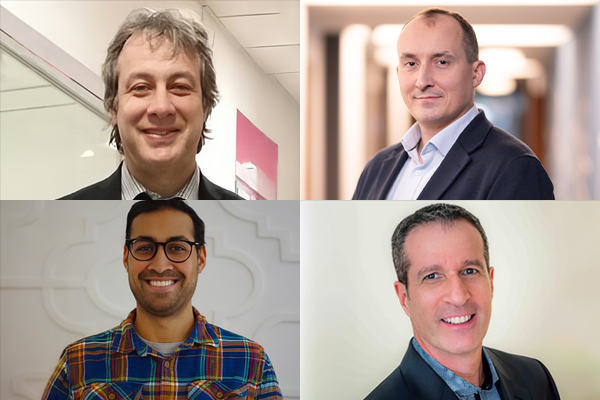
Matt Roberts, Head of Customer Marketing, Americas, Amdocs
S8 E9
02 May 2024

Matt Roberts, Head of Customer Marketing, Americas, Amdocs
S8 E8
49:35
24 Apr 2024
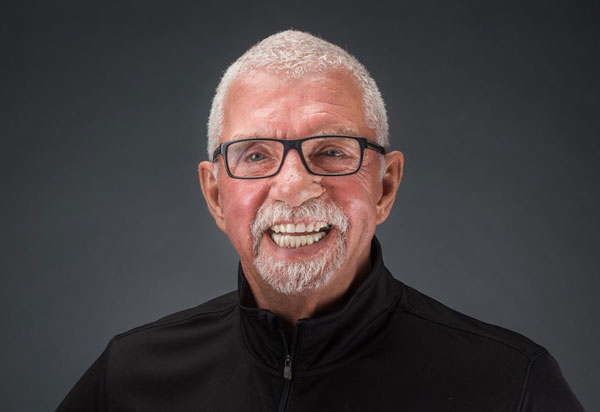
Matt Roberts, Head of Customer Marketing, Americas, Amdocs
S7 E9
45:19
14 Dec 2023
Matt Roberts, Head of Customer Marketing, Americas, Amdocs
S8 E7
17 Apr 2024
Matt Roberts Head of Customer Marketing, Americas, Amdocs
S8 E6
58:18
11 Apr 2024
Matt Roberts Head of Customer Marketing, Americas, Amdocs
S8 E5
45:08
04 Apr 2024
Matt Roberts, Head of Customer Marketing, Americas, Amdocs
S8 E4
29 Mar 2024
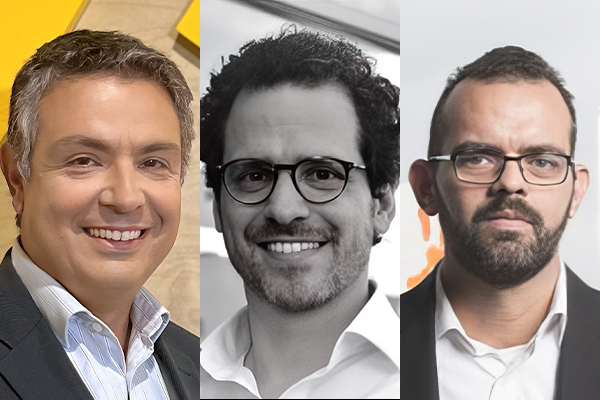
Matt Roberts, Head of Customer Marketing, Americas, Amdocs
S8 E3
53:28
21 Mar 2024
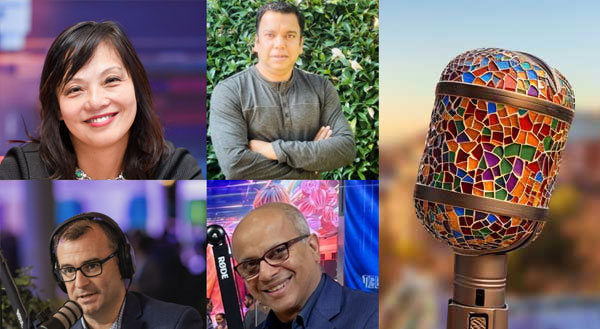
Matt Roberts, Head of Customer Marketing, Americas, Amdocs
S8 E2
14 Mar 2024
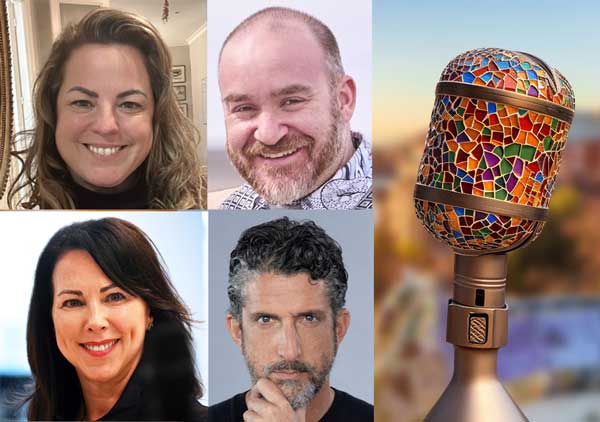
Matt Roberts, Head of Customer Marketing, Americas, Amdocs
S8 E1
07 Mar 2024