
Is it too early to start talking about 6G?
Matt is joined by two guests at Futurecom, São Paulo: 6G expert Paulo Rubino, and Futurecom founder, Hermano Pinto. Topics include 6G, the personal impact of innovation and bridging the digital divide.
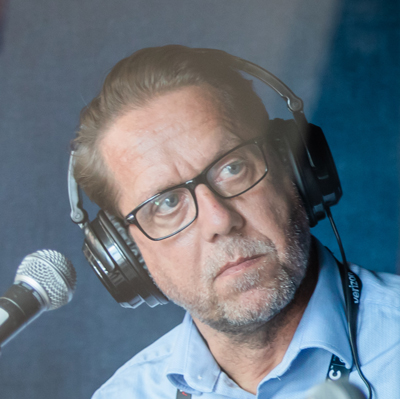
Matt Roberts, Head of Customer Marketing, Americas
S5 E12
39:13
22 Dec 2022
Please provide your details
Asterisk (*) indicates required field.
Thank you!
Your submission has been forwarded to the appropriate contact.
Okay. So oh, well, so you're here to talk about six g. Yes. Just published a book on six g. So our listeners, you know, and and we need to underneath the five g banner, There's a lot of talk about five g. The race to five g is only the United States. What to you is the biggest distinguishing element between six g and five g? This ring is all. Okay. So in short, it's the motivation. Six g is being discussed in all the research and development is focused on the human centric network. How we can provide a human centric network that really look into issues that we need to resolve right now. And, unfortunately, with the technology we have, we're still lacking other, parts to complement, to add up, and solve those issues. For instance, sustainable development goals are important aspects that technologies wireless tech wireless technologies can can resolve. Recently, we came up from a pandemic situation. We saw how important is to have wireless communications and mobile broadband communications across the globe. Right? The protect many people. Many people could go working from home, protect themselves. But apart of this, we have a fifth almost fifty percent of our world population without access to mobile communications. They cannot access to Internet. They are fragile, so we need to provide this new framework. And six g is not just speed. One terabit of of of of of of communications per second. It's more than that. It's looking to AI, how AI can be applied to solve real problems with the support of the wireless communication foundation, which five g is built upon head. And we can So and and I in the United States Yeah. Is fine to fix wireless access Yes. Verizon, AT and T Mobile Yes. And in particular having huge successes with regular. They're reaching rural communities. They're reaching underserved populated to bridge that digital divide. Six. I think five g is and has started that process, right, of, like you said, what can this technology do for humanity? So six g is is is an extension of that. It's looking at the deployment of these new networks in the light of what's good for society. Exactly. Exactly. And, also, there is a the World Economic Forum. So in Davos, and I was there this year, they they already issue some publications about, for instance, industry four point zero. Right? Because it's one of the frameworks of five g. Five g will provide this opportunity for industrial IoT to boom. However, there are many things that we need to solve. For instance, jobs that would disappear. What are we gonna do with that? Alright? And also the world population's aging. How we gonna provide a technology that will look after us? So we are talking about us and then projecting the next ten years when the new technology, six g, will come up. So we need to start thinking about this. And that's, the framework five g is thinking about to have a cognitive network as in as you mentioned, Matthew. So how to really turn this technology into a ubiquitous network? December now by December now, the world population will reach one eight billion people on earth. More than fifty percent of our population do not have access to mobile broadband, do not have access to Internet. How we can bridge that gap? Right? So we saw the pandemic. We need to protect people. We need to evolve, provide well-being to our society, and we need to start thinking the technology point of view to foster this well-being across our society. So let's talk about it technically. The ethos behind it is clear. Yes. Passerable. I think there's a huge movement for tax of good now, like you said, driven by the pandemic. It's interesting that a lot of the service providers almost have now. They feel an obligation to protect the communities they service and they get government assistance and all the rest of it. But when we look at five g as a technology, we explained it to them. We talked obviously about high speed, talked about low latency, you talk about the economics of being able to connect to all devices. From a technical perspective, what does six g add from a, if you will, features and functions as well? Yes. Okay. So we can start, for instance, from the data throughput to write from one gigabit per second to the high peak of one terabits per second, which is huge. And that's where it would be a growth? Yes. Yes. But especially for special networks, because we are talking about five g now, the five g created the prototype, the foundation for network slicing, and six g will be the same. You're gonna have a private networks with private KPIs, different flavors of six g. Right? As, serving different type of services, autonomous vehicles, okay, flying cars, you name it. Alright? And on top of this also, the important aspects people and engineer, researchers, scientists are looking at it, it's artificial intelligence. Alright? So quantum computation. So quantum computing is a very important part of this aspect because people are studying and how we can use quantum computing as a service in the cloud. So to propel new solutions on top of six g. Yeah. And for the first time, we're gonna have KPIs, real green KPIs for a wireless networks. So there are discussion, for instance, for proposal for one terabit for one terabit that you transmit, to have the the span of one job. So interesting. So we have to measure and create so many things. The infrastructure will be great. Plus, the technology because we'll be heterogeneous networks. We're gonna have optical wireless communications, no line of sight, light communicating with us, and we are moving to the spectrum of the the radio frequency that it's powerful, but also we need to mitigate because the range is not large. So terahertz, you need to do things. So we're gonna have massive MIMO so to mitigate. But MIMO itself only will not resolve. You mentioned about some telco and infrastructure. Infrastructure will be the key. We need to continue. Governments and private companies invest in the foundation of fiber. Otherwise, it doesn't matter just the front haul. Back haul needs to be looked at it. Yeah. Now one of the other interesting things about five gs and when we think about that, look at fiber chain. What we're seeing from a use case perspective, the use case is driven by a number of technologies that coalesce around five g, all those by coincidence. So we've got five g, blockchain, hedge computes, all coming together at a similar time. Right? Is there something you envisage with six g like a number of other technical advancements that have colliding, if you will, in a simpler time? Yes. There are many. So one of them, I just mentioned quantum computing. So it's one of the hearts before studying. I study myself quantum machine learning, the amalgamation between AI and quantum computing. Plus, IRS intelligence reflect surfaces. They are being studied now. There are so many, use cases and tested environment, proof of concept working. How you have one radio that the signal is reflecting in one wall and the power of the signal is being controlled by that wall. Imagine huge buildings were on the street because the the the the signal is being propagating and reflecting. You have a maximization of power and control. So that's amazing. You have also, as I said, light. Light communication will be also of great, great support. It's coming up, especially normal lights, no no site communication of lights. Okay? OWC. So we're gonna see, for instance, WiFi working as light. So many things to provide this ubiquitous microturbine. So there'll be a number of Technologies coming together. The technologies. Yes. Yes. Now, again, five g as the example is something I taught about the tablet. If we had a breakthrough this year So, we've talked about five g for a number of years. We've speculated and prophesied about what five g would deliver. And you bet there's a everyone always says about autonomous car, is it? Scars or something. I actually was in an autonomous car two weeks ago powered by Really? Nice. Wow. And I was like, okay. How was the experience? It was amazing. Really amazing. The company Did you just feel safe? We did feel safe because they have a safety driver still in this. Okay. If anything goes wrong, But I think the fact that it was it felt real. So we talked about it for so long. And really, the only commercial application five g today has been fixed one or something. And then all of a sudden, I'm in a driverless car. Right? But the point is for many years, we were speculating, dreaming we could do this, we could do that. Do you have the same sort of other bank of visionary future use tensors that six g will enable. Are you thinking about them? Yes. I'm thinking also I saw a prototype very interesting at my university, Aarhus University under supervision of my professor, professor Prasad and professor Albena, which is holographic type communication. This is amazing. So the challenges we have and have the opportunity to have allographic communication like Star Wars and the amount of data you have to consolidate, understand, to create the metaverse to to, also to transmit and recreate in the other side. It's amazing. And this is the type of technology I'm looking forward to to see it. No. It's it it is an and it links me to the matter of which I've I've talked before the matter of things, so that the nights have not. But I think the difference with them when we talk about when we look at five g, it was a very I'm worried that the four gs's. However, when we look at three g, there was dreams about what each of them could do. But the reality of what they enabled was very different to the dreams we had. And when I look at the metaverse, I'd see something that's demand driven whilst the technology is still being figured. Five g is like build it and they will come kind of grinsulated. So how do you think the metaverse itself will go to the next level with six g? So yeah. Going back to what you said about the previous generations. Right? There are a period of maturity. So the technology needs to be mature enough, and also our society, everyone that invest in that tech or utilize that technology will provide the answers. And we're gonna see big change, big change in the next three to four years on the five g. And this will create the foundation for the next level of solutions and use case on six g. I can tell you, twenty thirty when six g is ready, so we start rolling out. Not big things we're gonna see from the five the current five g that would be existing at that time. Okay? In the future. But in two, three years, we're gonna see them, new chains. But I can tell you, probably, holographic type communications will be one of the first new bones we're gonna see it. And especially because we are living the era of prosumer, so we create we are not just consumers anymore. We're gonna have people use. They go in there and create new stuff, new generations of technologies to to bring life. Now and and again, talk about previous Gs and previous the process was always the FCC would would go out of auction to the Spectrum, the service of spiders would have to invest a lot of money like they did recently with the c band, whereas t Verizon and AT and T is fabulous. Billions on the C band and Fortune. And and, obviously, it's the same with four g. Is six g operating in that same order? That's a good point because now there are there is a research how to do the return over investment on five g for instance. And the same thing is being done now on six g because people start looking where the money is. Right? And I saw many interesting proposition, but I think five g is slowly we start giving answer. I'll give you some very concrete examples because we have five g stand alone. We have you can be a a company that is not a telco and create five g nowadays. Right? Just get It's just the private. Yes. Private networks. I think this will be the future. We're gonna have the big telcos getting a big chunk of the spectrum, but also spectrum different flavors. And there is other things that is important in six g that I forgot to mention. Let's see because that's a dream to really have a six g cognitive radio, a radio that can play in any spectrum. When you don't have six g spectrum available, the radio can use temporarily another spectrum, Right? And provide connectivity to the local users in the rural areas or remote areas and so on. Can use white spaces. You saw spaces that are frequencies are not being used, but also all of this depend on regulatory. Other things that a colleague, a professor also mentioned recently in a conference I was in in Munich was the possibility that we need to start thinking to have national roaming. When you don't have a specific network covering a specific area, the other network must be able to give the service, allow to run. And about a satellite and diets? Yes. Satellite will play a big role and is true. And especially constellations we are seeing now, they are talking about hundred thousands of constellation. Don't know how this control will be done, but it's interesting. It's all unlicensed. Exactly. Right. Exactly. But also provides there are many, opportunity in areas that five g or four g or mobile broadband signals were not never reaching out. So it will be great now to see this and how the regulatory will be playing the a big role on this. Because it's interesting because recently, Apple and T Mobile have have talked in have been public about poll comps with Starlink and satellites since, you know, Musk was always wait to talk about the other he's he's providing that service in Ukraine right now. It feels he can be as but even satellites will come into the six g equation as well. Again, like you said, based on regulatory allowances to utilize that's at what? That that thing? Yes. For sure. For sure. Satellites will be a will be key players as well, especially to cover gaps in areas that satellites in areas where the mobile broadband signal could not reach, and they will continue being part of this. I think constellation satellites, there is no turn back, and we're gonna just see boosting boosting. But I think people will start looking at the space and also the debris, how we can control that. I I I had opportunity to meet one of Elon Musk's astronauts, doctor Cielnell, and the debate was okay. So how they control all these debris and how they can also foster more satellites to cover larger areas and but controlled in a good way. So it's amazing. The discussion with satellites would be amazing. Now, again, when we when I've spoken to people, many people in the industry about sixth gen, They're always like, no. No. No. I'm I'm focused on five g right now. I don't have the time to think about sixth gen. Have you started thinking about seventh gen? That's a good question. That's a good question. A friend of mine, so professor, he just mentioned something in the in the one of the last conference I attend called Conasense. Conasense is a research area that stand for communication, navigation, sensing, and services, how to bring all together. And the focus was how to foster this on six g. And he came up with this idea saying that he thinks six g will be the last frontier. Interesting. Interesting. And his name is Martijn, doctor Martijn. He said he thinks that six g will build a framework that all the next g's will be just add on. Interesting. I think the service provider supplied to it. Definitely, yes. But this has to be with the total cost of ownership, return over investment, CapEx or OpEx. And we have to operate in a way that is feasible. And also with cloud computing Yeah. Many things being done on cloud. Yeah. And tell all listeners a little bit about your book, if you will. Just be a popular story. Yes. Thank you for this opportunity, Matthew, again. MDocs, glad to be here. So my book, six g, the Road to the future wireless technologies twenty thirty, I'm co author with my professor, professor Ranjit Prasad, who is my supervisor on my PhD that I'm doing Denmark at the Aarhus University. Yeah. And and this book, I wrote during the pandemic situation, entire touring together. We brought together. Yeah. And we brought the main ideas, the the concept of six g. And these books are for everyone, not just for researchers in the field, but people that are interesting to look out what is the technology of tomorrow, what is coming up. And that's what we bring here. That's the consolidation, the synthesis. And more two books of those series are coming, which I'm contributing with other professors as well. But this book was the first pandemic baby that bring the idea for us about six g, and I'm very happy, and it's doing pretty well. Congratulations. Thank you for taking my our listeners find out more about the board and and and about your work. So the book is published by Hever Publisher. Everybody can Google six g, the road to the future wireless technologies twenty thirty. And professor Ranjit Prasad. You can find the book in all digital outlets out there. Okay? So it's available both physically and also in digital version. Now, before we finish, I've I've really enjoyed our conversation. What is it you've seen here so far in FutureCon today that you thought has been pretty cool? Or what are the differences you see in the Latin American market right now that you find quite exciting? Wow. So for me, I'm really proud to be here in Sao Paulo in this talent sea future called Boomi. And I I I will start seeing more slowly, but what really strikes me was as soon as I arrived here, I met two good friends of mine from old time in the engineerings, and they just great me in the future call is bringing people together to understand technology, and that's what is great in the heart of Latin America. So there is no better place to be right now, Future Call. That's well, listen, Paddle. I've really enjoyed our conversation. Thank you for joining our first ever I thank you. Latin American contest. Thank you very much. Down in history. I'm a flatterer, and I'm honored to be here with you, Matt. And I hope to see you again soon. Thank you very much. Great issue. Thank you.
Paulo Rufino at Futurecom with The Great Indoors
So my next guest here at FutureCon twenty twenty two, he's the creator, the father, if you will, of this wonderful event in Sao Paulo, mister Romano Pinto Junior. Welcome to the Brighton Doors. Thank you very much, Matthew. It is a pleasure to be with you here. Yeah. Just to point out that I I am with Future Come since the since the very first edition. Yeah. In when the name was not Futurecom. It was SEMINT. Okay. International Seminar for Telecommunication. Right. And the creator itself, it was a engineer from Telepar, from former Telebras. Yeah. Yeah. And then he invited several industry guys and I was one of them. Yeah. And since then, I am a counselor or something like that. And since two thousand seventeen, I assumed the position of the general director from future com. Yeah. And future comm is a big, let's say, get together from the industry. Yeah? Yes. And what we are seeing that in the in the former times where it was a a big get together from the telecommunication industry. Then we expanded to the also to the IT industry. And today is for anybody that needs connectivity. Yeah? So we have people here from health, health care, from industries, different industries, from agriculture. Yes. They had a big meeting of our agriculture technology agricultural community with more than thirty people discussing topics about the the the the the the technology that we can apply for for improving the productivity and and and all anything that is related to agriculture. So it's a great pleasure to be here with you. No. It's great. Look. And I I think you already touched on some things there that I think is really unique and and and really fascinating. And before we get into that, we're at the cusp of huge technological change now. So you've been, you know, at Futacom right from its conception and you've seen how the industry has changed and evolved. But for you personally, over the last twelve months, what's been the biggest technological innovation that's personally touched you? Sure. In terms of technology, I think the the the the the application of a x of a open architecture. I think this is perhaps the the the the the the biggest innovation that we are bringing into our networks. Yeah? Not I'm not only talk about open run, for example. Yeah? But I I anything that's related with edge computing, central computing, distributed storage, anything that's related to this, I think this is bringing bringing is bringing a a big opportunity for for lots of new players in the market. And this is perhaps causing the two main changes in the market. These are neutral hosts, a lot of neutral operators that are coming into the market. Yeah. And also the corporate private networks. Yeah. With five g slicing or not. Yeah. Yeah. Yeah. You can you can you can you can have slicing or not. Yeah. But you you it's it's focus on on private networks. I think this change on architecture, on the open architecture is really bringing new place in the market, is opening opportunities for the market the connectivity users. Yeah? And therefore, we have this this influx of lots of corporations here in the in in the show. Yeah? And I think this will really go on with bigger and longer steps. Yes. No. And it's really and I think there's a few things there that you that you've said and and in your opening as well. And I I'm really interested to get your thoughts on this because I've been in the industry for twenty five years or so. And we'd always focus on features and functions and what was the next iteration of mobile telephony and we'd we'd get but I think since the pandemic, there is now and I think I see it from everybody who's exhibiting. Whatever was what are the outcomes of all this technology and how does it benefit society as a whole? And and you mentioned it there talking about agriculture and talking about how, you know, we can improve ports, how we can bridge the digital divide. Is that something that that you see very prevalent here at Futurecom and in discussions you have? For sure. We have been having a lot of conversation with different areas of of, let's say, the the the the the the the government, yeah, for municipalities, for states, and even federal. Yeah? And the digital the digital divide is a big issue that we can solve via technology. Yeah? Yeah. And with the smaller things, not not that you have too big a a huge investment making a a Astro City from the Jetsons from the Yeah. Yeah. As you as you may remember. Yeah. Yeah. But you you can we we have we have some cases here in the state of Sao Paulo, but also we are we are talking yesterday from North Brazil in in Amazonia. When you when you bring, let's say, what we we we call the digital citizenship. Yeah? Okay. When we can give to the people that are, let's say, in the middle of the the the Amazonas forest. Yeah? The possibility of having a birth certificate to have to have documents over digital. Yeah? In order to to to to place opportunities of education, To place opportunities, we are just discussing this. I don't know if you have already heard about PIX. PIX is a form a payment form format. Yeah? That you may pay on digital format. Yeah? Right. Via your smartphone. So this was introduced in Brazil two years ago. Yeah? And this has expanded what we call the the social banking in a in a in a in a in a bigger sense. Yeah? All these things, yeah, are brought to the market via connectivity, are brought via this new technology that we are bringing in the mark into the market. And I think this is very important to us. Last year, when we have run still in the digital format, the future come two thousand twenty one, yeah, we we did a a metaverse. And one we had four islands there. One of the islands was bridging the the digital divide. Right. Yeah. And the four and the it was the the focus. So how to build smart cities, but not smart cities that really future lands. No. Smart cities that are really good in order to bring digital capacity and digital abilities for the population. And it it's amazing. And how does you know, being the the the the senior director of and and the, you know, the creator of FutureCop, to see this movement of tech for good improving the lives of of people, particularly underserved or underprivileged people, how does that make you feel personally? Very happy. Very happy. We have an action social action here inside the FutureComm that's called Safraeter. It's a it's a it's a it's a NGO. Yeah? That we that work for bring people, young people to the technical market. Yeah? So they give education, they give preparation, capacitation. Yeah? And this is very important to us because when we talk about here with with all the the the the our our our friends here in the in the the show, everyone says, we are missing about good professionals. We do have professionals. We do have a real gap in in in in in get good technicians. But you have lots of young people that are looking for jobs. Yeah? Yeah. And so this this connection we can do. Yeah. We we we have here lots of associations that are running such programs. Yeah. Not to to give the first job opportunity for these young people in the technical area. Right. Yeah. And this I think is very important. No. It's enabling opportunities, and those opportunities then lend themselves to better outcomes for society. Right? So it's it's kind of at both ends, right, from from from what you're seeing. And what do you think makes Brazil unique? I think the I think somebody once told that we are we are the land of opportunities, but everlasting opportunities. Yeah? Right. But we have we do have a lot of opportunities. Yeah. This is it's crazy how our infrastructure I am also the the the the the the director of infrastructure of Informa. I take care not only for telecom, but also construction, also sewage, energy, and transportation, so on. Yeah? And the the the there's a a huge put a lot of opportunities that we can really run-in Brazil. Yeah? And then when I I look for northeast, for example. Yeah? Northeast is a part of Brazil that is where where the poverty is growing. Yeah? It's higher. Yeah? But with with a very kind people, with a nature that is blessed by God. Yeah. It's really nice. Yeah. And we can and we have a I have a we are just running now also another show here side by Future Condens Brazil Wind Power with lots of winds. And discuss about about offshore energy. Right. But when you we and Brazil is top one in the world for for for offshore potential with more than seventy gigawatts of of of potential. Yeah? Wow. In the next ten years. And this is but in order to do this, we need connectivity. We have to to have this all these, let's say, wind plants. Yeah, connected to the grid. Yeah. And this is also a lot of opportunity for companies that are looking for that. And then we are seeing lots of new players like Brisonet, Intelecom, that you and when you look five years ago, they didn't existed or they were quite small. Yeah. Today, they are really really strong players, and it's a big change in the market. Yes. Yeah. Because then you will look to north northeast. These guys are stronger than the the the the the current incumbents. Right. Yeah. And they are growing and growing due to this big opportunities that we have in northeast Brazil. So injecting that competition and that entrepreneurship into those areas. And what do you think culturally? And I'll give you my personal observation. And it's it's and I I like to say, was in just in the last month, was in DTW in Copenhagen, MWC in Las Vegas, and we go to all the shows. But here at Futurecom, there's an energy, there's a passion, there's a warmth. Even here last night at say eight thirty, I walked from one end to the hall to the other packed with people still engaging in conversation, enjoying each other's company. And I was like, wow. This is something I do not see anywhere else in the world. And it's is the cultural side lends itself to that as well? Is is that a distinct uniqueness about Brazil? Yes. I think so. Yeah. We are, let's say, a big when I when I talk about telecommunication, I'm in this market for forty years. Right. Yep. Yeah. Then then when we when we meet when we are able to meet the guys, yeah, it's a really very nice and very we are very all always telling about some stories from the past and so on. Yeah? And the FutureCon, I think, is the big cat get together. Yeah? Yeah. Everybody goes comes here, yeah, from all parts of Brazil. Some that are already working out of Brazil that they come for the show. Yeah? And then we meet and then then discuss and we have also, you are now in this company, you are which solution you are you are bringing. Business are done doing a glass of beer Yes. Or some peanuts. It it is some peanuts. Yeah. And this is really something that is very important. When we organize the the event, yes, say, hey. Okay. The event the the the the content will go at up to seven o'clock, then the the the the event will close at nine. But yesterday night, yeah, I came out here from midnight. Yeah? Oh, really? No. They were I I went to after we had the talk with here that was here promoted by by by Amdocs, that was a great guy, and I'm I'm a very I'm very big fan from car racing cars. Yeah? We I went after that in six happy hours here. Oh, really? And it was running running running in all the people really happy. Yes. And this brings, I think, the big difference. Yeah? Yeah. And when they get the the the end the FutureComm ends today, yeah, the the people is are energized. They are really pushing a lot. Yeah? And we see this in the market in very clear way. No. And it it brings people back as well. Right? So, you know, when we do events in other parts of the world, there's set agendas, there's set things, meet these people, say this, da da da da. But I love that openness, that that social networking, people exchanging stories. I've met so many new people. I'm coming back next year because I learned great things from what's on show, what's what things are being discussed in in the plenary, but also that atmosphere, like you said, that energizing ability. It's really special and it I and I honestly mean, I don't see that in any other show anywhere in the world. Yeah. No. This is really interesting. We we I'm not telling for example, it's the Brazilian regulator. Yeah? Where where I was talking to them. Yeah? They they are really happy to be here because they say to me, Emmanuel, FutureCom is the biggest chance that we can show as regulators what we key we we do really do we can do really for the society. Yeah? Cause many people say, hey, Anatel is really to only to to make a fiscalization or to give some penalties. They're not. Anatel is here to help. And they say, future comes the big chance that we can really go closer to the market, not only for, let's say, government specialists or something like that, but go really to the market and explain how a regulator can help the market to grow. And and I think what an this statement from Anatel is valid for many of the guys that come to the the show and say that, no. There are no walls. We are here open to to exchange, to make business, and to make new friends. And I think as we stand on the cusp of a five g driven world with all the technologies that coalesce around five g, like you said, edge compute, blockchain, the move move to cloud computing. As we see all these things collide after the pandemic, there's a greater need for collaboration than ever before. Right? And and that's what this is enabling, that collaboration to take place because, like you said, without the regulator, you know, it needs everybody to play a part in this to make it a reality. Right? Right. Because the this this we are let's say, we as I said, there are lots of opportunities. Then we are open here for academy to startups, from entrepreneurs Yeah. To big companies. Yeah? Yeah. So everyone is here. Yeah. And it's interesting. Yeah. I was just talking yesterday with the guys from Inbrutale. Yeah. Claro has a Inbrutale Claro has a startup venture or, say, startup cluster. They are called Beyond. Yeah? Right. And this Beyond, yeah, they really push a lot of opportunities for the market to focus on these verticals that I mentioned before, agriculture, industry, this and that. Yeah? And they made a lot of contact here. Yeah? Yeah. Because we have a lot for example, we have a a big association for IoT. Yeah. So you have some, let's say, ground companies, but you have also the the rising stars companies there. Yeah. I noticed that with with the likes of COOL and people like that that Yeah. Ask. Yeah. And then there, yeah, you can find out solutions. Yeah? That perhaps were developed in in in South Brazil or North Brazil. We have people from Campina Grande, in Paraiba Yeah. Since Florianopolis is Santa Catarina. Yeah? Yeah. And they are not able to to make this contacts during the during the year. Yeah? Yeah. They come here, make these contacts. I I up cluster like like Beyond and the others that we have here. We have also many others that are running here around. Yeah. Kubu from Itau and many others. Yeah. So they find out business, say, hey, this can leverage my business. It will help to leverage this company. Yeah. And this is a very big I I'm happy I'm very happy to be able to promote to this. Perspective, I live in Ontario in Canada. And I came here the day before the show opened and we were setting up. And I was really I felt very at home to see the the Canada booth right next to the Amdocs one with Ontario and Quebec and a number of startups in that were there. So Futuricom transcends Brazil. Right? It has a broader, more international Yes. Yes. You are right. Because you see here the Canada booth, but they have another another country booths here. Yeah. Yeah. Some that I'm a bit hidden. Yeah? Yeah. Because you're not I saw China. Yeah. You saw China. Yeah. There is also Singapore. There's some some some some smaller. Yeah. Yeah. But also, we have some we have an area of meetups. Yeah. And we have the international meetups. So we also bring some some of the the this we we have a present for example, a meeting with the switcher. With this from from Sweden. Yeah? Yeah. When we also brought some companies, yeah, that are connecting, let's say, sustainability for for for for for telecommunication. Yeah? Some startups, how you do decarbonization or or or zero carbon and so on. It's also a topic in the in our in our agenda. Yeah? And and these companies, or these, let's say, country related associations. Yeah? They come here a lot. Yeah? They had also the Brazilian Brazilian associations. In this Brazilian industry association, the electron association. Lots of association that come here in order to to promote solutions from smaller companies, but also human resources. And I think this is also Yeah. It's it's amazing. You know that we have a lot a big lack of data science scientists. Yeah. And this is important to us. Yeah. Exactly. I always remember data scientist was like the hottest the hottest area you could go in and, you know, the the data science degrees were were were really sought after. And that leads me into into something else. When we talk about collaboration, I sat on the panel and did a presentation on the metaverse earlier this week, which was great. By the way, it it was absolutely fantastic. And one of the things we talked about was, again, that collaborative aspect, but also bringing in policymakers, the government, the lawmakers, not just the regulators, but actually the legislative functions because technology is moving so quickly. When we look at the metaverse, it's a it's a good example. We look at what social media and the downsides of social media that we never anticipated and still in the United States, the law that FC the section two thirty of the communication decency act, it can't catch up. It's so far behind where technology is. Is there an opportunity to involve the legislators, the actual government into these into a conference like FutureCon so they can start thinking and anticipating what they need to do to protect society. For sure. For sure. This is very important. This year, we are celebrating the twenty fifth anniversary of the Brazilian LGT. That is the Brazilian law for telecommunication. Right. Yeah. That enabled all this privatization process that we came through. And this law was the end of last year updated. Yeah. With big impacts in the market, like, for example, the ISP is growing. Yeah. The the possibility of of some non incumbent buying five g spectrum. So this was a big this is a big change. And when we bring people here from the legislation, yeah, from the legislative power, yeah, I think this is very important to show to them what is market exchange. Yesterday, I had a meeting with the the Brazilian protection agency data protection agency. Yeah? And we talk about artificial intelligence. Yeah? Because today, when we look and this was the topic there, we're talking to this to to the agents. Yeah? They they asked me about how artificial intelligence will change the the dynamics of data protection. So so they are thinking about how an authority that has to deal with with some some deputies and senators, they can talk about in order to prepare the laws in in order not to to to to to not put ops obstacles on this evolution, this normal evolution that the artificial intelligence will bring to the to the markets that you will use this for data protection or not. Yeah? Yeah. And this is and these talks, they raise here because the people say these guys that are not there in Brasilia or in some gap gap cabinets. Yeah? Yeah. They don't see this in the in the in the daily in the day in their daily experience. And they come here, they see this, and they come to to ask them to make questions. And also, we have we had see today is you know, that we had in the elections. Yes. So so no many there there are some some many politicians that are now Preoccupied. Preoccupied. Yeah. And they come here not to make the, let's say, new observations to to to in order to prepare their new laws that they will build. And it's very important to us. Very important. Very important. So we're almost at the end of FutureCon twenty twenty two. It's quite sad. I fly back tonight. So what are your takeaways from this year's event, and and how will that shape what you're thinking about for twenty twenty three? I think one big topic is application is king. Everyone that's come here that's looking for application for their own vertical, for their own business. Yeah? So when we talk to these guys, they are looking for this. So we see lots of new brands running here throughout the the show Yeah. From Volvo Ford to banks like Itau Bradesco. Yeah? From agricultural companies like John Deere and so on. Yeah. Yeah? They are running here looking for solutions, connectivity solutions, and also looking for partners because their expertise is the industry, the agriculture, or something like that. So we are and we show our show brings the the expertise for technology, for connectivity. Yeah. And this is the this partnership, this is very, very important. And as I said before, application is king. So this is number one. Number two, I think this is also very important to us that lots of investors are coming. Yeah? Looking for the opportunities. Looking where to invest their money. Yeah? Yeah. So we we have here lots of investment funds running, looking for these opportunities, these and that. This is a big a nice thing to invest. Yeah. And we have also move of mergers and acquisitions in Brazil by by now with the ISPs. We have more than nine or eight thousand ISPs in five thousand cities. Yeah. So it's a lot of opportunities there. Yeah. And and these ISPs are really growing very fast. Yeah. So we have also to let's say, these guys are looking for this such opportunities. And I think by the end, I think also that's important. I always say this. Yeah? Future com is a big career show. You come here, you are I'm not saying this for for for ms docs. Yeah? But you come here with your CV and you can exchange some let's say, bring your CV. I am looking for opportunities so so on. Our corridors here, we know. There are lots of headhunters. Lots of headhunters. This is very interesting. Yeah. Many people don't know, but they are running here. Yeah? Yeah. Looking for new executives or new technical people. And this is also I think that is something that I always say, I know lots of people that have have have changed their way the the the the the has find found a new a new a new job here in Futurecom. Yeah. No. It's it's and I would add to that as well. New friends. Yes. New friends. Yeah. You know? Because it's interesting. You know that Brazilians are are very open to tell their private lives. Yeah. I lived for seven years in Germany. Therefore, I can really say that it's different. It's very different. Yes. Yeah. Yeah. We take years in Germany in order to to to to to tell about your private life. And here, you find the guy, you meet there for the first time, and one hour after you you you you found the guy, you are talking about your mother, your father, your sons, your children. Yeah. And this is very interesting. It's no. It's really and that is one of the personal reasons I love the warmth and the energy of this show because, you know, it's it's it's been really wonderful. So as we get into the end now, Germano, and I've really enjoyed our conversation. Give me your big prediction for the next ten years. What do you think is gonna be the big thing? Because if we turn the clock back ten years, we were just getting into the world of LTE and four g. We hadn't envisaged things like Uber or TikTok or DoorDash or what that would do for us. If we look forward ten years now and we like to speculate, we like to dream, what would be your dream? I moderate in the afternoon a panel about six g. Yeah. Yeah. Yeah. I I had the gentleman who was keynoting on six g. Yes. Yeah. Paulo. Paulo Henrique. Paulo Enrique. Yes. Yes. So I think when we we look the move from five g to five six g, you are you are looking for a more personal and interactive Internet. Yeah? Where all the all all the all your feelings can also go through the bits. Yes. Yes. Yes. Yeah. There are we we will talk about this because there is issues about ethics, issues about morality. But I think this is a big move that we do. Yeah? We have a many conversations with as you talk, TikTok, why? All these guys that are running Yeah. Short videos, short contents, and so on. Yeah? And and we see how youngsters really interact in the in in the market via a game like a metaverse or something like that. Yeah? So there's Fortniners. Fortniners. Yeah. We have here also some some companies that have have brought lots of things about e games, e sports. Yeah. Yeah. And I think in the future, I think this interactivity via digital, we will continue to grow. I don't know what what is the limit or if there is a limit. Yeah? For me, as not anymore any youngster, for me, this human relationship is very important. Yeah? But I I see really that this interactivity via the Internet, via the via the via the digital means, yeah, will will continue to grow. But but when we I look in future, it's a strong focus on b to b. Yeah? Yeah. That's the big issue in ten years are safer industries, more secure interactions, more predictive behaviors in the machines. Yeah. I think this is what I look for the future to have really big opportunities in the market to be to be to be followed up. I think and when I talk about this, have mining industry, we have the chemical industry that really unsafe or or or a dangerous industries. Yeah? And there, I think there is there will be a big change. There will be a big change. And this brought to connectivity, brought through automation, brought through security. It's amazing. It's poetic. Yeah. I wanna thank you for joining us today. I've really enjoyed our conversation. It's been fantastic. I just wanna ask you one thing. We're in Brazil. What's your prediction for the World Cup? Brazil. It's very easy. Okay? Couldn't put my money on that one. And I am You said you lived in Germany Germany for seven years. Yes. I was thinking Yeah. Is there a is there a would you be rooting for them at all if if any When I eventuality that Brazil went out with the tournament. When I was living in Brazil, Brazil won from Germany in the Alright. Yeah. In two thousand two. Yeah? But I think it's there is a big you know, that Brazil is is is is really really a hunger for soccer. Yeah. It's Yesterday, during our our our talk with with, lots of people were telling me, Emmanuel, we have to close because there is flamingo you play. Yeah. Yeah. Yeah. Yeah. We we had to race to the restaurant because our driver Yeah. Yeah. And therefore, as I I will be running also an event with the Brazilian association for for for for energy commercialization. Yeah? The in Bahia. Yeah? In the to be there is a the the first game in Brazil to be against Serbia. Yeah? Right. Yes. So all the guys say, we go to the the the meeting, to this to this business meeting. Yeah? Yeah. But during the game, no no no business. It's only the game. Yeah? So Brazil is is really crazy for fruit for for for for soccer. Yeah. And we we we I think everyone believes that Brazil will be world champion again. I think so. And I'm a Welshman, Harish. I'm the my team whales have qualified for the first time in my lifetime. So I'm really excited, and I think it's gonna be fantastic. You know. Yeah. It is Brazil was first the first time world champion, played again the way against the Wales, one to one to zero. Yeah? Yeah. It was the first goal from Pele in a in a World Cup. Alright. That's a really interesting Yes. So we say, Wales there, Brazil will be Czech. Brilliant. I really enjoyed our conversation. Thank you for joining us here on the great indoors, Hamona. It's been wonderful. Thank you very much. Thank you. Thank you very much.
Hermano Pinto at Futurecom with The Great Indoors
Dec 22, 2022
Is it too early to start talking about 6G?
In this special bonus episode, host Matt Roberts of Amdocs sits down with his next two guests at Futurecom in São Paulo, Brazil. Futurecom is Brazil’s biggest telecom and technology show, bringing together some of the best and brightest in tech and communications.
“We have almost 50% of our world population without access to mobile communications. They cannot access to Internet. They are fragile so we need to provide this new framework and 6G which is not just about speed. It is more that. It’s looking to AI and how AI can be applied to solve real problems with the support of the Wireless Communication Foundation which 5G is built upon."
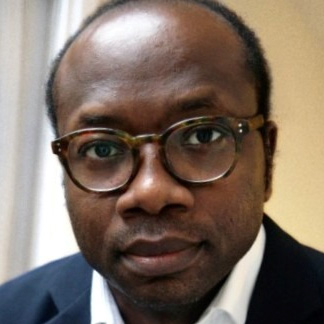
Paulo Rufino, author of 6G: The Road to the Future Wireless Technologies 2030
In this episode, Matt sits down with Paulo Rufino, the author of 6G: The Road to the Future Wireless Technologies 2030, for a discussion about 6G technology, including the biggest distinguishing elements between 5G and 6G.
“Futurecom is the big opportunity where we can really go closer to the market, not only for government specialists, but go to the market and explain how a regulator can help the market to grow. We are open to exchanges, to make business and to make new friends.”
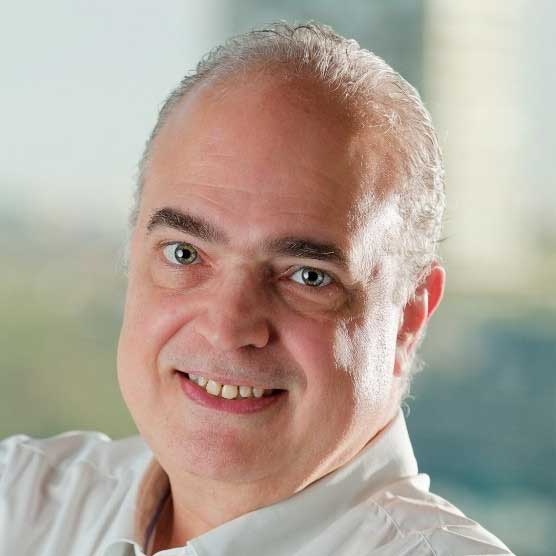
Hermano Pinto, creator of Futurcom
Racing driver
Next, he sits down with Hermano Pinto, the creator of Futurecom. Hermano shares his perspective on recent technological innovations that have touched him personally, as well as how we can continue to bridge the digital divide.
More in this series
Matt Roberts, Head of Customer Marketing, Americas, Amdocs
S5 E11
15 Dec 2022
Matt Roberts, Head of Customer Marketing, Americas, Amdocs
S5 E10
49:36
09 Dec 2022
Matt Roberts, Head of Customer Marketing, Americas, Amdocs
S5 E9
38:39
01 Dec 2022
Matt Roberts, Head of Customer Marketing, Americas, Amdocs
S5 E8
23 Nov 2022
Matt Roberts, Head of Customer Marketing, Americas, Amdocs
S5 E7
17 Nov 2022