
In Brazil how does technology enhance entertainment and sport?
In this special season 5 bonus episode, Matt casts from Futurecom in São Paulo, Brazil, sitting down with Brazilian TV host and personality Zeca Camargo and racing legend Max Wilson.
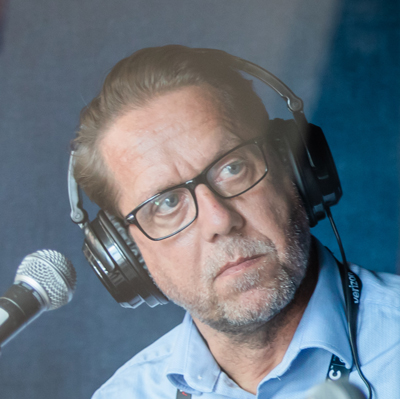
Matt Roberts, Head of Customer Marketing, Americas, Amdocs
S5 E11
15 Dec 2022
Please provide your details
Asterisk (*) indicates required field.
Thank you!
Your submission has been forwarded to the appropriate contact.
So here we are again In Sao Paulo at FutureCon twenty twenty two. It's been an amazing show so far. Personally, I've had a blast. But I'm really honored and excited to welcome my next guest to TGI here in Sao Paulo today, mister Zacho Kamaga. Kamaga. That's it. Thank you very much, Matthew. Thank you. We we met a couple of days ago at a at a panel. We had an amazing discussion. Yes. Many thoughts about the future. And, again, I myself, I put some some spice on that asking about the future of entertainment if that's my area, that's where I work. So let's talk about it. Well, and I see this as very much revenge from my perspective. You asked the questions the other day and now I'm gonna give you some the other foot as we say. So I think we can have some I I think that's what we need to talk about is the future of entertainment. We're at a technology show. Yeah. We're seeing new things. We're speculating about the future. Sure. But before we get into that, just for our listeners, Safiya, please give us sort of bio, if you will, The short version. The condensed version. The version. You have a fascinating career. Indeed. Actually, today. Actually, today, we're celebrating my my my premiere on TV. Twenty two years ago to this day, actually, thirty years ago to this day, opened MTV Brazil. And I was there right at the beginning doing the news. Mean, and that was like something quite daring at the time. Of course, there was already MTV UK, actually MTV Europe, and then MTV US as well. But that was like a new horizon for Brazil, for Brazilian young viewers, of course. And I was there, like a kid doing television and discovering everything, you see. That was like again thirty two years ago. And then of course afterwards, I had a previous experience with a newspaper, working with cultural journalists as well. Yeah. And then from MTV, I went to work for Global Television, which is like of course, the biggest network in Brazil, South America in South America. And I spent twenty five years there working very different shows, news shows, but also entertainment. And we did, I was the host for the first, very first reality show in Brazil, which is which is a version of, the original name, Survivor. Oh, yeah. Yeah. Right? Yeah. Yeah. Yeah. Big hit by then. That was in the year two thousand, actually. Yeah. Then I went back to news, entertainment, everything. And now I work for another TV show for another network called Badger Engines and and it's like a a quiz, a pop culture quiz. I love pop culture. Right. That's what I do. Not just on television, but I work on I I write for newspapers, blogs, and and portals, and and any news organization that invites me to write about pop music and pop pop culture actually. I started with music, of course, and TV, but Yeah. Movies, series, books, cartoons, whatever. I just love it. And of course Yeah. I hope I can still do that that in this brave new world that we're facing here. Well exactly and things are changing and I think you know the change we're on the cusp of right now is the most radical change any of us have experienced in our life. Right. But in the last twelve months what's been the biggest technological innovation that you've personally embraced? Something new. Gosh. Whether it's a product or something that's helped you in your everyday I I have a confession to make. I'm I'm I'm a late adopter of things, you see. I should not even mention which iPhone do I have because that will be a shame for you. But it's still what I'm most excited about is like as working with broadcast, we do a lot of covering. There's a World Cup coming up here, and TV Bandido Encius that I work for is very involved with that. So personally, I don't really got involved with any new technology, but I've seen and I've participated in some trials with new equipment and the possibilities. I'm look really looking forward to to the World Cup, of course, for this for the soccer, for the for for the games, but also for the covering. That will be quite exciting. You will be able to watch fantastic points of view and and and and new image exclusively for you. I mean, there's a plethora of of of possibilities and then what really excite me and I'm being involved into that. Not I don't cover sports. I I cover pop culture as I told you. Yeah. But being at the at the station and Budericius is a major player when it comes to sports, you see? Yeah. So I'm involved with that and and I can see the the the enthusiasm of everybody saying, look, this will be a totally different World Cup because people will experience it in a very different way. Yeah. So can't wait for that. No, and it is amazing, isn't it, to think that, yeah, this World Cup is gonna usher in a completely new way of consuming live content. Right. It's a whole different ballgame. And I think that this will definitely change the way people consume sports, entertainment, everything. It's like a big trial. It has happened already. And I remember the first coverage of World Cup and also the Olympics through the Internet. And I, my major career was in network, TV network to say, oh, that's gonna be a threat. And what I learned at that time is that it's not a threat. I mean, we can aggregate things. See, just expand, I'll say, haste the experience of enjoying a game, a competition, a moment of victory or stuff like, or sometimes big losses as well. But it's gone a bit different. So the more technology advances, I think, the more we'll be able to to share things, to get closer, to get to get exclusive views. I I I I'm a I'm a very optimistic person about technology. It's not like, oh, it's gonna kill this and this way of covering stuff. No. It's just gonna improve everything we know, experience, and learn about entertainment. You see? Exactly. Exactly. And it was Max actually, the racing car driver, I asked him a similar question and an example he threw at me, said, well, imagine watching the Formula one race Exactly. As if you were the driver because we put cameras inside the helmet. Right. You're not the You'll the metaverse and rather than just watching it on the TV, you'll be the driver experiencing as if you were part of Isn't that a great point of view? And when it comes to matches, you can be seen as the best seat in the stadium. And again, let's talk about a rock concert, a pop concert, you see. You can be sure, you can be sitting on stage if you want to see this really close to your idol, to your favorite singer, to your favorite band. You can try even to emulate playing guitars with the band, you see. So this is so exciting, you see. I'm it's it's like, of course, and when I talk about that, people say, yeah, but it will this will diminish the experience of enjoying music. Say, quite contrary, you see, because the music is gonna be there every time, all always. Okay? Oh, yeah. Nothing, a game, a match, a race, or a concert, or movie, whatever, A play, a theater play. There must be like some original stuff, so you can start with that. And I think all technology and all kinds of involvement connection with this experience departs from this original work, you see. So I think artists, players, whatever, they cannot be deceived by this experience. On the contrary, it will be more rewarding for them and of course for the audience that that that experience and share that too. But I just thought of a great analogy based on what you were saying, Antonio. And and it it takes me back to you starting at MTV. Yeah. Right? So and you you said something that the music's always gonna be there. Yeah. The music was always an audio sensory experience. True. And when you started on MTV, it became an audio and visual sensory Exactly. Yeah. And what we're talking about now is it's an audio visual immersive participatory experience. Right. So you're actually the music will remain the same, but the sense is it's stimulating and engaging with from a human perspective broadens. Well, I can't really say it's just gonna add to the experience. See? Yeah. One of the big questions about the beginning of MTV is they, oh, yeah. It's gonna kill I mean, actually, it didn't happen in Brazil. The first video clip played in Brazil was by a Brazilian singer, Marina Lima, special version of the girl from Ipanema. She's saying that in a very mixed way. But in the US, I'm pretty sure the first video ever was a song by the Google's Eye video kill the radio star. And what wasn't that like a like an omen, you see? Yeah. No. It's true. I mean, there was something in it that they like you said, they predicted that the MTV and and the video TV generation would destroy radio. But it didn't. Look what happened. Yeah. I mean, forty years of MTV in US, thirty two years of MTV Brazil, it's still there. And I think it's just I mean, the breakthrough, you have to maybe not to convince but let people know that they will not lose anything in that experience. Mean, sometimes because people especially from my generation, they have a lot of a lot of nostalgia for that MTV. The m you know, MTV is important to say, it's still around. You see? Yeah. But it's more like a reality show stuff. In Brazil, there's a lot of comedy pieces and whatever. You can you can transform yourself. You can become anything you want. But people approach me sometimes, people from my generation say, you know what? I missed that MTV. Oh, that experience. Oh, the good old days of MTV Brazil. Yeah. You know what? You want to watch a video now. Why people turned on to MTV by that time? Because they wanted to watch the video of the music they loved. So you wanna watch a video now, where do you turn to? To your phone, you see? There's no way Yeah. It's it's it's totally bold to say, oh, let's premiere this video on TV. When you can catch it, I mean, a video released in, don't know, Korea race, the Korean bands are big You can experience in Bahia, in Brazil in seconds, just that. So you have to, people that are not that early adopters, to let them know that, hey, your experience is gonna change and it's gonna change for the better. And the thing is, if you want me, and I'm asked this every time, very often I talk at universities, at young students of journalism and stuff, so what will TV become? What's the future of television? Say, you're asking me? You should be asking yourselves. Because you guys with twenty years old Yeah. You should learn or at least you should you should be trying to learn the answer to that. I'm gonna a almost sixty year old guy, I'm gonna be happy to embrace that. I might be thinking sometimes, I said, watching what Ben DeRentes is doing for the cover of the World Cup, and say, oh my god, I gotta get this to my show. Maybe I will try to this idea. But you guys, the younger generation are thinking of new ways to express, to engage people, and finally to enhance, as we said, this whole experience of just watching a show. Could be a sports show, could be a political show indeed. It's less fun, but still and or a show business, whatever, see? You said something there that triggered that's made me think of of something else that's fascinating here. Because music artists, they wrote a song True. They recorded the song Yeah. They released the record. Yeah. The record sold and that was it. But when MTV came around The musical artist had to write the song, record the song, and then create the video because the song would only succeed with the video that backed it up. Yeah. So they had to add a different media element creativity. Oh, and they came with some masterpieces, you see? Exactly. It's not it's not like you're losing anything. It just there's more ways to communicate to to communicate with your audience in break just go for that, you see? Yeah. Because I mean, some artists, let's say, the most obvious ones Michael Jackson or Madonna, they became pioneers in in in inspiring people to watch or to experience music in a different way, you see? And you can and that that will not make the songs, the craft of songs smaller. All the country is gonna be bigger. I can their artistic palette. Exactly. As And that we're talking about short business, but you can see that with everything that you deal with. I'm a journalist, you see, and I started at a newspaper before MTV, there was Foley de Sao Paulo, where you worked before. And what was my job by then? I would go, I would talk to somebody, report a thing, come back to the editing room, write a piece on a sheet of paper, actually. Was how it happened at that time. It was back in nineteen eighty seven. And okay, it's got then print and the next day, the story will be there. Hey. If I go for a story today, I have to do a video like that, maybe record one, two, three stories, try to think something about how to engage more people with reels or TikTok, whatever. And also come with headlines and stuff, things that might work at Twitter or something. So it and it's basically the same thing. I'm writing a good piece of news, you see? But the way I want this to reach people, this will definitely gonna change. Yeah. And it's not just not not just like, oh, there's infinite possibilities, but we there are, but we're trying to see what will lead. What will be the major way of expressing it and and making this arrive to more people, see? Like like this, you see, we're recording this on a video, right? Yeah. We're broadcasting this as well as just the audio, audio. If you can just listen to that. Yeah. If you put some titles, if you added some image, I mean, it can become a TV show. So what is it actually? If you if somebody really open a social media, a social network, it can become a live, you see? So what are we doing here? A TV show, a live, a broadcast, a podcast. We don't even have a The lines blurred. Exactly. The lines of blurred, yeah. And this is a good thing, you see? It's not the opposite. Let's just explore it. No. And I think it it takes us back to the panel we did Earlier this week. And we were looking at the we talked about the metaverse specifically. Yeah. And in the same way we saw the transition with to MTV in the video that some of the pop concerts from Arianna Grande, Justin Bieber Yeah. Yeah. They're live in the metaverse. They're already happening. Right. Yeah. Yeah. Happening. So that, again, we're seeing that shift from, you know, that that that progression into these new technologies from a younger generation. Exactly. But it's happening. It is. And of course, some critics would say this is like dangerous, you see, because we're becoming less humans. Remember, at the end of the panel, I say, what are we what are we facing now? You mentioned in your speech, are we going towards a dystopia or a utopia? It's like, it can work both ways. I mean, and you know already how social network can be destructive, right, and and sometimes even dangerous if you don't really use it for the good, with good intentions. But I think when you when you this is probably with every technology from telegraph to to metaverse, everything can go both ways. But I'm still, I can be I I want to be very optimistic because, again, as I said before, there will always be something made by humans. It could be a piece of a news piece. It could be a song, a short video. It could be a talk between two interesting eyes. See? Yeah. There will be always a human touch. Either you experience it live. This is going to become rarer and rarer, of course. Or in a metaverse, can still you can only start with some human touch. And I I I love that. So I'm not at all afraid of technology. I'm not afraid of becoming less human or dominated by technologies and say, oh, we're we're becoming less a person or no. That's that's that's It's not the balance. Exactly. Well, and It's it's and it take it's the it's the notion of transhumanism which you mentioned example, when mankind created fire Sure. Stomach changed. So you need to when man created mankind created the the book, their memory capacity shrinked over the next few hundred Right. Because they didn't they could write things down to get so you think, what happens to our physicality in the metaverse? Do our eyes diminish? Do our ears I mean, there's that element. Right. We don't know what's going to happen. Experience is so far very small to know how we're going to overcome this. But again, the very good examples you gave us before, we learn to adapt, you see. Look at us now. Where are we? We are at a better world. We are better beings, you see. This is not a self help podcast. But we just I'm just trying to show that, yes, we have Yeah. It's progression and we have an enormous capacity Yeah. Of adaptation Yeah. Yeah. For for the good. We adapt for everything. Adapt even to famine and even horrible things. But if we are have if we have technology, science, gadgets, whatever to to I think I I I love the to say, to tease us with this because sometimes they say, oh, new stuff, I don't know. I I would experience it. You know, those old guy old minded guy say, no. I want to listen to a music in vinyl. Listen, I still have my collection in vinyl. I love it. I love the sound of the needle. Like, is great. But again, if I could have this singer performing this as I could almost touch me, touch him on stage, Would you say no to that? And another example, getting that balance right and augmenting it is driverless cars, right? So Yeah. If driverless cars come along, we all of a sudden stop driving. I think the driverless car gives you the option to say, I will drive this leg of the gym. Right. Exactly. And when I get into Sao Paulo, I'm gonna sit back and let the computer take off because the traffic's a nightmare. Something that should augment and enhance what we enjoy doing. But I guess sometimes I feel like we we are suspicious of our own kind. See, it's like, how can you I mean, can I really ride on a driverless car? Yes, you can. You see, you you have to trust technology. You would watch an airplane at the beginning of life center and say, no, this thing's not gonna I'm crossing the ocean with this. Look what happens to us. Now although, I would say I travel around the world, I do travel a lot, that's my big passion besides pop music and I'd say, there have been talks about a pilot less plane and I'd woah, we'll get there? Yeah. Yeah. Would you consider flying on there? I would think twice, but finally, you see, just just just going up on a plane is a really daring experience, you see? And a plane is almost already semi autonomous because in like the driving example, you switch it to autopilot. Listen, we know, I have friends that are pilots, people in my family are pilots, you know, they're always there, they're very engaged to what they're doing, but like seventy percent of the time they're just watching machines run that plane, which is fantastic. Love the presence of humans there, machines are there for us, not the other way around. And it's funny because some of the things and I'd to get your perspective on this, because some of the things in the entertainment world forecast the future Indeed. In in its sort of not a parody, but in it so if we if we look back on things like Herbie, Herbie or Knight Rider, they were a computer driven car, right? Exactly. Reality is coming to be. Right? If we think of The Matrix, the movie The Matrix Yeah. Which is dystopian. So hold on a minute. Isn't the metaverse a bit? Matrix y. But yeah. Well, but this yeah. But all these things you mentioned actually put us on an edge. And that's interesting. We should not again, I mean, we we my campaign is to embrace technology always, and it's just becoming more and more fascinating. But still, I like the idea that pieces of fiction of a movie, a a series, a book make us think twice about it. Because, okay, putting us on an ad, say, okay, I'll go and I'll test and this will make scientists and creators more concerned and more engaged with their inventions and with their new technologies. I think this this little game between, again, dystopia and utopia, it's interesting because move us forward and always we will be we will side with the good experience. This is the the examples in in science fictions. They can be apocalyptic sometimes, but they also prove if they're good movies, good series, and also good books, that we will have the capacity to learn without mistakes. And good will come through. Because all those movies, know, they show a little hope. Yeah, humanity triumphs in the end. Exactly. What I'd like to think is that, again, when people ask me about what is the future of television? And you know, what is the future of fiction? What is the future of science fiction? We are at this moment now where like a lot of stuff that science fiction predicted came through, you see? Yeah. So I think there's also thinking about entertainment, a big challenge for creators of of a content. Say, so how are we gonna talk about the future now? Because a big part of our fantasy about the future is here, see? Yeah. We're still not walking in uniforms. We're still like eating good stuff. Thank God. I'm not I think you've tried some Brazilian food, so you know what I'm talking about. Yeah. But in technological terms, we're there already, you see? Yeah. So it's up to you guys, creators, these people, writers, directors, visionaries to come out, come with come with some new ideas about the future. I'll be I'll be hungry for them. You know what I think it's done? And I think this is a really this is a good conclusion, I think, to the future of entertainment. It's democratized the creators. Yeah. Absolutely. I can be a creator now. Absolutely. Your daughter can write an alternate ending to a Harry Potter novel. Right. Right. Publish it online and and get engagement and dollars. Absolutely. People are empowered to be creative. I've just read this week a story about a writer. She has like in the last year, she had like seven books on the top ten bestsellers list in the New York Times. And she became, wow, at home doing her own thing, own thing. And there's some good stuff. And music, like music. If you if you think about Justin Bieber, or in Brazil, we have this guy, Luan Santana, that also started on the Internet and the YouTube, you see. And they became major stars. So and okay. And then people at TV networks or major record companies, they had to just change the way they they they look for new talent, you see? It's more it's more laborious. It's more difficult because you have to watch more things, select even the the work of selection, creating, maybe maybe maybe you say that. It's more complicated, but again, fascinating. We have more possibilities because everybody now can do their own stuff, you see. You don't have to become a Justin Bieber or a Lua Santana. The way that people can just express themselves, you see, they will find their own niche, you see? And that's so good. Again, you can I mean, even for my generation, I know I'm a writer mostly in news, I live in television, I I write? But back in the eighties, you could write your your stuff and you would show to a couple of friends, you see? Yeah. And that will be it. But now I can do, I have my blog and I even I publish books and people buy them. I can bypass major publishing houses. If I have a song to sing, I could buy record companies. Just do your own stuff. You might hate it big or you might just be happy with expressing yourself to share yourself and share. And you know, I guess the personal example of that, have an eight year old daughter called Matilda. She's got a YouTube channel called Matilda's World. Oh, that's so don't know she's recording video or something where she feels like she's achieved something and she wants to share that with her YouTube That's it. She, of course, she'll be stimulated by that. Her friends will say, oh, we can engage to that and she can even if you're a small network, that's a way of engaging. In a way, you know what? It's a contradiction. We're becoming more humans. Exactly. Technology for the doomsayers. Yeah. We are actually capacity people to be more humans with technology. Express and share. Express and share. Yeah. So listen, we're almost out of time. I've really enjoyed our film today. That was good. That was amazing. Yeah. If we met again ten years from now Oh, man. At this very show, we may be a little bit, you know, a little bit You know? A little bit wiser, but what would be your big prediction? First of all, we'll be meeting at a multiverse, definitely. Not here. I mean, and and I will be again optimistic about it. I mean, we're going to explore levels that we haven't even thought about it, you see? Yeah. So and I hope, Daniel, this time I'll be seventy and I don't think you're gonna live forever. That's not the point here. But we're gonna I'm gonna be sharing this experience again with with people with of every generation. Every every every circle of interest. I mean, it's gonna be so open, so engaging that I can only see as as a good thing. It might not be myself here wearing this white shirt bra with textile from India. It could be whatever I want to be at that time. You see, I'll be maybe younger in the metaverse. I'll be myself. I can be older, more experienced in the metaverse. But we need what we we will not lose is this capacity to talk and to exchange ideas because and that's that that will be the day that you totally lose that. Yeah. And I think technology is on our side about it. Wonderful finish. I've really enjoyed our conversation. Indeed, Matthew. Thank you very much. See you in ten years time or earlier. See you in ten years time in the metaverse and my avatar will be ten years younger. That would be the difference. Bye. Brilliant.
Zeca Camargo
So I'm really honored, excited to be joined by our next guest here on TGI at Futurecom Sao Paulo twenty twenty two. He's a former racing driver. He's a TV commentator. He'll be speaking on the main stage about how technology is affecting motorsport. So I'd like to welcome to the great endorser today, mister Max Wilson. Thanks very much, Matthew, for having me here. It's a pleasure. It's an honor to be with you here today, and let's talk about technology and motorsport. Well, know, I mean, I'm really excited about this because we've never spoken about motorsport specifically before on this show. We've spoken about baseball, soccer, cricket, some other sports, but we've never got into motorsport. So I think this is gonna be really exciting. But before we get going, just staying on the theme of technology. What is an innovation in technology or a product or something that touches your life personally that's been quite what's so impactful to you over the last twelve months? In my life, my personal life? Of course, you know, mobile phones, you know, it's on the connectivity is one thing so important now for everyone nowadays. For family, like, I got a son and it's always good to find out where he is or be in touch with him anytime we want. Yeah. And it's good for us that technology has advanced so much in the last few years as far as, you connectivities and then the quality of the technology of today. And for sure for me is the connectivity, of course. Particularly in the last couple of years of the pandemic. Definitely. You know, seeing my son having, you know, online lessons, you know, because he couldn't go to school or nobody could go to school. And the kids, you know, kept in touch online as well. So during this very hard period that we know we all came across, technology and connectivity was really a big played a big role in our world today. Excellent. Excellent. And for our listeners around the world, can you give them just a one minute elevator pitch or one minute elevator bio on your history today, Matt? Because it's pretty fascinating. Thanks. Thanks, Matthew. First and foremost, I apologize for my English. It's a bit little bit rusty. Perfect. Perfect. It's been a while since I haven't talked that much. Spent a lot of time living in English. Exactly. But Thank you. But actually, I'm a racing car driver myself and I started go karting when I was ten years old. And I came across all the series over in Brazil, all the categories over here in Brazil from go karting to from a four, from a three. And then I went and moved to to Europe. My goal, my dream back then was to get in f one, become a f one racing car driver. And I got as far as test driver for Williams Grand Prix, a British team, a very very big one. And I was very proud to get that far. And when I got to Williams, Williams was the running champion back back in the day, it was nineteen ninety seven. And from there, I I moved to America, also racing. I did some IndyCar racing back in the States. That was in two thousand one. And then from there, I ended up in Australia. Down under. So it was a long trip, but it was a great experience to live in Australia, not only because of the race and motor sport, but Australia is a beautiful country. And then after twelve years on the road, I decided to come back home and came back to Brazil to be close to my family, parents, friends. And as much as I have done a lot of a lot of friends throughout these years, know, in the place I lived in, But it was good to be back home and here I am today. And today, I'm still doing some racing. I'm a director in the Porsche Cup Brazil. It's a series that we have here in Brazil. And also, working the broadcast of the f one, you know, commentator as as a commentator as well. Excellent. Excellent. Now I know you're gonna be speaking on the main stage in a moment, and we can get into some of the details. But I think and we spoke about it before, Max. Technology and data is having a significant impact on motorsport, specifically Formula one. Just give our listeners a sort of what it's doing, how it's enhancing the sport, and the sort of data you're to improve the efficiencies. As you mentioned, Matthew, you know, sport and technology, they've been walking hand to hand for decades now. And even sports like cricket or soccer, sports that we don't even know that the technology is involved, but it is. And especially when in a sport where you have a machine on board of it, like a race car or motorbike or something, technology became even more important because it helps a lot of drivers, talking about motorsport, but also about the machines, about the cars. So talking about the drivers first, motorsport is a kind of unique sport in a way that first off, you don't have a coach. Normally, you don't have a motor like a racing car driver coach. Right. You know, the guy, sort of the drivers try the error and they'll make things right and wrong and then he finds out it's There's a lot of instinct involved. Exactly. Yeah. So techno technology mainly on the data acquisition thing, part of it, is change the sport big time because in a racetrack, if you're like sitting in the pit pit wall, for example, watching what's going on, you can only see so much. Racetrack is huge. It's a different environment from like a soccer field or tennis court, for example. So the data acquisition that comes through a software that the car produces it, you know, helps the driver understand, okay, when I'm gaining time, where I'm losing time, when I'm braking too late and, you know, make a couple of turns in the corner, or when I'm braking too early and lose a little bit of time. So technology played a big role as far as drivers evolution kind of it. And that's the reason why, for example, if you take the great drivers from back in the eighties, for example, comparing to a driver which were not that great, there was a big gap between them. Right. Like, Deryton Senna that is a Brazilian, you know, hero here in Brazil and comparing him to some of his teammates, sometimes not qualifying left. There were two, three seconds gap between them. His head and shoulders above. Above everyone. Yeah. And the reason why that happened was nobody knew why he was that fast because they didn't have a way to understand what he was doing. Nobody knew where he was breaking, what which gear he was using in each corner sort of thing. And through the data acquisition, all that information was provided to all the drivers that was on the same team with him. So therefore, the driver could compare what he was doing to what Seno was doing, for example. And therefore, he could elevate his game big time through this information. Now, I've just come up with a something that I think is quite profound, if I don't mind saying so myself. But whenever in this industry, we always talk about the digitalization of something. The digitalization of music or music Yeah. The digitalization of books, the digitalization of TV. But what you're describing is the digitalization of instinct. Exactly. That that's That's a pretty accurate in a way to put it. It's a you know, you can see in a computer what that guy was doing by instinct. Exactly what you just mentioned. And that's something that changed the sport because, you know, racing is difficult to understand what's the driver's doing if you don't have that. If you watch a tennis match for instance, you can see with your eye what's going on, which grade did the player, you know, hold the record record or what, you know, sort of stroke he was doing in that ball or that particular point. Racing, you cannot do that, especially racing cars. Because motorbikes, for example, you can see the rider on top of the bike. Yeah. A car, you are inside, you know, cockpit. Yeah. So you cannot really see much at all. Yeah. So that, you know, played a big role as far as, you know, evolution of the drivers and you mentioned your your example is perfect. So it's leveled the playing ground for the Big time. Right. Has it done anything for the really good drivers? Obviously, it's helped them put in their machines. It's helped them become more efficient. But are they are they pro or are they against? You you know, for the great drivers, it still helped a little bit because as much as you're talented, for example, it's very it's nearly impossible to become perfect. So the great drivers were very close to perfection, but they never get there. There is no way to get there. But for this particular group of people, the great drivers, they help, you know, technology helped to fine tune the little bits here and there to get better again, to improve a little bit more. For the drivers that were not that great, technology as far as that is concerned helped quite a bit more, which in a way hurt the great drivers. Is in a way like, imagine in soccer, you're a big fan of soccer. If your Liverpool, you know, is showing everybody what you're doing or, you know, another team, Every single player you're training or everything, all that information you're giving to your rival. That is in a way a little bit unfair, but it's part of the game. It's part of the the way things run today. So but it helped both drivers, you know, but mainly level the playing field. And have the rule makers of, say, Formula One stepped in to put any limits on the data you can use? Or are they is it just less a fair, just go for it? Or if they identified maybe that gives an unfair advantage, maybe are they starting to change the rule book slightly a little bit? A little bit. They did a little bit because not as much as the data. The data is too pretty wide open what it can, you know, gather as information. Yeah. But also the technology was on wasn't only about data. It was about some parts of the cars and softwares. For example, one thing that everybody knows because the road cars got it today, traction control. Yeah. For example, traction control for road cars is mainly for safety. For racing, it's more about performance. So it's something that back in the day, f one had traction control. And and then the organization got to a point where, oh, that was a little bit too much because the machine or the technology is making the job or work that the driver should be doing with his own foot in the throttle kind of thing. So there was a point where it was a little bit unbalanced like the traction control example or the active suspension that, you know, the car could ride in the perfect ride height from comparing to the road because it was all controlled electronically. So back in the day, there were times where they overcame a little bit where the balance point was. But I think today's pretty spot on and they got back to where the driver, which is the athlete, is still, excuse me, makes the difference not as much as the technology. And those learnings, that sort of data loop that comes from, say, the the car itself Yeah. That improves, say, the efficiency of the engine, Do they feed that back into the consumer world to improve regular consumer cars? Definitely. Most of the things that you take from the motorsport industry, you can apply in road car. You know, for example, throttle took for for a long time now, this is controlled by fly by wire. It's a wire that electronically control the controls the throttle. So ABS system, traction control, they all started in motorsport and then the industry, the road car industry, they put them on their road cars because mainly again about safety. But some of the manufacturers, they also have sports car. So some of the technology they apply also in sports cars, which are road cars, but, you know, they can still use it. So for example, one thing today that we got in f one, for example, is a DRS, which is a drag reduction system, which, you know, the rear rear wing of the car gets in a lower angle so the car can go faster on a straight line. Yeah. Something that the road cars, the sports cars today, they have this technology as well, for example. Or the pedal shifts, you change the gears a lot faster than manually. So a lot of things from the motorsport, mainly f one is the biggest, you know, laboratory as far as producing things that translate to world cars few years later. And what do you think is next for f one? Because one of the things that we talk about is this propulsion of digital adoption. Technology is moving faster than ever. Things are changing so quickly. What's on the horizon as far as what technology can do for f one moving forward? I mean, time will tell. Like, if you think back twenty years ago, there were a lot of things that are used today that we never imagined that we're gonna use. For instance, for example, when the race cars started at first, they were HVAC gear changes, and then they became sequential, you know, also manually, which was a big step. And now it's a paddle shifter. So I'm not too sure what's gonna happen in furious time. But I think, you know, one thing though, f one or motorsport in general, they can never forget that it's a sport. You can never go too far with technology. There is a sweet spot that, you know, as I mentioned before, back in the day, sometimes they they went over it. But I think, you know, as far as they got the balance right, which I think today they do, I think, you know, technology and sport can walk hand to hand. But what the future holds, one thing for sure is electrical engines, which in f one they have already their hybrid system cars. They have a combustion engine. They also have electric engine. The new rule changes for twenty twenty six excuse me. Get some water. Excuse me. For twenty twenty six, more electrical power is gonna be available for the f one cars. So sustainable fuels as well for the combustion engine. So there are lot of things that's still in evolution and the time will tell what's gonna how far we're gonna go. Well, I'm I'm that leads me nicely into something I wanted to discuss is, obviously, electric cars, EVs are hot right now. It's a big talking game. That's even before we talk about autonomous Yeah. Yeah. Yeah. Same thing. But do you think the combustion engine will be replaced by electric cars in f one eventually? Not in the near future because, for instance, in twenty twenty six, the f one has already made the rules from twenty twenty six onwards, which is still have a combustion engine in the system. The big the the battery the electrical engine is gonna be bigger, but the combustion engine is gonna be there again. But in the other hand, they're gonna go to a sustainable fuel system or fuel source. So to to not have as much as many pollution in the environment. So but I think for the next at least ten, fifteen years, combustion engine in f one is gonna be still there. Well, that's what lends itself to the atmosphere, the sound. The sound. The smell. Yeah. The of the that's what it's all about. Exactly. It wouldn't be the same if it went. I don't think, you know, combustion engine I don't think it's gonna be ever away. A lot of people believe that, you know, electric car is gonna take over the world kind of thing. I'm not too sure that it's gonna happen. Some some manufacturers actually, they're gonna go full electric within the next five years. But I think combustion engine is gonna be still around for a long time. I think the only thing that they're really looking at big time, which is very important, is to have a combustion engine system that is not as aggressive towards the nature as nowadays, you know. And that has a lot to do with the fuel system or the fuel sources that are gonna be available in the future. They have talked about hydrogen hydrogen engines, you know, suppliers. Yeah. Yeah. Ethanol is a big, you know, industry as well. So you'll see what happens. Now another thing I wanted to talk about, and there's a picture on the wall that kind of illustrates it, but something I talked about yesterday is the metaverse. So you're a commentator. You have a great but for the spectator, how do you think technology is gonna change the experience they have whether watching the sport at home or indeed going to the racetrack to watch it. Because the example is, I can put on my headset at the racetrack and be anywhere on the track. Even on the race cars. Even in the race cars. Exactly. You know, you know, that's amazing. And it has all to do with the connectivity, which plays a big part of it. It can be in the racetrack or in your house and watching the race from the drivers sort of, you know, Exactly. And I think it's great because as many as much we can show people what, you know, we're doing inside the cars, I think it makes this sport more attractive and attract new people, new fans, you know, which is very good for for the industry of the motor sports. So that has been already that has been already happening. I think, you know, where we're gonna get as far as, you know, how much more information or how much how much more images we're gonna provide and technology gonna provide, I think, you know, it's gonna be amazing. But, you know, so far it's been unbelievable what technology has, you know, made for racing fans. And I'm even thinking to myself, how exciting would it be to witness Formula one as if you were sat in the car in real time Yeah. With full virtual reality. That's a whole different that's crazy. It's crazy. You're not that far ahead, you know, that because we have all their f one cars, they got onboard cameras. Today, there are cameras even inside helmets, you know, aligned with the eye sort of, you know, level of the racing car driver. So I think, you know, and we there are a lot more to come and they're gonna make sport even more interesting and gonna attract more people through technology. Now, we talked before as well, I think it's really interesting. United States, there's a there's a boom now Yeah. For f one I, Which will bring in a whole different audience Yeah. And a whole different thing. We we spoke about Austin, Texas from and obviously, Las Vegas. Sure. It's coming to Las Vegas, the entertainment capital of the world. But the one thing I know when I was in Las Vegas a couple of weeks ago, I noticed a couple of innovations, technical innovations that blew all minds really, didn't it? And I wasn't expecting it and I thought, Las Vegas is like becoming Silicon Valley number two. The the Tesla loop, the underground Elon Musk public transportation system of of electric cars that was very incredible. Then there was Halo car, this semi autonomous driverless service where you Must be scary. Yeah. At first Call the car, it comes, you and and and at first I was like, what's going on here? And then put some music on, and we're sitting along. I was after that. But where just from and and and this is a I don't know. Maybe a controversial question. But if people stop driving themselves twenty, thirty years from time, if they don't drive their own cars anymore, how would that affect Formula one? I mean, if someday we get to that point in the sport, I mean, we can get that far on the road, you know, but as far as sport is concerned, I think, you know, it has to have a limit for it. And as we just talked before, you know, every time the technology has gone a little bit too far, they have already stopped it. If you think about it, some of the technologies that we had thirty years ago, they stopped it thirty years ago and they never came back to the sport again. They came back to the road cars, for example, but to sport, they never came back because as much as every sport became a business, became an industry, but also always gonna have to have the heroes, the athletes, and you cannot never take take that apart. And I think, you know, and they shouldn't because it's sport. Sport is good for a lot of things. And I don't think, you know, in motorsport, they're gonna get too far as to that point where the drivers, they they are not important anymore. But in the other hand, there are already some series that they are they got driverless cars racing. Really? Yeah. And but it's a different sport. As you know, in the same way that you have simulator, you know, video game racing, f one racing. It's a different sport kind of thing. But the main one or the original one's still up and running. Know, the thing's gonna be like this forever. Well, I'll tell you what I think. And and you have obviously, it's your life. You have a love and a passion for driving. Definitely. I don't believe people all know, even if the technology exists, they'll give up driving in because it's something you enjoy doing. Yeah. If you're on the open road, if there's people the countryside, if you're at the driving is something people like to do. But I I think what autonomous cars will allow people to do is say, I'm gonna drive that leg of the journey, then I'm gonna let the machine take over for that leg. Yeah. Then Like an airplane. Yeah. Exactly. When I get into downtown London, I don't want the stress. Yeah. Yeah. Yeah. Right? So I'll hand over to the computer. But I don't think there's gonna be full autonomy anyway. I think Even if the technology allows it because it's too much fun to drive. Right? Or I think it's gonna be an option. You know, you can have a full autonomy or you can have halfway through it like in in the nation like about the one that you eroding, you know, in Vegas. Yeah. Or you can have it full on yourself like airplanes are. You know, airplanes you can go automatic pilots and then you can take control if you want again. Yes. You know, so I think, you know, you're gonna go to the same direction as airplanes as far as that is concerned. That's gonna be excellent. And you mentioned about, you know, Las Vegas about, you know, cars and everything. It's amazing how much f one grew in America in the last few years. And next year, you're gonna have three races in United States, plus one in Canada in Montreal. Yeah. And which is great, you know, because the most successful race as far as crowd is concerned was last year in Austin, Texas. Four hundred people over the weekend. Yeah. And sport in general is about culture as well. You mentioned cricket, which in England is a big sport. In Brazil, basically almost doesn't exist. And f one in in America never had been anything big. But in the last few years has gotten bigger and America is a very important market for for everything. You know, if you think about America as far as the land is concerned, it's almost as big as Europe altogether. Yeah. And as far as the population, I think the American population is like probably fifty percent of the whole Europe Europe's population. So it's a big market and America is really receiving f one very nicely and I think sports gonna go grow a lot more over there. And I think for the technology industry as well, you know, Formula One, I mean, we'll be at the Sao Paulo, the Brazilian In a few weeks time. Few weeks. And, you know, in my history, my career where I've worked at Vodafone and LG, we sponsor Ferrari when I was Yeah. A lot of the technology companies like to get involved in Formula One, whether it's Oracle and and and all the others now. Definitely. Because it's all about performance. You know? Why you have to have as performance as Vodafone or Oracle? We're gonna have to do the same with the race cars. And now we do in conjunction with, you know, some of these companies. So I think it has a lot to do f one and motorsport with technology. And what's your favorite Grand Prix in the world? I would say that my favorite one for, of course, is the Brazilian one, Interlagos, not only because it's in Brazil, but I grew up in Interlagos neighborhood. That's where I first drove a gold car. That's where I first drove a race car. So I got a really soft spot on me because of that. But also I like the races where Formula One is very popular or very big, like England for instance. You know, motorsport, England is the is the biggest place where for motorsport, Formula One or Formula Anything, that's where everything started. So I like the British Grand Prix as well because of the crowd is so passionate about racing, you know. So it's a very nice one as well. And so and who's your favorite? Who's who's your favorite for who's who's the best driver in the world as far as your concern like that? Today, whatever, it's think it's a very difficult question because it's very hard to compare drivers or athletes from different generations. Yeah. You know, for example, the amount of tech the the gain that technology brought to the racing car drivers, you know, it's very unfair to compare a guy that was racing without technology back in the seventies, for example, to a guy that has that much information from data or anything. So I think, you know, the best drivers were the the ones that, hey, they have done different or better than everybody else from their generation. Right. And on that matter, I think, you know, Ayrton Senna was one was one of the biggest ones, Schumacher as well, Hamilton. And today, got a guy which doesn't have the numbers of those guys that they just mentioned because he's still really young. But I think, you know, as far as talent and as far as quotation, he's gonna be one of the greatest, which is Max Verstappen. Yeah. Yeah. Right. Well, listen. I'm really looking forward to seeing you go on the Oh, appreciate it. Later on. We're gonna check that out. Do you have any closing comments for our listeners before we wrap it up today, Max? No. Just, you know, thank you once again for having me here. It's a it's a great experience to be sharing in our our world, which is motorsport with yours, which is technology, which you know we've been together for many years. Congrats for the podcast and they're gonna be a big supporter from now on and thanks once once again for having me here. No. It's been great. Thank you very much, Max. Appreciate it. Brilliant. Thank you.
Max Wilson
Dec 15, 2022
In Brazil how does technology enhance entertainment and sport?
In this episode, host Matt Roberts of Amdocs sits down with guests at Futurecom in São Paulo, Brazil. Futurecom is Brazil’s biggest telecom and technology show, bringing together some of the best and brightest in tech and communications.
In the inaugural episode, Matt sits down with TV host and personality Zeca Camargo, Brazil's first-ever MTV VJ, and now the host of Brazilian game show 1001 Questions.
“The more technology advances, the more we'll be able to share things, to get closer, to get exclusive views. I'm a very optimistic person about technology, it’s not like 'Oh, it’s going to kill this and that way of coverage and stuff'. No, it is just going to improve everything we experience and learn about entertainment.”
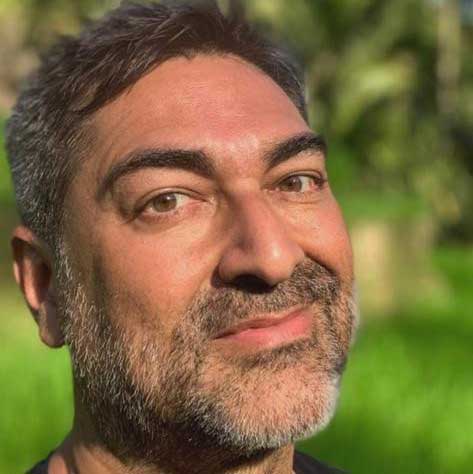
Zeca Camargo
Journalist, TV host
He’s also joined by Brazilian racing legend Max Wilson, who has competed at the highest level of motorsport and is now a TV pundit in Brazil, paying special interest to the role technology plays in motorsport evolution.
“Most of the things that you take from the motorsport industry, you can apply in road cars. For example, throttle, ABS system, traction control… they all started in motorsports, and then the road car industry put them on their road cars. So, a lot of things comes from the motorsports, mainly F1, which is the biggest laboratory as far as producing things that translate into road cars a few years later.”

Max Wilson
Racing driver
Together with his guests, Matt will attempt to answer the big question: how does technology enhance entertainment and sport?
More in this series

Matt Roberts, Head of Customer Marketing, Americas, Amdocs
S5 E10
49:36
09 Dec 2022

Matt Roberts, Head of Customer Marketing, Americas, Amdocs
S5 E9
38:39
01 Dec 2022

Matt Roberts, Head of Customer Marketing, Americas, Amdocs
S5 E8
23 Nov 2022

Matt Roberts, Head of Customer Marketing, Americas, Amdocs
S5 E7
17 Nov 2022

Matt Roberts, Head of Customer Marketing, Americas, Amdocs
S5 E6
09 Nov 2022