
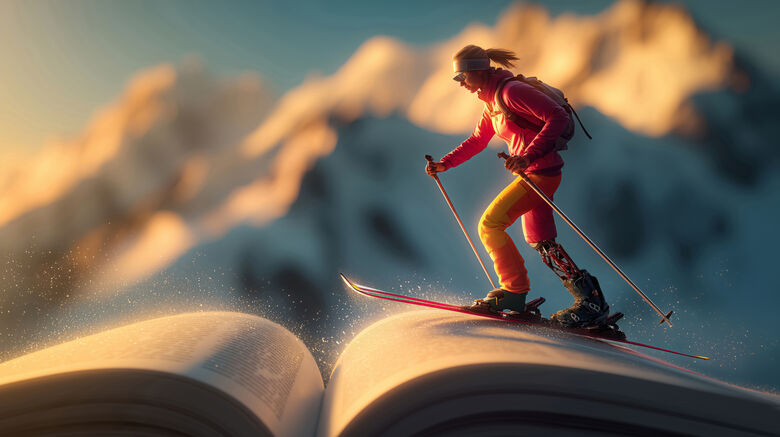
More Than a Moment: The Movement Behind Adaptive Spirit
Matthew Roberts, Head of Customer Marketing, Amdocs
The Great Indoors Adaptive Spirit Special Edition, E1
22 Apr 2026

Please provide your details
Asterisk (*) indicates required field.
Thank you!
Your submission has been forwarded to the appropriate contact.
Apr 22, 2026
More Than a Moment: The Movement Behind Adaptive Spirit
This episode of The Great Indoors tells the story of Adaptive Spirit, a purpose-driven movement that, over 31 years, has raised more than $25 million in support of the U.S. Paralympic Ski and Snowboard Team while redefining what an industry event can achieve. As Amdocs proudly celebrates its 25th year supporting Adaptive Spirit, we’re excited to bring The Great Indoors to the event, capturing the voices and stories that make this community so special. What began as a bold idea to break from tradition has grown into a powerful platform that connects the cable and media ecosystem with elite athletes, pairing sponsorship with storytelling to fuel careers, inspire organizations, and shift perspectives from disability to possibility. Through voices of founders, leaders, and athletes, this episode captures how Adaptive Spirit continues to turn relationships into impact proving that when purpose leads, an entire industry can help.
Guests in order of appearance: Bridget Baker, Steve Raymond, Bart Garton, Alex D’Addio, Kyle Taulman, Andrew Kurka, Rich DiGeronimo, Danny Bowman, Nomi Bergman
In a world where so much of our industry is defined by scale, speed, and relentless optimization, Every so often, you encounter something that quietly but profoundly redefines what actually matters. This is one of those moments, one of those biggest moments. Welcome to the great indoors adaptive spirit special edition. I'm your host, Matthew Roberts. And as always, I'm joined by my producer, the one and only Larissa Guy. Now this episode and the next couple that follow are very different. We're not in Barcelona. We're not surrounded by keynote stages, product demos, or the familiar rhythm of an industry in constant motion. Instead, we're here in beautiful Vale, Colorado at an event called Adaptive Spirit, an event that has been running for over three decades, an event that Amdocs has supported now for twenty five years, and an event that until now, whilst I've known about it, of course, I had never experienced firsthand. And to understand something like this, you have to start at the beginning with the people who built it. And in this episode, you'll hear first from Bridget Baker, a senior leader with deep roots in NBC Universal. In fact, was the former president and the Olympic movement, and Steve Raymond, cofounder of Adaptive Spirit, one of the driving, or if not the driving force behind its creation. And together, they start by telling us the story of how a simple idea born inside the cable industry became something far more enduring. From there, we'll move to some of the athletes involved, not by an abstract cause, but as individuals whose careers, ambitions, and futures are directly shaped by what happens here. Because for many of them, this isn't peripheral. It's foundational. And then we'll hear from some industry personalities themselves. The leaders, the partners, the people who show up year after year, not out of obligation, but because something about this experience stays with them. People who came once chose to come back. And somewhere between those three perspectives, the builders, the athletes, and the industry, you begin to understand why this matters. Not just as an event, but as a model. A reminder that even in an industry defined by technology scale, commercial pressure, there is still space. Real space for human connection, for purpose, and for impact that lasts. So in this first episode of our Adaptive Spirit special edition, we go back to where it all began and why it matters to everyone. Steve Raymond and I were definitely two of the early people who kind of it it was birthed out of an idea of as respective chapter leaders, he was Rocky Mountain chapter chair of an organization in the industry called CTAM Yes. Which still exists today. It's a cable marketing association. And I had just been named chair of the SoCal chapter of CTAM. Yeah. And these were two new chapters. Mean, the headquarters of this organization on the East Coast had decided they needed more representation west. Yeah. And Steve and I, who knew each other a little bit Yeah. As he mentioned, having traveled around on many states. Sales pitches. Yeah. Each state, you know, back when there were hundreds and hundreds of independent cable operators Yeah. Remembering that cable operating franchises were awarded by city governments by zip code. Yeah. So cable operators were all over the country. They were independent. In many cases, operations. Yeah. In places like Provo, Utah. Yeah. And, you know, Libbey, Montana, and Juneau, Alaska. Yeah. And so states would host these state cable shows. And Steve was working at ESPN, and I was trying to get a cable network called CNBC off the ground. Yeah. So we had met each other a little bit. Yeah. But I reached out to him as we are now colleagues in this CTIM organization and said, did you get this directive, you know, from HQ that we should host a golf tournament Yeah. That was our annual golf tournament. Yeah. And I said, Steve, I'm just thinking about this. And all of these state cable shows host golf tournaments every year. And, you know, you're in the Rocky Mountains, and I'm in LA. We should do something different. Can we not think of something more imaginative than a golf tournament? Yeah. And that sort of evolved into, I said, you should host river rafting because that was one of the big things they did in these summer shows. Yeah. And I said, I don't know, I should do beach volleyball or something. Yeah. I was currently president of a Rocky Mountain Cable Association and what we did was we put together networking events. We tried to find a worthy cause that we could support too, but also focused around the cable industry. I had just attended the nineteen ninety two Summer Olympics. Yeah. In Barcelona. In Barcelona for NBC. And this was NBC's very first partnership with a cable operating company called Cablevision Systems. Yeah. Chuck Dolan, Charles Dolan, his son Jim Dolan, more recently of Sphere in Las Vegas fame. They built the Sphere and Yeah. And they they have a storied media Yeah. Past and family run company. But back in nineteen ninety two, they partnered with NBC to offer something called the Olympics Triplecast, And it was a pay per view offering for cable customers. So we were way ahead of our time, but it was it was truly a cable broadcast partnership for the Olympics. And I had just come back from sort of that experience. And it was my very first Olympics. Yeah. So I saw so many different sports. And yes, it was the summer games. Yeah. But I also grew up in a state, which we talked about, that had no professional sports. I grew up in Alaska, in Southeast Alaska. And so I had seen a lot of more alternative sports anyway. You know? Yeah. Yeah. So I contributed in sort of building bridges to the NBC Olympics unit simply because in many ways we got very lucky with our timing. Yeah. NBC also knew they were going to have the nineteen ninety six Atlanta Summer Games. Yes. And so our very first Ski Tam well, sorry. It's called Adaptive Spirit now. Then Formerly known as as Ski Tam. Formerly. Exactly. It was kind of it was a play on SEA Tam Yeah. Which by the way stood for Cable Television and Administrative Marketing or something. But anyway, Ski Tam was the name that Steve and the team out here gave it. Yeah. And it really caught on. And so I just kind of, again, being really we were newbies in all of this. I I said to Steve, you know, let me reach out to this Olympics group at NBC. So it took some effort, but I got through to someone there and said, you know, we're trying to start this, explained it. And it didn't hurt us either that the USOC, the US Olympic Committee, is headquartered in Colorado Right. Just down the road away in Colorado Springs. Right. Right. And I think we got a contact there right off the bat, a wonderful guy named Charlie Huber who worked with the organization for many years. Yeah. And so, yes, we were starting to build these bridges. I was working at ESPN and a good friend of mine named Bob Meserve, he had been paralyzed in a ski accident in Vail, you know, forty three years ago. But he made the US disabled ski team and he was a snook skier and he he told me that the US disabled team was gonna be disbanded. They lost a big sponsor from US skiing and one of my, co chairs at CTM of the Rocky Mountain also knew the head coach of the disabled team. She heard the same story and here we are in Denver, Colorado, Rocky Mountain region. Why don't we do something around skiing to create some energy that we could maybe save the team? Yeah. So we started to put together an event, a three day event where we'd have sponsors, companies from the cable industry. Yeah. We'd come and sponsor, we pair them with an athlete from this team. They could build a relationship, spend time with them, learn about what what they do. Yeah. And we we had two hundred fifty people show up that first year. And for those of you who know about ski film, Warren Miller is a famous ski filmmaker. Right. I knew his son pretty well and I got Warren to come speak at Adaptive Spirit, then called Ski Tam. Warren was a pioneer not only in skiing, but he also had a lot of adaptive athletes in his films. Nineteen ninety five was the very first Ski Tam, and I think the following year is when we had the association with the disabled ski team. Right. And it was an important shift because, again, going back three decades, you know, the the big operating companies, the MSOs or MVPDs or cable companies, however you'd like to refer to them today Yeah. Were not exactly in the beginning. Oh, the Rocky Mountain chapter is doing a ski weekend in Vail, Colorado. Yeah. I don't think so. You know, it absolutely was perceived as a boondoggle. And that, you know, the companies are paying to send their representatives whether it's either on the what we used to call the programming side Yeah. Which would be the NBC team or the Viacom team or the HBO team, you know, or the representatives from Comcast, ***, Charter, Mediacom, all the cable companies. So it wasn't as if in the beginning. Yeah. They opened their arms and said, oh my gosh, the Colorado chapter. Yeah. Geniuses, those guys out there starting a ski weekend. No, no, no. That is not how they reacted. They reacted like, we're not doing this. We're not sending our people out there for a boondoggle skiing. Yeah. And it was truly attributed to Steve Raymond, his personal relationships. He had a friend who had been injured on a ski mountain. That's right. Yeah. He had gone through some really personal and he heard personal experiences. And he heard through his friend. Yeah. And another shout out, Jenny Overbaugh, Jenny Cause, who was Steve's vice chair for the very first ski tam, also was involved with the US ski team in some capacity. So she knew about this funding need over there. Really more of a crisis. If they did not get some funding, it was gonna sort of disband. And because of Steve's personal experience, etcetera, they had this idea they had the idea, you know, we should be look. Well, they had the idea we should be supporting this US disabled ski team. That's something the cable industry can do. Yeah. So we raised a quick two hundred thousand dollars in nineteen ninety five and realized we had maybe a formula here that could be sustainable and continue to fund the the what's now called the US ParaSkin Stoneware team. Wow. And that was thirty one years ago. Yes. Yes. Our perspective on that is because, again, Steve from ESPN, myself at NBC, Universal, later Universal, was we were considered programmers in affiliate sales to all the cable So the cable companies. Right? Yeah. But we knew. I mean, we're, first of all, representing, you know, successful wealthy media companies. Yeah. And we're calling on Yeah. Successful wealthy media companies. Many of them, all many started as family owned operations. And in one generation, these family members are becoming billionaires nearly Yeah. Yeah. Which is whoever hears of that. Yeah. Exactly. That's not the norm. Yeah. So that was a simple kind of, you know, thing to pivot to, to say, hey. We have the capacity. We had done enough by then. I mean, Steve had been at ESPN for a number of years. I had been at NBC. Yeah. I mean, we knew that someone like *** Communications might be extremely interested in supporting Yeah. Something like this, a charitable avenue. Yeah. And again, because athletes are coming from every city and every state Yeah. What's the overlap? Yeah. Yeah. *** has operations in San Diego, Phoenix, Santa Barbara. Yeah. You know? I mean, I'm naming companies that don't exist today because they've been all gobbled up by other companies. But, you know, I mean, I can name twelve cable companies back then Yeah. Who might have been having a rough time with their city regulators Yeah. Or a rough time with their state senate state representatives to congress or a rough time with it. And suddenly, also, they could say, we are charitably supporting the US disabled ski team, and we have three athletes in our state who are going to compete at the US games. And suddenly, this had a different narrative. It has a yeah. That's really interesting. How do you would you encapsulate the the way you approach it? Yeah. It's a little bit of everything. I mean, I'm I'm I'm still event chair and board chair, but we have an amazing group of volunteers. We've had our our committee members and our board members that really are a working board, a working committee. We're all volunteers. We have one paid employee. So I I kinda have to do a little bit of everything. I'm a cheerleader, especially this time when we're cheering on the athletes after the success. Yeah. We just got saw Cortina. Yeah. So a little bit of everything. I love to see our industry come together. That's one thing we think about is the industry has been supporting this for thirty one years. Yeah. Which and the industry, as you know, changes all the time. You know, I would say most huge successful companies, as we said, I don't see them expressing any kind of necessarily humility about how they become successful. You know, it's often attributed to their strategy and their but I think there was sort of a focal point of foundational elements That set up adaptive spirit for success. Yes. Yeah. And it is all those things. Yeah. I I truly believe this because it was the winter sport in Colorado. Yeah. Where the US Olympic Committee was also based. Yeah. And a lot of the training centers for these athletes, they're Here. They're in the Rocky Mountains. Yeah. I mean, go to Park City. Yeah. All of them, the able-bodied and disabled, all do training for skiing in Park City. Yeah. You know, Colorado, so we had that going. Steve represented ESPN Yeah. Which was, you know, again, you have a big company that's focused on sports and athletics and that kind of thing. And NBC had an interest in the So I think I like you said, had that gap and that interest. Yes. And so I think all these things came together. Right at the right time. Right at the right time. It was this unusual event that happened not in the summer, but in the winter in the middle of the country. And a lot of the cable operating companies, you know, that were out here could be part of it. And I think that really grew. And then we could probably look back and see pivot points where specific people when *** Communications got involved and they sponsored an athlete Yeah. Yeah. When Advance Newhouse got involved and Naomi Bergman. Mean, you could look at specific things. But NBC support has never waned. Yeah. Yeah. I mean, to this day, they still are a platinum sponsor, and they and they do support the Olympics. And I think and I think it's an interesting question of where else that could have ever come together. And I'm not sure because I think the very seeds of it were so specific. Those variables for its its not just its creation, but its ability to thrive were very rare. It's like the stars aligning at a certain time. Agreed. Yeah. So my next question was, what does the future of Olympic and Paralympic broadcasting look like? The first thing Comcast did when they acquired fifty one percent of NBCUniversal Yeah. Which was twenty eleven, twenty thirteen, they bought the second half, was to write a big, big, multibillion check for Olympic rights. That's the first big thing they did. And it is interesting because I'm sure there is no doubt of interest from big tech companies. I'm sure Apple, Amazon, Google, Netflix. Yeah. You know, what we used to call FANG, the FANG Yeah. Apple, Amazon, Netflix, Google. Yeah. Yeah. Why wouldn't they come in with a big check and try to get rights themselves? They're going after the rights of everything else from NHL hockey to Premier League soccer. To Formula One. To NFL. To NFL. But to my point on they're requiring the rights to everything. So Yeah. Yeah. It it's interesting to think about how that might evolve. I think as long as oh, and we didn't mention Peacock. As long as, you know, the Comcast NBC Peacock piece of it Yeah. Can be the continued, you know, host broadcaster in the US Yeah. I think it's a very, very important asset to the Comcast Corporation. I think that, you know, certainly I hope this continues to go strong. I think as long as we support it in the same, you know, method that we have, these these athletes are just tremendous human beings. Incredible. They're so inspirational, which is how we set up the first corporate sponsorship of a single athlete Yeah. Was this idea again. Yeah. Shout out to Stephanie Victor, a skier back in the day whose story is just incredible like all of these athletes. She arrived at USC, you know, a beautiful young freshman from the middle of the I don't remember. I wanna say Iowa, but I'm not sure that's that's the case. And, you know, had gone on a date or out with some friends and was standing between two parked cars on campus, near campus. And a car came barreling around a corner and smashed into two cars, and she's a paraplegic. I mean, the stories are just unbelievable. Yeah. Again, we were looking at those links between where did Stephanie grow up, where is she from, and which cable operator is in that city, town, zip code, and let's get them together. Yeah. Yeah. And *** Communications sponsored for thirteen years. Ralph, I won't think of his last name, but Stephanie was sponsored. And Yeah. Of course, because Stephanie can go and give talks to employees. She can travel in all of the businesses that these MSOs are in, and she can represent them so well. And so that tie Yeah. I think also was foundational in terms of the success of how this has stayed strong for so long. It was also great to speak to two gentlemen that have been videoing this event for thirty one years, Bart Garten and Alex Diadio. At the time when this all started, our legendary cochair, Steve Raymond, who's one of the founders Yes. He just did a great job of wrangling up people at the time in the cable industry, and I was one of those people working for Time Warner Cable. What got me and what I think gets everybody as part of this are the athletes Yeah. And how remarkable they are and what they do. And I saw the video at the end of the first event that I attended, and I went to Steve and then my boss at the one of my bosses at Time Warner Cable, who's also a cochair and said, I want in. How do I be a part of this, and can I do the video? And as Bart mentioned, that's when I found Bart. And I said, I need a guy that's really great on skis. Yeah. And this guy can ski backwards with a camera more Yeah. Faster than most people can do go forwards. Yeah. And he lived up here in Edwards. He knew the mountain, and the rest is kinda history. One of the things about adaptive spirit that I'll say, it's always about the athletes first. And second, it's the great friendships that I've developed. And that's one of the things that I'm most fond of is Bart and I have become great friends over the years. Kyle Tolman from Team USA Alpine really told me how important this event is to himself. And obviously it's a little different this year, we don't have enough snow to ski. Yeah. I've been all over the world this season and unfortunately I don't think anywhere has been doing great, I think except Japan. Japan I think is the only place that has had a good season overall. But yeah, unfortunately, we just aren't getting the ski here, but thankfully all the sponsors showed up still. I mean, they they come to this event for a lot of reasons, but one of the biggest reasons is to support us athletes on the US team and we really appreciate that. Andrew Kirka from Team USA participating in the Alpine was fascinating to speak to. It's a great great event that raises funds for us. Yeah. And I mean, at the same time it raises funds but it also networks everyone together. Yeah. And to be able to come together over such a positive event that isn't just work but also fun outdoors activities and then a positive vibe of inspiration that the athletes provide. Think it's I think it's a very good thing in the business world, especially the cable industry. I've been on the US adaptive ski team for sixteen years now. I'm an alpine skier. Yeah. And I got a bronze at the games this year. Well, congratulations. Thank you. Do you have the medal with it? I don't. No. I don't just carry it around with me. It's kinda crazy. So but I I and I have a gold and a silver from previous years. Yeah. And so I've had a successful career, I've had multiple successful seasons and I can tell you it's because of this event that I'm able to raise funds, I'm able to get the sponsors, I'm able to get the funding that I need. Yeah. And I've also been able to help people, let's say, make those connections inside of the business Yeah. And it's it's a it's a cool and unique experience to be able to be an athlete and then have a business that is questionable about sponsorship Yeah, yeah. But have them trying to do business with something else. Yeah. And then being an athlete and being able to bridge that gap in a positive manner Yeah. And helping two businesses to work together and to thrive. And that's what we're here for. That's what the athletes of this event do and that's what makes it so unique is because it adds that unique perspective. I do a lot of traveling, you know, especially, you know, as an alpine ski racer, we go all over the world doing all sorts of things, and then I'm also a professional speaker, and so I travel and I speak on behalf of a lot of my businesses and a lot of the different companies that sponsor and support me. Yeah. And this is one of those cool things because it presents athletes to corporate industries, to individuals that are able to sponsor them and that are able to make a difference in And also it adds an inspiration factor because honestly, like the business world, the corporate humdrum, come on, People get tired of it. Yeah. I definitely do. You work in the world. Money's fun. Everyone loves But then there's always that little piece that's missing. And I think as as athletes, we provide an an inspiration factor that makes a little bit of a difference. Definitely. And I think I think to your point as well, I think for a lot of people in the business world, they need that inspiration sometimes. Yeah. It helps. Definitely. It does. Motivation helps. It does. Yeah. It does. Yeah. That's what I do is I I help people to increase their workforce inspiration. Yeah. The the motivation behind it. You know, there's a lot of different aspects and a lot of different ways to do that. Yeah. I do it by telling my story. How I became disabled, how I achieved success, how I built a business. Yeah. And how I was able to grow. And then the unique perspective that typically I tie it into the cable world or whatever the company that I'm speaking for engages in in what they do. Yeah. Yeah. It it mixes it up a little bit, but at the same time, it helps people to feel like they're actually making a difference because they do. Yeah. And that's why this event is so popular. That's why this event does so well and everyone comes here. Yeah. You know? A, it's a party. Yeah. B, it's inspiration and it means more. You know? People go from here back home into their normal work jobs and Yeah. They're feeling ready to get it. We see it. We see. I mean, last year we saw our account executives that were here. They came straight back and they were like, Matt, we've gotta we've gotta go bigger next year. We gotta be more of this is this is really where it's at, this event. It really is. And hence why I'm I'm here this year and I'm really glad I've I've come. So my next question obviously is, what's the attraction for people to show up? Rich DiGeronimo, the president of product and technology at Charter, has a strong affinity with this event and has for many years. You know, you're a board member and a leader and a key player in the industry. What brought you into this? You know, I was able to to come as a guest. I think that's how a lot of people start. Originally, was so Steve Raymond. Yeah. He's the co founder Yeah. Of Adaptive Spirit. He was working at ESPN at the time and he invited me and my family here and you know oftentimes I say, you know, we got too much going on in life and say no. Know, we'll give Adaptive Spirit a shot and you know, from the moment I had my first conversation with an athlete, I recognized this was something different. Exactly. This is a different type of And the fact that my kids were able to go ski, you know, with a Paralympian. Yeah. And they could kinda understand that like there's there's no excuses. You know, there's really no that limitation can be overcome and for not just me but for our kids to kinda see that at a very young age and Yeah. They've been able to come now for for many many years. I kind of got hooked and and through that process I was first asked to be part of the sponsorship committee. So trying to get sponsors to come in to retain them and and we we did a good job doing that where we now sell out this event. Know, usually by the time the event ends the next year is already sold out which many years ago wasn't like that. Yeah. And so we've we've built a really great reputation there. And then through that, you know, Steve, you know, asked me to be co chair of the event. So it took on a lot more responsibility to really host it. And, you know, we have over twelve hundred people that come to this event each year. You know, I view it as my responsibility to make sure that, you know, it's well run, they have a great time, and we have a phenomenal set of volunteers in our committees that really kind of help this machine run and every year is different. Danny Bowman, the EVP of Product at Charter summed it up perfectly. We have, as a cable industry, been doing this for a little over thirty years. And I believe we've raised about twenty five million dollars for the athletes. Because this whole event is all about the athletes. Yeah. And for us to be able to give back with all of our critical partners. Yeah. You know, everybody's here, you know, if it's from Disney to Max to, you know, our mobile bill or Amdocs, you know, it's very special. Yeah. Very special. Nomi Birdman is a board member at Adaptive Spirit and is someone who has supported this event for many years. Yeah. And and you're you're not just a participant. You're not just a delegate. Right, Nomi? You're a board member now. You're an active Right. Yeah. Right. Right. Member of the entire infrastructure at Adaptive Spirit. Exactly. Exactly. Well, you you know, I came for a number of years, then you just kinda feel like, well, hey, how can I help? Yeah. So at first, I became involved with the auction, which was great fun. Yeah. So really throughout the year, there there was work to do to prepare for the auction. And the auction raises quite quite a bit of money, that goes money from the auction goes directly to the athletes. Right. And so that that was terrific. And then eventually, yeah, I became a board member. It's just such an honor to be involved and Yeah. I I I love this event. Yeah. Everybody really is very united around our common purpose for why we hold this event, You know? And we really hold it to, you know, to together to support the athletes. And Yeah. Without adaptive spirit, I don't I don't believe the Paralympic ski and snowboard team and you know, would be would be doing as well as they're doing. Yes. You know, we've we've done so much to support each of the athletes as individuals and to support the team, to help them to buy equipment. Yeah. And, you know, we've our athletes have some of the best equipment. Yeah. Things like that. For me, one of my, I think, most wholesome things that have happened for me or to me at this event is I've had a chance to inspire some young athletes that have worked and been a part of this program. And then also Nomi Bergman, who Yeah. Has been inside of, you know, the cable industry and is a pretty prominent name, has been believer of mine for a very, very long time and has supported and believed in me. And I think just having genuine kindness from an individual that truly cares not just about how you ski and not just about the business world and not just about what you can provide, but also just to see someone who wants to openly and willingly help makes me want to give back more. Yeah. And and that's just kinda, I think, what what this event is is about, you know? Yeah. Yeah. Yeah. And there's the fun, there's the crashing, there's the skiing, there's everything that happens. Yeah. And then there's the stuff that happens behind the scene that changes the lives of the athletes. And, you know, if it wasn't for the support that I have acquired From this event, I couldn't have continued my career. Yeah. You know? Through this event, I work on a nonprofit program where I inspire and mentor young athletes that are up and coming on how to speak, on how to be professional, on how to raise funds and be professional athletes, especially in the Paralympic and adaptive world, that's something that's needed and Yeah. I wouldn't be there without this event. That's wonderful. And, you know, to be able to see the lives of young people change for the positive Yeah. Is something that's awesome. And it's something that I love to do, and this event has given me that outreach. I tell this story all the time. Two thousand two was the first time it was a Paralympic year that Adaptive Spirit was involved in. And Bart and I had the privilege to go to Salt Lake City and film Wow. The athletes in the Paralympic performances. When we created this video to show at our event about their accomplishments and everything that happened, it was Bart, myself, and Steve Raymond in a room. And we wanted to show Steve because it was our first time doing something like that for our audience. And when we finished watching it with Steve, all three of us just started crying. Oh, wow. And that was pretty special to me. That's Yeah. When I knew personally that this was in my heart and I'd be a part of this forever. Yeah. Wow. That's wonderful. What's one moment that was a defining moment in in in all the time and effort and Yeah. That you've put in? There is a lot, but I think just to see, we talked about we talked a lot this weekend about the success of Team USA at the Paralympic Games. So for those of people who know about the Paralympic movement, Paralympic does not mean paralyzed. It means parallel to the Olympic Games. So we started to support the athletes in their Paralympic journeys and the first games we went to was two thousand two in Salt Lake City. So we took a small group of our supporters to cheer on the athletes and understand this is every four years. This is the biggest competition of their life and to represent team USA is quite the honor. Yeah. But to me and to our attendees, what it also means is you see this perception change of people of who perception change of people disabilities. You see what is possible. You don't see ability. You don't see disability. And this movement continues to grow, that's something we're gonna talk about this weekend. But I saw that that moment on time, really kinda got what the paralytic rule was and how people with this disability and the athletes, you know, they have other challenges they have to deal with day to day but their athletic ability shines through. It it was really a powerful moment. Yeah. Yeah. I worked for Rich DiGeronimo and he's been on the board and been the president and, you know he really was a driver of our commitment to be here and I remember my first time I came he asked me hey you know we do this to open up the event we have executives talk about new things the cable industry is doing and he goes can you talk about mobile? Because at that point we were like zero right on Yeah yeah. Comcast had been out on the market for about a year and a half and they were getting a little bit of traction and Yeah. I sat in front of all the executives and all the partners and the ecosystem and I told them how we were going to change the game and I basically kind of laid out the recipe and we delivered. So much fun right for me to see how this is all played out and just our ongoing commitment and what's always really fun for me this is kind of fun little secret. Yeah. My birthday is April six and it's always the first week of April and guess what this event is. Other than this particular one because Easter was last Sunday. Yeah. Yeah. This time it was a second Sunday but most of the time I end up having my birthday one. So it's kind of fun because you know few people know about it. Yeah. Okay. But yeah. So not only just expressing amazing, you know, resiliency Yeah. With the athletes and hearing all of their stories and then I kind of have this little piece that celebrating my birthday at the same time. Yeah. It's really special for me. No. That's wonderful. That's wonderful. And this is my first adaptive spirit. And, you know, we go all over the world at different tech events. Obviously, you're probably familiar with SCTE. If you were at Samsung, would have been very familiar with MWC. Oh, yes. I mean, you know, that's the monster. I think Barcelona was my middle name at one point. Oh, really? We just came back. We were we and we took the podcast there and, you know, that's you that the magnitude of that and the intensity of that, and this is just such a wonderful experience as an event. Yeah, it is. The athletes, the people like yourself from the industry, the venue, it's just incredible. You know? I'm hooked. Well, here's what's unique about. This has been a, unfortunately, a very dry year in Colorado. It's the lowest, you know, number of inches of snow I think with decades. Yeah. And as you look around, you see what you see. This is normally what June looks like. Yeah. Yeah. Not April. Usually everybody's skiing and you know just having all kinds of fun and the athletes are skiing with you and you know it just gives you a really unique perspective of when you actually the athletes go to every dinner, you know, because it's all about celebrating and they participate with you. And just these stories are just unreal. And it really gives you perspective of how critical it is to be resilient and adapt. Adaptive spirit. And so as we close this first chapter of our adaptive spirit series, what stays with you isn't just how this began. It's what it's became. An idea built by people like Bridget and Steve carried forward by an industry and given meaning by the athletes at its center. Because somewhere between those perspectives, something quite rare has taken shape. It's not just an event. It's a community. One that connects business with purpose and performance with perspective and ambition with something altogether more human. And for me, this was the first experience of Adaptive Spirit. It won't be the last. And in the episodes that follow, we'll go deeper into the stories, the individuals, and the impact that continues to ripple far beyond Veil. And until then, this has been The Great Indors.
More Than a Moment: The Movement Behind Adaptive Spirit
Featured Podcasts
Episode 2: The Power of an Adaptive Mindset
This episode of The Great Indoors brings us inside Adaptive Spirit through the voices of the athletes themselves, sharing firsthand stories from the Paralympic Games and the journeys that define them
Episode 3: The Spirit That Stays With You
In Episode 3 of The Great Indoors, Adaptive Spirit Special Edition, we explore the powerful role of family, community, and purpose behind the Paralympic journey.
More in this series
Matthew Roberts, Head of Customer Marketing, Amdocs
S12 E10
14 May 2026
Matthew Roberts, Head of Customer Marketing, Amdocs
S12 E9
07 May 2026
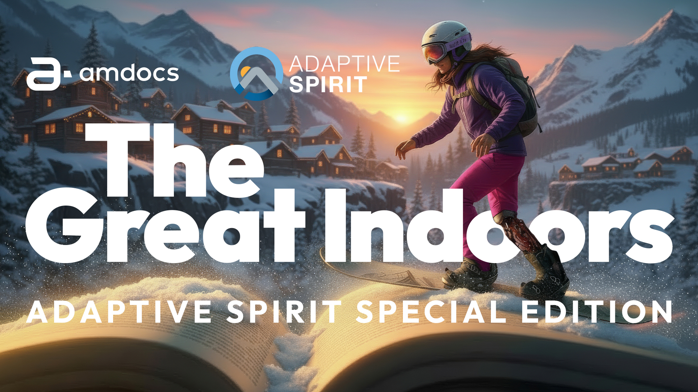
Matthew Roberts, Head of Customer Marketing, Amdocs
The Great Indoors Adaptive Spirit Special Edition, E3
05 May 2026
Matthew Roberts, Head of Customer Marketing, Amdocs
S12 E8
30 Apr 2026
Matthew Roberts, Head of Customer Marketing, Amdocs
The Great Indoors Adaptive Spirit Special Edition, E2
28 Apr 2026
Matthew Roberts, Head of Customer Marketing, Amdocs
S12 E7
23 Apr 2026
Matthew Roberts, Head of Customer Marketing, Amdocs
The Great Indoors Adaptive Spirit Special Edition, E1
22 Apr 2026
Matthew Roberts, Head of Customer Marketing, Amdocs
S12 E6
16 Apr 2026
Matthew Roberts, Head of Customer Marketing, Amdocs
S12 E5
08 Apr 2026
Matthew Roberts, Head of Customer Marketing, Amdocs
S12 E4
02 Apr 2026