
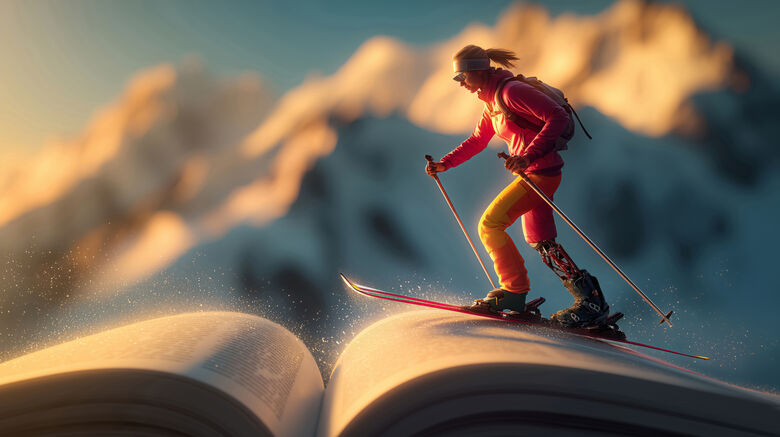
The Power of an Adaptive Mindset
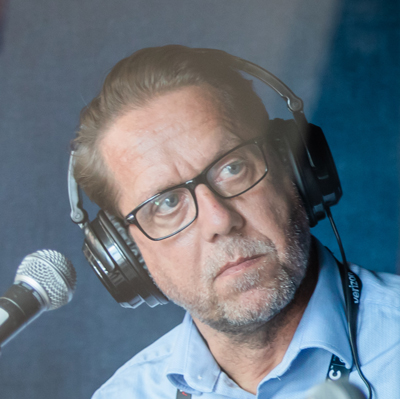
Matthew Roberts, Head of Customer Marketing, Amdocs
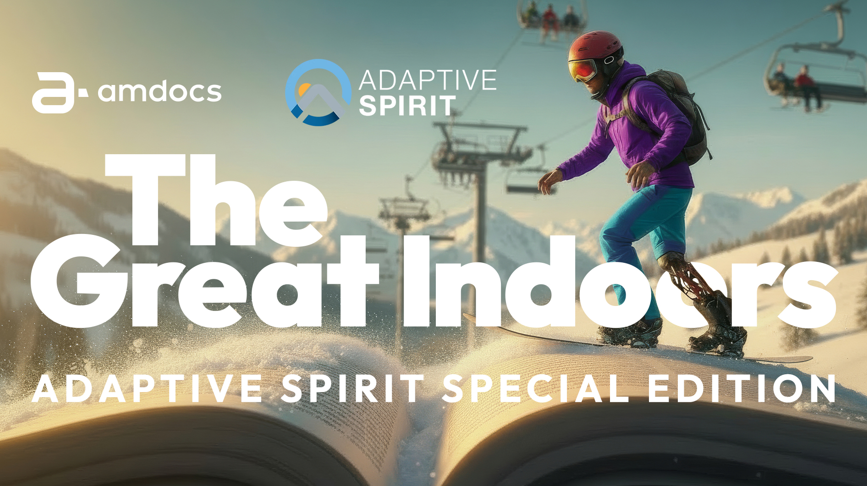
The Great Indoors Adaptive Spirit Special Edition, E2
28 Apr 2026

Please provide your details
Asterisk (*) indicates required field.
Thank you!
Your submission has been forwarded to the appropriate contact.
Apr 28, 2026
The Power of an Adaptive Mindset
This episode of The Great Indoors brings us inside Adaptive Spirit through the voices of the athletes themselves, sharing firsthand stories from the Paralympic Games and the journeys that define them. As Amdocs continues its 25th year of support, we capture the moments beyond the podium where preparation, setbacks, breakthroughs, and mindset shape what it truly means to compete at the highest level. From first-time Paralympians to seasoned medalists, these stories reveal the resilience, community, and global camaraderie that make this world so unique. What emerges is a powerful reminder that success isn’t just measured in medals, but in the connections built, the challenges overcome, and the inspiration these athletes bring back to the industries and communities that support them. This is more than a conversation about sport, it’s a reflection on perseverance, perspective, and the unifying power of shared human experience.
Guests in order of appearance: Audrey Crowley, Saylor O’Brien, Ravi Drugan, Michael O'Hearn, Kate Delson, Jake Adicoff, Kyle Taulman, Patrick Halgren
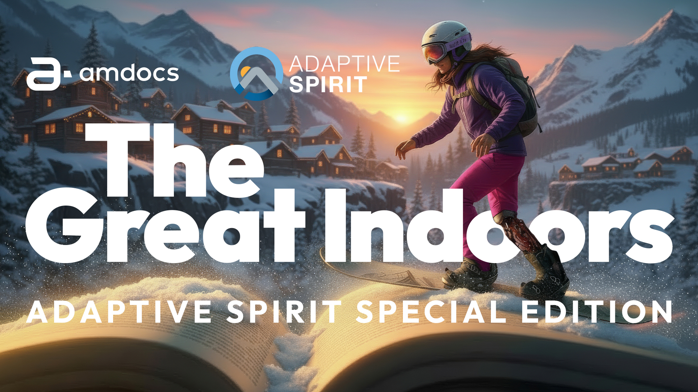
Welcome back to Vail, Colorado and Adaptive Spirit. Now in our last episode, we explored the origins of Adaptive Spirit, How an idea born inside the cable industry became something far more enduring. Became a community, a movement, and a force for good. But if episode one was about the why, this episode is about the who. And I'm not talking about the British rock band. I'm talking about the athletes. Welcome to the great indoors and in an age where information seems to be moving faster than meaning, where we're constantly connected, but not always truly in conversation. I'm your host, Matthew Roberts. And as always, I'm joined by my producer, the one and only incredible, Loora Seghee. So coming back to Vale and what we are looking at in this episode, they're not just stories of resilience. They're stories of ambition, of discipline, of sacrifice, family, of unimaginable lows, and through this, an unwavering commitment to perform at the very highest level. So we feature a lot of the athletes. You know, you'll hear athletes like Jake Adecoff reflecting on a career that has spanned multiple Paralympic games and moments of extraordinary success. From competitors such as the charming Sailor O'Brien navigating the emotional realities of elite performance and where mindset can matter just as much as results. And from emerging voices like Audrey Crowley at the beginning of their Paralympic journey already thinking about what comes next. I mean, all these conversations were just incredible. Ravi Drugan, his story stayed with both Larissa and I still with me right now. Not just because of what he's achieved, but because of how he sees the world. A perspective shaped by incredible challenges, but grounded in something remarkably simple. To live fully, to embrace the moment, and to take whatever life presents and make something of it. And I'll be unequivocally honest here. The conversations in this episode affected me more than I ever expected. There are moments in conversations like these where the distance between myself, the interviewer, and the subject simply disappears. When you stop thinking about the next question and start reflecting on your own perspective. The amount of times my own children, family, and friends entered my thoughts with something I've never felt before. It really helped me reflect and put my own life in true perspective. Because alongside the triumphs, you'll also hear the stories that don't follow a perfect script. Athletes like Kyle Talman, reflecting on when things didn't go to plan, but where the experience itself still carried enormous meaning. And yet across all these conversations, there's a common thread, a mindset that embraces challenge, a willingness to do the hard things, and a perspective on life that frankly most of us don't encounter often enough. And you'll begin to understand that adaptive spirit isn't just support, it's connection. The kind that allows these incredible athletes to share their stories and to inspire us, and in many cases, to give something back to the very people who support them. And that's when this becomes something more than sport. So in this episode, we spend time with the athletes themselves. We hear their stories, their journeys, their triumphs, their setbacks. And in doing so, we begin to understand not just what they do, but who they are. Audrey Crowley from Team USA Alpine was a breath of fresh air. I've been on the team for four years now. This is my fourth year. I have won world championship medal and four world cup medals. I'm here to adapt Thank you. I'm here to adapt the spirit just to, you know, raise awareness about our sport, raise money for our sport, meet all these incredible people here, get to hang out with my teammates and friends. Yeah. And I love being here. Every year it gets more and more fun, I think. Yeah. Awesome. Saylor O'Brien from Team USA Alpine. Actually charming. I think I'm just kind of, you know, it's end of the season for me for skiing. So things are just kind of starting to chill out getting into, know, more summer off season training. But, you know, this is probably like one of my favorite events Yeah. Of the year, just to kind of close things, which is super awesome. And what are you hoping to get out of the next few days here in Adaptive Spirit? I think just like making authentic connections with people is really kind of what I'm here for. Yeah. And so, you know, and I definitely I definitely have those every single time, but that's often kind of my my mindset coming into this is, you know, making as many authentic connections as possible. And that's what we're about on this podcast. Because I know it's there's a technology angle to this event. Yeah. But I think you'll agree with me, Selah. The best connections are the authentic human ones. Absolutely. Right? Yeah. All ones with your pets. Yes. Know? Hundred percent. You know? Team USA's alpine skier, Ravi Druegans, personality was infectious. I had an open mind because you think about skiing in a sit ski. Yeah. You're up high off the ground like this is like a balancing act. How about a sled? Yeah. But by you know, we had a lesson with an instructor with orient adaptive sports. You know, they they gave me a scholarship for a half day lesson. And by noon, me and my dad went skiing by ourselves and we're skiing black diamonds in whiteout conditions. And I remember yelling at my dad because I was like, this is hard. And I'm like, is this a black diamond? And he looks at me and he says, we just ski down the mountain. It doesn't matter. So he taught me to ski down the mountain no matter what the conditions. And Yeah. I fell in love with skiing then, loved the challenge of it, and that's what keeps me ski racing is just the challenge. Like, you do that good? Can you nail that course faster than someone else? So I never thought I'd be a ski racer. Like, I was more of a free skier than a park rat, and if you asked me fifteen years ago, I've been like, I wouldn't be caught dead in one of those spandex speed suits. But I do it now, and it's really just because like in eighth grade, I had a teacher that was like, write down what you wanna be when you're older. Right. Right? And people wrote down mother, father, dentist, lawyer, doctor. Right? I'm like, don't know. Right? I really thought about it and I wrote down to live life to the fullest, enjoy every moment and have no regrets. And that's really why I wanna say it got me to here. Because it's just you gotta take the opportunities that life presents itself and enjoy the ride. Absolutely. And I think you're the absolute embodiment of that ride. You're really, absolutely. I'd say the same to you for just being here. Yeah. I'd like to. Michael O'Hern from Team USA Alpine just had an incredibly intelligent and fascinating perspective. I started skiing independently before I walked and it became a real signature for me, a real sense of anatomical freedom and just a joy. Mean, didn't have that kind of outlet navigating disability as a child and I kind of progressed from there to level one, racing, just scholarship opportunities, just intro the sport. And past two years I've been, you know, training full time out of Park City, Utah. Was able to work my way up to some national rankings. I got a few just a few podiums and some good results the past two seasons and was able to secure a top five national ranking in Giant Slalom. This is my first games, named to Team USA, and Wow. It was awesome. Yeah. Kate Delsson, snowboarder with Team USA, not only out of fantastic games in Cortina, but she's something of a creator. We're only on the world stage for a blimp. It goes by like that. Right? But there's so much to get there for both Olympians and Paralympians. So and we get started on the Mammoth team. I was training in an event called Slopestyle just for fun. I was very passionate. I didn't miss a day of training. My coach called me crazy sometimes for not wanting to take ten minutes to drink water because that was two laps gone. I've I've recovered from that. I drink water now while I'm snowboarding. But, yeah. So there's local competitions in the US by regions through this organization called USA SA. And with USA SA, you just sign up, you start regionally. So in Mammoth, I would compete in slopestyle, which is jumps and rails. I had this run. I would always try to throw my three sixty. It was my best trick and still is now in the run. And then when I was a senior in high school, there's every year there's an event where all the regions come together actually twenty minutes from here in Copper Mountain. I was just riding there today. Yeah. And we compete with everyone from all the regions, every kid and you do it by age group or open class. Like a national, a national event. Yes, it's called Nationals. Yes. Yeah. That story. Yeah. And I was competing in seventeen year old seventeen and eighteen year old girls category. Yeah. And against able-bodied. So I was the only disabled person there as far as I know. Okay. And I went there and I landed my run. It was a front three, back three, grab, and then probably fiftyfifty in a board slide on the rails. Very simple run, but I had been working on it the past three seasons to be able to land that. And I did during the comp, and it got me a third place at Nationals. And still one of the medals I am most proud of. Wow. And then that same event, I also they had a small little adaptive race there and a lot of the riders on the national team and the ones coming up came out just to say hi and have a fun competition because I think it lined up with this event. And I met them and I got introduced to a team in Utah that trained. And of course, it was going be a big change going from having fun with my park team, being so embedded in that to going to race, like Going from my baggy park pants to skinny race pants. Yeah. That was a bit for my mind to really want to do. That following year, that January, I went to my first race with which was in Finland with this new team. I was on Team Utah. And I thought it was really beautiful being surrounded by so many people with disabilities. You'd honestly forget on the hill that we are all disabled. Then you would see them off the hill and be like, hey, that guy's missing an arm. You wouldn't notice it on the And And I imagine as well being an international crowd, right, if you were in Finland. Yes. Very international, which was crazy to go from competing at my local little spot to go to a Europa Cup in Finland. Yeah. Which are Europa Cups and North American Cups are combined with World Cups. Like Yeah. They happen on the same day usually. So I was also with the top Yeah. Like seeing the top athletes compete. And I was pretty hooked from there. That's when I decided I was gonna go for the twenty twenty six Paralympics. And that's when I realized logistically that I had a good shot of making the team. Jake Adikoff from Team USA Nordic is as cool as he is successful. It was great. Yeah. I had a big goal of four gold medals and I nailed it. You got four gold medals? Four gold medals. Did you really? My goodness. Yeah. Congratulations. Here on the great indoors, we have four gold medal, Jake. Well done. Congratulations. Thank you so much. Yeah. Yeah. Do you have any of them on you? I have one on. Oh, dear. There you go. Look. Pulling that. Told that. Instructed to carry it around all week. Oh, wow. Look at that. There you go. Look at that. We got a gold medal for the great indoors. Look at that. Well, congratulations. Yeah. That's incredible. Thank so much. Yeah? So it was a fantastic and was it your first Olympics or Fourth Olympics. Oh, was your fourth? Yeah. Oh, wow. Wow. But this was the most successful medal hall you've had? The most successful by by a lot. Yeah. Oh my word. That's incredible. That's really incredible. So it feels very much like a bit of a celebration this week then. It's A little bit. Yeah. Yeah? Yeah. You were out in Italy the whole time and with the rest of the team, it was a great atmosphere. I imagine it is the memories will stick with you for the rest of your life. Right? Yeah. Definitely. That was that was quite a fun Paralympic Games. Yeah. They have all been quite different. Yeah. This one I think was maybe the most fun of them all. Yeah. Yeah. That's a a good thing to hold on to for a long time. Congratulations on the four medals. Thank you. Incredible. Amazing. We've never had a gold medal winner on this podcast ever before. See you the first. And no, thank you very much, Jake. It's been brilliant. Let's hear more from Rappi Drugan. Beijing was my first Paralympics, so Cortina was my second Paralympics. It was really nice kinda knowing what I was getting into and everything and not being during COVID was really nice. I mean, you know, Beijing was better than I expected it to be, but Cortina, Italy, the Italians are just so nice. No matter what, like, the little speed bumps you find, it's great there. And the season's ended now, so do you have a break until it all comes back again? What are what are your plans? Well, so I'm not only a member of the Paralympic team, but I'm also a member of the national team. So we're normally on the road a hundred and sixty, a hundred and seventy days a year. So for instance, last season, you know, about this time, we just are focused on SNC and gym time. And then August, we were down in South America training and then again in September. So ours my season started last year in August with training and then, you know, we race a full Paralympic or a full Para World Cup season. Yeah. So it gets busy. Yeah. So we only get a lot of time to train in the winter and it's just But it's fun. There's moments that are really fun and there's moments you have to appreciate the journey and the travel and just, you know, the challenge. You don't always do something because it's easy. You gotta do something because it's hard. But Yeah. When you do those hard things that you feel so much more rewarded at the end. Yeah. You know, like going back to Cortina, the downhill. Yeah. You know, I raced that hill two years ago, the exact same course. Right? I probably skied that hill like twelve times now. Yeah. And every time, no matter how much fun it is or you get to the bottom and you're like, yes, that was awesome. You get to that start and you're like, alright, what did I sign up for? Alright. I can do this again today. So Yeah. I mean, part of ski racing isn't just to be fast, but it's also to enjoy the journey and to have the life experiences to make you a better person overall. Who's Sailor O'Brien again? Cortina was amazing. It's one of my favorite venues. Yeah. And I've, you know, raced there a couple times previously to the games. And so there was a a sense of familiarity as well going into it. Yeah. And just such a beautiful place in Italy to have it. And, you know, it was it was an amazing sort of setup and, you know, they did a really good job at, you know, going from transitioning from Olympics to Paralympics and, you know, that whole thing. And, you know, I did all of the events, everything downhill to Slalom and so, yeah, and had some really great finishes, is amazing for my first Paralympic games. Oh, it was your first one. Yeah. Oh, congratulations then. So, yeah. I know it was it was amazing and I'm I'm stoked about it for sure. Yeah. And here, it's so it's because, you know, obviously, it only comes around every four years And we're here. Yeah. There's something quite prominent about that. Like being at Adabba Spirit Yes. Post Cortina, everybody sharing those stories and experiences. Yeah. What what was a moment for you either in Cortina recently, your first Olympiad? I imagine the whole thing was it. And just what an incredible moment. Right? You know, I think that the overall experience was really, really amazing. I think what's sticking out for me as I'm kind of, you know, at the end of it, of processing it, is that I've actually kind of had like a pretty bad season mentally That's right. You know, going into the games. And that for sure has kind of gotten, you know, into my skiing a little bit. And so I've been struggling a little bit with that as well. But going into the games, I just was like, I just wanna try and like do it and see what happens. You know, I didn't wanna have any sort of expectation or you know, too much pressure on myself. And so, I mean, really I think what stuck out to me for this was that how I held those things accountable for myself as you know, you're here to have fun, you're here to just like ski and it's you know, like yes, it's the games but it's also just another race. Yeah. And just, you know, having having a good time and and those runs just being exciting and doing the best that I can. Yeah. And so I think, yeah, what stuck out was, you know, how I kind of did that throughout the games and and the mindset that I had and Yeah. And what that created for me. Wow. And is there a coming together of the USA team? Does it feel like a family? Does it Yeah. I imagine it must have been. It does, for sure. I mean, think, you know, at the games, you know, there were we had at least at the Cortina Village, we had the three three sports there at that venue. Yeah. So, we were only able to kind of be with those people and you know, not the entirety of Team USA. Oh, okay. Yeah. Yeah. Yeah. But the, you know, sports and other teams that we were with, you know, we were all just sitting together, you know, at dinner, lunch, and breakfast, and having chats and just kind of talking to other about our sports and each other things and learning. Yeah. You know, certainly coming here to this event where we have those mixed sports here and kind of getting to share stories and experiences of, you know, how is your games and and talking to them. And it certainly does, you know, bring people together and there's a sense of community for sure. And this might be a strange question, but I'm I love that. I'm I'm British. I live in Canada. I'm Canadian as well. Yeah. Who is the archrival of the US Paralympic team? Oh. Who do you love to beat? You know Or is there one? I mean, not really. I think I think that, you know, we the US isn't a, you know, ski racing country. And so, in a lot of ways, it's just the entirety of Europe is kind of the rival. Yeah. I see. It's so of just, you know, we are kind of the the underdogs in in this sort of Yeah. Space and environments in our And so, it's it's quite tough to kind of be up against everybody else. Yeah. Yeah. But there's a good friendly atmosphere between the other countries, It's it's super awesome, friendly competition environment. Yeah. You know, especially in the women's field, you know, it's it's awesome to have those ladies. I love, you know, racing with them, and it's so fun. You could learn that. I guess there's a lot of things to Yeah. Totally. And, you know, I get to watch them ski and and, you know, be like, hey, like, how do what, you know, what skill is that? Or, you know, whatever. Yeah. You know, but get to, you know, play with, you know, have fun with each other, you know. And then when we go through the start, it's like, okay. Like, it's game time. And then when we go through the finish, we can go right back to supporting each other and just having fun again, which is awesome. Wonderful. Wonderful. Audrey Crowley reflected on the impact her first Paralympic Games had on her. It's always been the goal to go to the Paralympics and eventually win a Paralympic medal. So, this was step one, like, to my first games, and I think I learned a lot. It was it's a pretty crazy experience. Like, you don't really know what it's gonna be like until you're there. But it was also really fun and I can't wait to like have four years to learn from that time and be even better the next time. Kyle Tolman from Team USA Alpine just had a multitude of fascinating stories. Unfortunately, I didn't end up finishing my race. I had an issue with my equipment in the middle of my run. If you know anything about sit skiing, I use something called a mono ski and I have basically a plastic bucket that I sit in, but I don't have my full core. So I have a taller back on my rig so that I can kind of push off of it, stay forward, be aggressive, and unfortunately that back broke and unfortunately I wasn't able to finish. It's still a great experience, babe. I mean I'm proud of what I did, know. I I made the most of the games in general. I I said that going into the games, making the team, the world is so divided right now. And I think that the Olympics and Paralympics are so important in that because it brings people together. And my other love is music. And those two loves, I think are for the same reason of they bring people together from all over the world. People from completely different backgrounds don't speak the same languages, but anyone can watch the Olympics or the Paralympics, listen to a song and just feel connected, and that's super special to me. But you know, I I made the most of that at the games. I did some interviews with with fellow athletes and things. I, you know, made content around the games. I did music at the games as well. I got to play some guitar, play some music. That was awesome. And then my competition, I'm, you know, I was training well. I was I was in a great headspace and me and my coach checked my gear, we checked my gear all the time, we checked it the day before, after training I trained great, everything looked awesome and unfortunately on the day it didn't work out but but I gave it everything you know, I I went out there trying to compete, trying to lay down a fast run. Some people just, you know, were trying to finish and I respect that as well, but I was trying to race. I was trying to lay down the fastest skiing I could and unfortunately it didn't end well, but it was a good DNF. Yeah. I've gotten to travel the world and meet so many incredible people and you know ski so many amazing places and do well in races here and there you know. Obviously making it to the games in Italy was incredible. And it was my second games. My first was Beijing. But it almost felt like having a second first games because Beijing was still during COVID times. Yeah. So we had to wear masks. In the dining hall, we were all separated by plastic dividers. And this one was just so much more social like the the feeling of togetherness was so incredible and I I loved it. Being in Cortina, it's a beautiful city, the Dolomites are incredible. All the volunteers I met there were amazing. It just that experience was just the culmination of all the the hard work over the last few years, you know. What I've learned talking to people, especially volunteers at the games and at our races and things is that the parasite is so important because we've all been through something, you know. It's all different experiences. Some people are wounded warriors who were injured in combat. Some people like me were injured when I was young, like around two years old. Some people were born with it. But we've all been through something, all have challenges and because of that lived experience, we all, I think, just have that, like, want to be around people and to bring people together. Know, like, I've been helped by so many people from other countries throughout my career. The Chilean team comes to train in Colorado quite a bit and their coaches have helped me so much over the years. The New Zealand team, their coaches have helped me so much over the years coaching me when they didn't have to. And when I was in Beijing actually, my I had on a sit ski, we have two shocks, like motocross shocks, or we have a shock that kind of acts like our knees. I brought two to the games, both of them blew at the games. And I went to my coaches and they looked at me and they were like, we can't help you. And so I I wouldn't have been able to race, but I had trained with some of the Japanese team before. I speak just a little bit of Japanese. They spoke a little bit of English, and my rig was a Japanese rig, and I went to them and I was like trying to, you know, work with them, and thankfully they had a technician from the from the shock company, and not asking anything in return, they Frankenstein my two shocks together and got me on the hill to compete at the games and against their own athletes, you know? And that's so special. That's something that you, a lot of times, wouldn't even see at the Olympics, you know? It's something I think is specifically about the Paralympics that we all just want to help each other and at the end of the day we're competing against each other, but it's it's my own performance that's going to win me a medal that's going to put me on the top of the podium or or get me anywhere close and it's the same with them. Like, if their performance isn't good enough that day, my performance is better, everyone's like, yeah. You skied better, you know, and and that's just special because everyone's there to help each other as well and bring people together. Here's Michael O'Hearn again. It was my first games and it's the thing I take the most pride in. This has been something I've been working towards for, you know, almost two decades now. And it's really is my signature, my happiest place, my introspection. I think it's, you know, perfect blend of calm and chaos and just feel where I feel the most phrase. We represent, you know, a story of perseverance, tenacity, grit alchemy, and pride in real action with real results that means the world to me to kind of showcase adaptive excellence, put us on the map and represent, you know, disability excellence in sports. So it was a phenomenal experience. Know, it was my first game, so it didn't go too well for me. It's kind my Paralympic debut in the World Cup, World Champ level. I just qualified earlier this season, so I couldn't really shake the nerves. I currently have a torn ACL, so it was not my best result or in how I really ski in qualifying events. Yeah. But I was proud to just be there pass it up It's just the beginning. Just the beginning. New chapter for both of us. Yeah. We're stoked for future cycles. Yeah. Let's hear again from Kate Delsson. So first we went to Austria and we did a training training camp. We just ripped around and had so much fun riding in Austria. We even signed up for a local bank slalom race. Oh, really? Where we just had just the just the time, you know? Yeah. Was the whole team cruising before the big show. And then we go to Venice, we do the whole welcome experience and it was crazy. I've never been showered with so much attention and clothes and Yeah. And then we show up in Cortina for the games. We and it becomes real by the Yeah. The first day, our first qualifications race. I was like, holy crap. You know? We're here with my teammates Yeah. One of whom I started one of the girls whom I did the first race in Finland with. We were both becoming Paralympians together the first time. And then my other teammate I was competing with, Brenna, who I was just three years prior here in Colorado, I was starstruck when I first saw her. Oh, really? Was racing with her at the Paralympic Games. Oh, wow. So Brenna was like a hero, your role model? Oh, yeah. I as soon as I learned about the Paralympics, snowboarding, she was the first name that popped up. I was like, that's Brenna Huckabee right there. She was standing right there, and I was like, hi. Oh, that's really cool. That's really cool. I won two medals at the Paralympic Games and Wow. Congratulations. Thank you. And my family I I say I won, but I'm supposed to say we won. That's how I think about it in my head. Do you know what? That you you raised such a good point and this is what I've got from these few days from speaking with a lot of the competitors. Family plays such a huge part in your success. And we saw your family feature heavily in the opening video on the opening night. That's how you feel like they've really you feel that a lot of your success you can attribute to their Yeah. Support. I mean, to my parents, a hundred percent of my success I can attribute to them because they made me. And I think about it a lot, how they helped me get here. Whether, like, you could look at it at service level, but they let me move to Mammoth. They paid for me to be on the Mammoth snowboard team when I was growing up, like, that's service level. But then I looked like, why was I so passionate that I wanted to be on the Mammoth team, that I came to training every day? And it's because my parents were so passionate about what they do in their perspective fields, I grew up observing that and being loved by people who are like that and surrounded by that constantly. So watching them be here, watching them watch my video, that's what's cool. Do they get emotional? I think it's super. My dad got I was obviously not really watching, but when I got my first medal, one of my mentors was filming him, and he tells me now he just flashed back to when he was a kid watching the Olympics and the medal ceremony and now he's watching his own daughter. It was really cool in the crowd, especially for my second medal because they were able to actually get in there. They were security was very heavy for the medal ceremony. Right. It's like But for the second medal, they had fixed the process and my parents were right there. Yeah. And and my family and my friends, and I got to just make eye contact with them while I was standing on the podium. When it comes to personalities, they don't get bigger than Patrick Holgren from Team USA Alpine, silver medal winner in Cortina and donning quite a fantastic tracksuit for the great indoors. Oh, this whole thing? I got it out of the back of my closet. And tell let's talk about this little thing here. Oh, this silver medal here? Yeah. They went they went back to pure silver, it's nice and heavy. It's like almost half a kilo, you know? And this is from Cortina recently? Yeah. From the from twenty twenty six. What was that your first Paralympic Games? Or It was my second Paralympic First one doing the speed events, suit me better. Yeah. Yeah. And my the really the first time I knew I could be competitive, maybe. It was a stretch to Right. I'm probably two years away from my peak Yeah, yeah. Of really like being like, alright, gotta win. I gotta do good, you know? But before I've won, whatever, it's not about the medals, but I do play to win. Yeah, yeah. And I'm a realistic Yeah. And I I knew it would be a far shot to be competitive this year, but I cracked it. And and like I was saying, I swear I could feel the love from all the people, specifically at this event at After the Spirit. Well, they they give me money that make it possible. The eleven years have developed my character into the man I always dreamed of. So I feel the exact same every day, when in that not always just a Tuesday for me, but Yeah. Yeah. Yeah. For my parents to be there. Yeah. For my mom to see the person who I've grown into over these eleven years of living in a caravan and Yeah. You know, doing everything I can, working three jobs and oh my god, was so good. Yeah, yeah, yeah. But yeah, it was, oh, it was crazy because, you know, yeah, I've just been trusting that process for all season and, you know, just been doing bad, having really bad crashes. Right. Physically beat up, mentally beat up my really good mates who I usually groomed with, broke his neck before the season. He just gone all season. Yeah. It was like the worst. And in hindsight now, it's like Yeah. Oh, yeah. I was at like the lowest of my life. Yeah. Yeah. Yeah. And then all of a sudden shooting up to my parents first international competition, seeing my dad in Italy, never been to Europe. Oh, really? He was just obsessed with the little moped trucks. He was with these two stroke engines screaming by, he's chuckling and laughing. And the funniest part was I did that four years ago when I first went there and I was like, you know, not far from the tree and all those super surreal moments. And that was I thought I was on a mission from God. Yeah. Just in all these crashes I was having. I remember my coach running up to me after I went through two red fences and tomahawks for fifty feet through, you know, white snow, like some rocks and tree slopes over there. And I'm just like, those streets through just like, oh, oh, oh, look. I'm okay. Like, unreal. Everyone's like, yeah, man. Like, everybody knew it too. They were just like, you are so lucky you're not season over in the hospital right Oh, my goodness. They were just like, alright, see you guys tomorrow. Yeah. And they were they my coaches preached trust the process. Yeah, yeah, yeah. And thank God they did. Audrey Crowley, again. I think my message is just like really hard work wins in the end. So really keeping that hard work, like don't let anything hold you back and Yeah. Yeah. It's very evident in Audrey. She's from she I mean, she's the moment of she's she what she does is rooted in, you know, legacy representation excellence. She's kinda trailblazing a new path for adaptive sports and women's sports. So Thank you. We have a little hate love relationship, but I just have all the love for you. And I, yeah, I'd say, my message is to, you know, get involved in the community because visibility carries representation. You know, we wanna represent excellence. We wanna represent elite level athleticism, and that's what we do. Yeah. You know, we run parallel to the Olympics in criteria regimen, hard work, and discipline, and we've earned our spot here. We're stoked to be here. So, you guys look out for us for two upcoming achieving that mission. Thank you. Thank you. And I certainly think both of you are an inspiration. Thank you. Thank you. Honestly, to me personally, and hopefully to our listeners. Here's sailor O'Brien. What's on the horizon for you? What what have you got planned? Yeah. Definitely take some some time for myself. I mean, I don't know. I'm kind of like open and up in the air about, you know, I guess what my plans are. I I do a bit of rock climbing in the off season. So Yeah. Hopefully a bit more of that. Yeah. And then also, I'm an artist as well. And so Oh, wow. Get to spend more time doing that. I'm actually in the like, beginning process of learning to be a tattoo artist. Oh, wow. So hopefully, I can get that start to, you know, That's really cool. That's really great. Yeah. Let's hear from Patrick Halgren again. Best movie ever made. Just came out free on YouTube. Us and Them, a disabled ski film, that whole thing. I just had a movie come out and it's gonna change the world. You're in the movie? Me and my three mates made this movie. It took us seven years from COVID. It's the first ever fully disabled, made, shot, directed produced movie. Okay. We're gonna check it out. It's so good. It's We're gonna promote that for sure. Yeah. My three mates from New Zealand, all in sit skis, all filmed in New Zealand where they did Lord of the Rings. Yeah. Have you guys heard of Lord of Rings? I've I've I've read the books as well, you know. Oh, well, you have to see the landscape. Don't worry. I've got it for you in my movie. But it's turned into this beautiful thing where I saw them grow and get interested in things, have this hobby that they've mastered. And I did the same thing with skiing and it's like, it worked. Awesome. It all worked. Yeah. It's so funny because I was there last season and I'm you know, we're looking around watching the edits and it's crispy. You got a red similar red camera, like a twenty thousand mile camera. Yeah. Like we cracked it. Yeah. And we're looking at these shots and editing and we're like, we're like, we did it boys. We cracked it. We're rich. We're gonna be rich. Or like, you know, we were saying we're gonna be rich. Yeah. Yeah. Yeah. But I'm looking around Yeah. And I'm like, we are rich. Like, this is the best part. We're all in the room. He's got screens he's built up. We're looking at these edits. Yeah. And I don't know. And all I did was move wheelchairs. Yeah. Really? Like And like, messed stuff up. Yeah. Honestly, like, post the ad. Like, almost ruined the film to my ears. Yeah. Oh. And, oh my god, it was the most beautiful thing I've ever been a part of. Let's hear again from Kate Delsons. So, my passion, when I was originally on the Mammoth Snowboard team training in park, I pretty quickly realized that pretty low chance I could become a pro in slopestyle. I disagree with that right now. I think I can believe in my I believe in myself a lot more now than I did back then. But I was like, okay, how can I be involved with the snowboard world? And what I did was, like, I could be a filmer. I just need to be get good enough to go off big jumps with cameras. Yeah. Yeah. Yeah. So and But there's a bit I I've got, like, all the accessories for the for the GoPro. Yeah. And I can put it on my head. Can put it on my chest. There's lots of different you know, there's so many different accessories that you can buy to do the to do this stuff. It's crazy now. This whole podcast is being filmed by action cameras. That's it. That's about. That's what it's all about. And what and so have you have you made any and put anything out there? Yeah. I made the thing I'm most proud of, which still is like, I made it in sophomore year of high school I think. Right. I was just this short five or maybe last doc documentary about the adaptive program in Mammoth Lakes. Other than that, I just have fun on social media. Making little reels and On Instagram? Yeah. That's fun. And then whether I don't usually do that good, but I enjoy it. It's editing snowboard clips, whether it's mine or my friends, is really fun. Are you using any AI tools to help with your creations? AI is embedded in everything, pretty much. So I just have AI do stuff for me, like, mask out when I'm editing photos. It'll just mask out the subject or Yeah. Yeah. It'll mask out the background and Yeah. It can track Yeah. In videos. That's really cool. Because this was all created on AI and then we turned it into a video. I noticed Yeah. So I was like the great indoors and then you see this person outside and then I was looking closely and I saw the prosthetic leg. I was like, that's really cool. I have fun with AI for And so as we come to the end of this episode, what stays with you isn't just what these athletes have achieved. It's their mindset, the discipline, and the perspective, and the ability to keep going even when things don't go to plan. And as I said in my intro, I'll be honest. This one stayed with me. Because moments like these don't just inspire, they recalibrate. And they've changed how you see the challenge, how you define effort, and perhaps what you choose to value. And that's what makes this modern sport. So that's episode two, and in the next episode, we turn to the people behind all of it. All of it. The industry that supports it, sustains it, and shows up, the families, the crews, the board members, more athletes, and they do it year after year. Until then, this has been the great endorsed.
The Power of an Adaptive Mindset
Featured Podcasts
Episode 1: More Than a Moment: The Movement Behind Adaptive Spirit
This episode of The Great Indoors tells the story of Adaptive Spirit, a purpose-driven movement that, over 31 years, has raised more than $25 million in support of the U.S.
Episode 3: The Spirit That Stays With You
In Episode 3 of The Great Indoors, Adaptive Spirit Special Edition, we explore the powerful role of family, community, and purpose behind the Paralympic journey.
More in this series
Matthew Roberts, Head of Customer Marketing, Amdocs
S12 E10
14 May 2026
Matthew Roberts, Head of Customer Marketing, Amdocs
S12 E9
07 May 2026
Matthew Roberts, Head of Customer Marketing, Amdocs
The Great Indoors Adaptive Spirit Special Edition, E3
05 May 2026
Matthew Roberts, Head of Customer Marketing, Amdocs
S12 E8
30 Apr 2026
Matthew Roberts, Head of Customer Marketing, Amdocs
The Great Indoors Adaptive Spirit Special Edition, E2
28 Apr 2026
Matthew Roberts, Head of Customer Marketing, Amdocs
S12 E7
23 Apr 2026
Matthew Roberts, Head of Customer Marketing, Amdocs
The Great Indoors Adaptive Spirit Special Edition, E1
22 Apr 2026
Matthew Roberts, Head of Customer Marketing, Amdocs
S12 E6
16 Apr 2026
Matthew Roberts, Head of Customer Marketing, Amdocs
S12 E5
08 Apr 2026
Matthew Roberts, Head of Customer Marketing, Amdocs
S12 E4
02 Apr 2026