
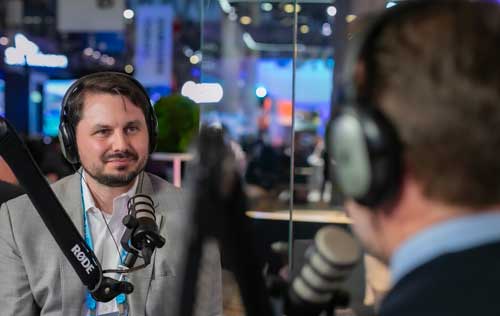
The generative leap: How AI is redefining Big Data
Join host Matt Roberts in insightful conversations with industry experts on the forefront of data and AI innovation.

Matt Roberts, Head of Customer Marketing, Americas, Amdocs
S8 E8
49:35
24 Apr 2024
Please provide your details
Asterisk (*) indicates required field.
Thank you!
Your submission has been forwarded to the appropriate contact.
April 25, 2024
The Generative Leap: How AI is Redefining Big Data
Join host Matt Roberts in insightful conversations with industry experts on the forefront of data and AI innovation. In the first segment, Matt is joined by Matt Dugan, EVP for Data at AT&T, as they delve into the complexities and potentials of big data utilization. They explore the challenges companies face in harnessing vast amounts of information effectively, and discuss the potential of Generative AI in structuring and contextualizing data. In the second segment, Matt welcomes Don Tirsell, Global Head of Partnerships at Google. Don discusses the evolving landscape of cloud infrastructure and deployment in relation to Big Data. Next, they discuss laying the groundwork for AI to become the 'killer use case' of big data, Google's approach to developing AI pipelines for enterprises, and the partnerships Google is looking for.
So my next guest on the great indoors at MWC twenty twenty four here in Barcelona. He's come all the way from Atlanta. He's the EVP for data at AT and T. Mister Matt Dugan, welcome. Thank you for having me. Yeah. Thanks for being here. So we're we're approaching the sunset almost of the show Yes. This year. And before we get into what you've seen at the show and and everything you do, just give our listeners a history of yourself and your role at AT and T currently. Okay. Well, like we said, my name is Matt. Matt. I've been at AT and T now for a little over fifteen years in aggregate. Yeah. This is actually my fourth time with the company, like with the family of companies. So over a twenty five plus year career now, I spent over half of it with AT and T, part of the ATT thing. Yeah. And I've done a lot of roles. I started in field engineering. So think poles and holes. Yeah. Hand holes and and poles for cables. So distribution. And did that for a while and decided that I wanted to make a shift more into technology and software, my areas of passions that I developed as a young man. And went and got a computer engineering degree and made that pivot. Got brought into AT and T as a developer. Had gone up since then. Yeah. And then gotten to do a lot of roles. I've worked in application development, middleware and services, back end systems integration, getting into data, data and AI, advertising, VARTECH, deploy build CDPs, manage data platforms. And now in in the current state, work on all of the underpinnings of everything, funding our oldest technologies, the mainframes, all the way up to our very latest stuff, which is entirely cloud native and hyperscale. Wow. Wow. And what do you think of the show this year? What have you seen? What's been the talking point for you? Well, is my first time at MWC. Oh, it's definitely been an experience. There's a lot of people, virtually nothing in the way of foot traffic control procedures. Yeah. It is, you know, almost if you've watched a sci fi movie where they have completely autonomous vehicles and they're all going up and they're all at once and they somehow make their way, that is what the experience on the floor of everything you said is for And, seeing it this year and seeing it, everything come together, it's really amazing displays, really amazing products and services that are on on display, a lot of really cool demos. Yeah. Some, I I think it's actually wrong to call these as booths. Some of them are like micro cities. Yeah. Yeah. Yeah. Yeah. Full of full of, you know, independent stages and experiences to go see. And I just walking around and seeing the audience that's gathered around, how many people are so excited to see something loose. Yeah. You know, an animation or a presentation. Yeah. You could tell that there's a lot of energy here. Yeah. Yeah. Definitely. Definitely. And, you know, I've been coming to this show for many, many, many years. And, you know, you always come away from the show with like one talking point, maybe two big things that you see everybody double down on. Is there something that you see in here that you think, oh my gosh, that everybody is, you know, this is big. I mean, going from halls one through eight, we just take one look at the signage. Right. And you see everyone is talking about some level of integration of AI. Most of them are talking about an integration of generative AI. Yeah. But you balance that with what I've seen in the sessions. And when the talk turns into sort of just the general fluff of generative AI, people are getting up and moving. Everyone is beyond that point now. That curve is so steep that people aren't willing to sit to be introduced to generative AI again. Wow. They're like, no. We we we got this. Like, I wanna hear about actual deployments. I wanna hear about edge cases and experience. Yeah. I want to understand how this is applicable in my company and not in general terms. Wow. That's really interesting. I haven't heard that at all from my guests. It Well, maybe not be a popular No. You know, opinion to go spreading around that people are getting up and leaving sessions, but, you know, you said Yeah. It's it's totally right because there's a lot of monotony. There's a lot of repetition. There's a lot of buzzwords and slogans being associated with it that are repeating themselves over and over again. And like you said, you want to see a demonstrable example of clear value that, you know, and new stuff. Well, think there's a difference between the generation or the interest and the generation of hunger. Yeah. Interest is, I wanna hear anything that is out there because I I want to start making an understanding. I want to start learning. I want to I want to know. Yeah. And and this hunger is for growth. Yeah. If I'm not growing here, let me move to the one that can help me grow because that's what I'm trying to do. I already got it. I already know that I want it. I want to get something that's applicable in my space that I can take back with me. Yeah. That's fascinating. That's a really fascinating fascinating insight. And I noticed from your resume, Matt, and and your title of of head of data, you've been involved in the data space for many years. Right? A little while. I mean, in engineering disciplines and then information technology, you deal with data a long time. Yeah. My my job titles predate specialization. Right. So there was a time when we were just called developer, and then we were very happy to be started being called engineers. You know, some of us are actually engineers by trade. Yeah. And so, that was great, but now, there's like every kind of engineer. Yeah, yeah, yeah. Now that we're inventing new ones, now there's prompting. Yeah, Right, like this new disciplines that are popping up, and it's almost a micro segmentation of the overall discipline of problem solving. Yeah. So in that mode of problem solving with technology, we deal with data for since forever. Well, then even some of my first technological jobs were dealing with a database and dealing with information, how to cultivate it and present it back. So it's been a long time in data. It's only been though about ten years in what I would call big data. Yeah. Is petabyte scale data. Yes. Yeah. And and and the reason why I'm I think when my previous job in Amdocs before I came over to North America is I headed up the marketing for the big data division at Amdocs. At the time, this was nine, ten years ago. You took the Right on your time scales, but it was hyped. It was at the top of the garden, a hype spike that cycle. What did they used to call it? The peak of disillusionment before it went into the trough of The peak of interest before the trough of disillusionment. That was it. Yeah. Was it. Yeah. That's the model. That was the model. And I always remember being here in in in Barcelona, talking to analysts, talking to press. And and I think there was a hype about big data and just the term, but I don't think people really understood what the definition, what fell under that umbrella. And it was a number of different things. Obviously, the data management systems and, moving from a data warehouse to a data lake and things. And just moving from regular BI to actionable analytics everybody was getting excited about. And then there was the data scientists who were apparently gonna create all this magic with this, you know, swathes of swathes of of data in these clusters. And I remember always being asked, what's the killer use case? Right. What's the killer use case? What's the and and, you know, in in the world of telco, you know, you'd always say things like network optimization and next best offer and, you know, all all the things, improve customer care, all the all these things. But then it this was my own proclamation, by the way, of coming coming up with this. But then when generative AI reignited the hype about AI AI wasn't created on the thirtieth of November twenty twenty two with it existed what, nineteen forty seven in in in its but this reign this this this defibrillator, if you will, on on the big data hype came up again. And it occurred to me, and I'm interested to to get your thoughts on this. It occurred to me that maybe generative AI is the killer use case for big data that we were waiting for. What what I I was actually gonna say the same thing. Oh, really? So that if you remember the promise of big data Yeah. Was that there's all this data out there. Yeah. If you're not collecting it, you're dumb. You should. Yeah, yeah. And, well, we can't really tell you why, but we can tell you that if you have it, you're sitting on a, you know, precious metals, like gold mine. Yeah, yeah, yeah. Your ability to transform your business, if you only had it. Oh, but isn't that a lot of work to collect all the data? Yeah, but you gotta do it. Yeah. You don't have all the data, you're failing. Yeah, Okay, fine. So everybody collects all the data. And then it's, well, but don't I have to process my data? Like, don't I have to like cleanse it? Don't I have to look at structured data? No, no, no, no. You don't have to worry about any of that, because you could just data mine. Yeah. Right? Go in your unstructured data, your storage has completely changed, you know, you no longer, at the time, you wanted localized compute and storage Yeah. Which was a deviation from the prior iteration of the pendulum swing of I want a network attached storage and differentiated compute. Right now, turned into I want general compute on top of attached storage Yeah. Which is like interesting. And now we're moving back the other way again, because now we have hyper scale in the cloud, and even though storage is is sort of convinced technologically network attached, you don't get the latency delay. Yeah. The difference though is what became the big data, I would call it failed promise, which is if you have all the data, you will somehow be successful. Yeah. Step one, step two, step three question marks, set up a profit. Yeah. The that question mark is now, really, it's you're supposed to have had AI on top. Yes. Yeah. Yeah. The first thing we did in collection was then realized that what we needed to do was create structure. Now we create structure, but the volumes are so high that putting humans to task against it means that you can get some penetration, some models, and some insights, but you're not necessarily going to be able to create better models and create convergence of insights from multiple different data demands. And it's also still really hard to tell when your data is lying to you. Like, you pulled in all the data. Yeah. Some of it's garbage. Yeah. And or something. There was the Versus, wasn't there? Volume, Variety. That's it. Yeah, yeah, yeah, yeah, yeah. So yeah, sorry, I interrupted what you said. It just jumped straight into my hand. Yep. Yeah. Yeah. And so now on the generative AI side, it becomes, okay, well now I have the reason to actually go through my data and start to pick apart the pieces. Some assistance, right? But pick apart the pieces that really matter. Yeah. And so now the notion of the data races, now it's a data expectation. I'm expected to pull together the right data Yeah. To deliver the right business answers. And I have to enable the business to interrogate those answers. So generative is a great, you know, pattern to be able to support that. No. It is. And and and, you know, it's I I back on some of those other things in that big data expectation and some of the companies that are out there. I remember the Hadoop companies, Cloudera and Hortonworks. Yep. I remember going to AT and T in Dallas with Hortonworks and we were we were talking about big data. So whatever happened to Hadoop? I mean, Hadoop still exists. A lot of the patterns of Hadoop exist. Like, I would say less the technical implementations and more the concepts of a map, shuffle sort, reduce, right? Going through data derivation pipelines, a lot of them exist in data processing patterns today, even though it's not technically a Hadoop family operation. Yeah. But Hortonworks was acquired into Cloudera. Yeah. That's what happened. Yeah. Yeah. Yeah. Yeah. And Cloudera still has a robust stack of these data capabilities, but they're also branching out. Also saying, hey, Hadoop style technology, Hadoop family technologies are not the answer to everything. But there were some things that were solved really well in that ecosystem, like the ability to have a metastore of what we call today a catalog of all the data. Yeah. What metadata is attached to that data? And so, how can I describe this data? The fact that that was available in a centralized fashion, as something that could be produced, was an important concept then that didn't get enough attention for its importance. It was a technical function that was necessary to run the Hadoop lake. Yeah. Now, it's a business function that is necessary to understand what data do I have, what data should I choose for this use case, What data do I want to model against? What data do I want to bring into a data product context? Those are now all functions of a catalog. So the interrogation, that interrogative experience that a business user analyst or a data platform engineering group is gonna do, is now necessary to be done with the catalog. Yeah. Another thing that the Hadoop ecosystem got right was rights management on the data. So having a very mature RBAC who could access and use what data sets, this is something that has not yet been solved well in the generative AI space. We're gonna have to add the layers to solve it. But in doing so, you have to say, well, what kind of result am I expecting? So, as sort of an arbitrary example, if I was to ask you what's on this table, you would look down at the table and answer my question. Yeah. If I was to take another person, cover half the table in in a sheet, and say, what's on this table? They're gonna get a different answer. Yeah. Yeah. Well, imagine imagine in the generative AI view, you can't see that there's a sheet covering half the table. You're just you're only seeing the view the part of the table that you're being allowed to see, and you're and it's being presented to you as a complete table. So that presents an interesting problem, because it means that based on your your permissions, you could get not just a the right answer for you on the information that you're allowed to operate with based on a complete question, but you could actually get an entirely different answer, an entirely different reasoning structure Yeah. Because the generative AI couldn't actually look into the tables that are part of the ecosystem that you're not allowed to sleep. Yeah. Yeah. That's fascinating. And it's it's it's really, really interesting. And going back to generative AI as a whole, did you see it come in? Did you think that we would get there to the promised land with big data eventually? Was it something that that you because it surprised me when I I think generative took took everybody by surprise. Yeah. The the concept of generative has been around a long time. You and I are old enough to remember Eliza. Yeah. Yeah. Yeah. And being told that all our problems ultimately come back from, you know, how was the relationship with your mother? Yeah. Yeah. Yeah. In in a text based console experience. Yeah. And you you think about that being an early concept of of generative. Now, obviously, the engine wasn't using the transformer pattern and such, but it had the makings of the experience. It was a human like interaction that understood natural language and responded in natural language. Yeah. And I I think where generative popped up was all of these things have been possible, but they haven't been possible at scale. Scale and compute, scale of data awareness. Yeah, yeah. Yeah. And so now we're all everybody, if you look at the adoption curve, between one million to a hundred million users on generative AI colliders, it it is you have to zoom really far in. You have to get within twenty four hours Yeah. To see the adoption. Looks like a straight line. Yeah. Yeah. It's actually asymptotic over twenty five period. Yeah. But it's extremely rapid because suddenly everyone wanted to try it. Yeah. Yeah. Yeah. I know the statistic on on that. We had Laura before on the episode, and she said, oh, it took excellent to achieve this penetration. And AI was this. And you then you realize and you go, oh, my gosh. And I think the other interesting thing is, you know, whenever there's any big innovation that's gonna change people's lives, you know, it it starts in in in geographies fairly localized. So even if you go back as far as the industrial revolution in Great Britain with, you know, the mechanization of just building things. The industrial revolution then took two hundred years to reach India. Right? Right. I mean, there was a lot when the Internet first came into the world in the, you know, early nineties, it took a long time, you know, twenty, thirty years to reach Africa. It was only mobile Internet and the smartphones and and and that that allowed those people, even if, as the penetration increased, to access the internet. So those even the what what was the statistic I had from the creation of the telephone by Bell in in whatever it took a long time for for the rest of the world to start using these technologies. And and like Sattaya from Microsoft at Davos said, and within two weeks, people in India are using this, building on it, creating things. And and and that to him was as as significant as the rate of adoption where it was being adopted, which I thought was a pretty interesting insight. And my question is, in your history in technology, have you seen anything like this before? Anything comparable? I mean, in a this has happened over and over again. The time cycles are getting shorter because the platforms are getting more ubiquitous. Yeah. In in prior, you know, you had prior to the industrial revolution, you had a technological boundary that had to be overcome. And then it actually took time to, once crossing that technological boundary at one place, to then manufacture all the things that are necessary to unlock that boundary. Well, in many places. But if you think about the evolution that we had, say, in in Internet and connectivity, you know, prior to proper Internet, you know, we had electronic bulletin board systems. I operated one in the nineteen nineties. Right. And and we would network ourselves together to share messages between each other, so that users that would come in could read the message board and get messages that were actually written by a user of another BDS, right? This isn't the area where you still pay for long distance. Yeah. Yeah. Right. And, you know, the ham radio people have been figuring out how to do these relays and whatnot, so that they could they could get the same kind of patterns. But then, on the Internet side, the accessibility of knowledge, well, like, once you got connected. Yeah. You could get to, you know, depending on where you are in the world, you could get to virtually any knowledge that was available. But then the question became how to find it. So then we started getting a good search. Yeah. Yeah. So, you know, evolving from Lycos and Excite and Altavista, and now being able to go into Google or Big Yeah. Yahoo and search for something, like your results are worlds apart from what they from what they were. Prior to having a really good search, we were like, web breaks. Yeah. Right? So these platform level evolutionary changes, they become available, have allowed people to create step changes Yeah. And adoption curves and innovation curves of things that operate on that platform. Yeah. And the platform change that enabled generative AI is hyperscale architecture with integrated GPUs. It really didn't have to be GPUs per se, but it had to be extraordinarily dense computational layers, that it was possible to put it in something, you know, less than the size of a city. Yeah, same. And so now, it's like, now that platform is available, and someone said, well, why don't we take some of these models that we've been thinking about since the, you know, even from the fifties in Bell Labs with bigram and engram research for identifying clusters of character sets and how that implies into language, or all of the intellectual property that Microsoft bought up, natural language search and natural language processing, and language understanding, multi dialect language understanding that they've had since the nineties. And then someone thought, well, what about this transformers concept? And so you had the paper at the Goodwill and they said, okay, this is how we could interrelate them. Yeah. Yeah. And then someone thinks, what if we just ran this on a massive cluster and we just threw information at it? What would happen? Yeah. Yeah. And so then you get your first foundational model of an LLM that allows it to sort of, through repeated exposure, capture context of language. Yeah. And be able to appear quite lifelike. Sometimes very, very wrong, but still lifelike in being wrong. Yeah, yeah. And so it's interesting to see, well, now this is what LLM adoption has done, generative AI adoption, is to say that now this itself can be exposed as a service, and this itself could be a platform Yeah. For computing against other kinds of use cases. And so, I've seen sort of those platform Yeah. Degrees, logarithmic expansions several times. We've each seen it, but we were always starting from a smaller place. Yeah. Now we're starting from a much, much bigger place, much, much more connected world. And that connected world means that now there's a lot of minds thinking about what's next. Yeah. Yeah. So it's it's quite exciting. No. It's it's incredible. I like the way you articulated it there, Matt. It's it's quite unbelievable. But the other question, is there anything that scares you about generative? And I know that comes up here all the time and there's all these comparisons to sci fi. But I'll tell you what what I heard yesterday and I won't disclose my source on what whilst we're having this conversation, but he basically said, and I'd heard somebody say this in one of the keynotes, was it's only limited by the extent of our imagination. Right? You know, and and I'm I'm gonna ask you the same question in a moment, but I ask all our guests, what are they doing with it? And ninety percent of the answers I get back are unique. So the breadth of these use cases and when the mobile telephone came into fruition, what did you do with it? Well, I made a call, and everyone did the same. But with generative AI, the breadth of how people are using it with their own creativity and the things that they're doing are vastly different based on their imagination or which I thought was an interesting point. But then but then he said to me, I don't agree. I I put that quote to the gentleman and he came back. I don't I don't agree. He said it's limited by the machine's imagination, not people's imagination. And I said, well, what do you mean by that? He said, the machines are starting to create use cases without being pushed or asked to create use cases. And I was like, really? He said, yeah. I can see it. He wasn't worried about it, but I thought it was an interesting point that he put across. What are your thoughts on that and some of the, I wouldn't call them ethical issues, or maybe they are ethical issues, I don't know, but that side of the pace of where we're going. Yeah. It's I mean, I get the get this sort of apocalyptic nature of it. Right? Yeah. Humanity worships the sun. Yep. Humanity evolves. Humanity invents machines. Humanity invents AI. AI invents machines. AI perfects AI. You know, world blows up, humanity worships the sun. Right? Like, this is the loop. I've that cartoon. It's a very good one. So it's provoking in thought, in a sense. Now, unfortunately, we've developed to an extent that it may not be humanity looking at the sun and maybe the roaches. Yeah, yeah, yeah. But I would say I generally agree. What is frightening is not the sense that the machine can operate in and of itself and make some internal reasonings. I I think what what is potentially not well understood is to what extent the machine can make those reasonings that we can't unpack and explain. Yes. Yes. And so, in the LLM space, we worry about poisoning. And I'll give an example. I was using an enterprise chat client. Some bug occurred, and all of my text that I'm typing starts appearing perfectly backwards. As for every character, I then I then pre poned my cursor to the very beginning Right. And then added the next character. Right? So, backwards. And I thought, maybe, you know, I'm in the middle of my workflow. I'm trying to solve a problem. I'm working with people at the moment, I'm thinking maybe this is just on my screen. So I click set. And the response that comes back is, maybe we need to invent an LLM to decode whatever Matt's trying to tell us. I'm like, okay, great. So I said, well, that's interesting. Before I go reboot my computer and try to clear whatever is going on Yeah. Let me take what I wrote. I looked like a paragraph that started happening. And so then I went over to our GPT-four instance that we call inside of ATT, and I said that, and I meticulously backwards typed, translate this text, and I pasted in my paragraph a perfectly backwards input. And it responded as if it didn't understand why it was being requested to translate anything. It says, clearly the author is discussing blah blah blah blah blah, the language is in English. Right? Yeah, yeah. And I thought, well, that's odd. Yeah. So, but I guess, you know, in my thoughts, you know, sort of my naive understanding of what might be going on behind the scenes, it's like, okay, well, if I create all these Ngram clusters of adjacency and everything else, then if I put in perfectly backwards text or perfectly forward text, I'm likely to get the same graph, just inverted one way, you know, from left to right effectively. Right. And maybe there's some variation according to where spaces were and things like that, but, you know, close enough that the variation of just common misspellings and other things could still be satisfied, and it still looks like English text. Well, that's interesting. Yeah. So if that works, then there are probably quite, surreptitious ways of poisoning Yeah, yeah. LLM inputs and and being unable to explain why some result is coming back out. Yeah. And we see already That's really interesting. In the deployment of LLMs that are publicly accessible, that bias has been introduced into the LLMs on the part of the providers of those interfaces because that, you know, in the name of political correctness or certain sensitivities or other And it's like, okay, but do we fully understand this? Like, what what are we creating when we introduce those biases? And these are now explicit biases. Right? What about implicit biases? What about biases that are created because of structure in the data that just occurs, that we don't we don't see a pattern? Like, to us, as a as a human observer, as a human understander of the language, we don't see that this pattern exists, but it's in the subtext. And then, do these models pick up on subtext? Like, find that they pick up on all kinds of interesting things. Like, it's possible to get instructions of these in many different ways. Do we understand that problem really well? Or are we gonna end up with the thing that I you asked me, what what do I fear? I fear a misunderstood implementation being put in a decision making process that we can't decode. Yeah. Yeah. Even domestically in the US, we have the notions of credit scores. These algorithms are proprietary, but they're known. Right? They're known by the people that provide them. Yeah. The internal state of the LLM is not known, right? It's not knowable per se. And so, if you have something like this, and now this is deciding what level of medical treatment that you get, or does your driverless car turn left or turn right, or hit the brakes? You know, yeah. Like, things are reasoning decisions that we want to be able to, in very great detail, be able to explain and rationalize. So when you make a mistake, when something bad happens Who is liable? Correct it. You can't correct it, and who is liable? Yeah. Yeah. Exactly. Wow. That's really interesting, Matt. That's really interesting. Now, we're running out of time. I could carry on speaking about this all evening. It's fascinating that you've given me some incredible examples and and food for thought there. Even though my you know, at this stage of the show, I'm still being, you know, amazed at some of the insights that some of our guests have. It's incredible. Now, the way we finish each episode is just a fun we're gonna come down a little bit from the from what we're talking about. And we have a fun quick fire round called TGI to go. And it's just so we can finish on a bit of a laugh, a bit of fun, and it gives our listeners a different perspective of you, Matt. So should we do, TJ, to go? Let's go for it. Alright. It's very simple. I'm just gonna give you two choices, and you give me your answer based on your preference. Alright. Okay? Here we go. Hockey or basketball? Basketball. Which team? Detroit Pistons. Ah. Right. Is that because did you My favorite team as a child. Oh, really? Ah, interesting. This is an interesting one. I'll tell you why I think it's interesting afterwards. Chat GPT four or Gemini Advanced? GPT four. Have you used Gemini Advanced? Yes. What do you think? Too biased. Oh, really? I've asked that question to almost every guest this week, and none of them had used Gemini advanced. And the reason I put the question in there is because the New York Times were making such a big deal about it two weeks ago on on on one of their podcasters. This thing is even better than Chachipsy, but you believe it's super biased. It's overtly biased. Oh, really? It's like I I just don't know. But you were just talking about bias just a moment ago, but this is a good example of Yeah. A truly interesting. I made the mistake of asking that question as well to a guy from Amazon. He just looked at me and said, bedrock. You know, and we thought, okay, won't do that again. Singing or dancing? Neither. No. That's okay. I I would say I'd be more willing to observe singing than dancing. Okay. That's a good one. That's a good one. When you get back to the US, you've had a week of tapas, a week of paella, sabbatha, riocha. Would you rather go for a Japanese or a Thai dinner? Thai. Yeah. Thai. And what do you Is this your first time to Barcelona as a city? It is. Do you like it? Oh, it's amazing. Yeah. It is sort of everything is condensed together, like this, you know, what I was really struck by is, you know, we're standing in the corner and we go, okay, where should we eat? So let's load restaurants in the map, right? And they're literally everywhere. Yeah. Throw a stone and it hits a restaurant's window and the owner comes out and shouts at you in Spanish. Like, it's it's yeah. It's an amazing town for food and entertainment and all. I could see why MWC would be here. Yeah. Excellent. That's good to hear. That's good to hear. Now, and and I'll finish on this one. Star Trek or Star Wars? For me, Star Trek. Wow. Yeah. I'll explain if you like. Star Trek is still in the mode of discovery. And Star Wars, sort of everything has already been uncovered. Some things have been forgotten and have to be rediscovered, but everything else is already discovered. Like, everybody is everywhere. Yeah. Yeah. And I I think there's a a an attractiveness to the unknown in the Star Trek universe. That's a brilliant answer. That's a brilliant answer, Matt. So, we finished the episode today. Thank you very much for joining us. Thank you. I've really enjoyed the conversation. It's been great having you and and maybe we'll see you here again next year. We can pick off where we pick up where we left off and and and see how the world has changed. But Alright. I hope you enjoy the rest of your time here in Barcelona. Sounds good. Thanks.
Pioneering AI Adoption: AT&T's Approach with Matt Dugan
So my next guest here at the Great Indoors MWC twenty twenty four in Barcelona is mister Don Tursle, the global head of partnerships at Google. Google Cloud. Google Cloud, we have to be more specific. So how's it going today, Don? Thank you. Oh, it's an exciting time to be here in Barcelona always. Every year it's a new experience, there's new capabilities, new value for operators, chance to revisit with old friends. Exactly. Old old partner friends. Exactly. Yeah. Great food, great great wine as well. And where where are you based in the US? I'm based in the Bay Area. So there's a little bit of time travel to get here. But by this time, everyone's pretty well adjusted. Exactly. Yesterday was a long day. Yeah. Yeah. Yesterday was a long day. And so for our listeners, Don, give us a bit of your history, your background and your role at Google Cloud. I think it's fair to say after I've studied your LinkedIn profile, you're a data guy. Right? Oh, I started in the data world in the late eighties actually at at Oracle and Sun Microsystems, building systems for capturing and managing data Wow. Databases. Yeah. And then found a small company called Informatica that I was at for a very long I know them. Yeah. Yeah. That's where I actually had my first experience with Amdocs. We're a great relationship there. Yeah. Me and my team managed a lot of this, enablement and use of Informatica by Amdocs. So have a long history with Amdocs. At Informatica, I led a number of cloud transformation initiatives and that led me to go to a cloud provider. Right. And, so I've been at Google Cloud now almost seven years. Wow. So I've seen a lot of growth and change and have a significant experience in the telecom industry which is why four years ago I was asked to to build our telecom ecosystem. Right. And Amdocs was the first partner that we engaged being a market leader and also having a services and product bent because we wanted to have Amdoc's products on our platform, but also the ability to deliver those successfully for customers. Yeah. Yeah. And so I've been working on that now for four years with the team and it's a global initiative. We have a number of live production customers on a variety of Amdoc solutions. Wow. Yeah. Including the data one solution at a couple of customers, which is a big focus for Google Cloud at this event, AI and data. Yes, of course. Being one of our biggest advantages of helping any type of customer bring that to the cloud and use it for best advantage. Yeah. Now, and it's interesting, and the reason I know about Informatica and and my history was before I left the UK to North America, I headed up marketing for the big data division at Amdocs. And this was eight, nine years ago. And it was basically when big data actionable On prem big data. Yeah. On prem big data and actionable analytics. Were at the peak of the Gartner hype cycle. Right? And and I remember constantly, know, being asked to articulate the hype around big data. What's the killer use case? What's the killer use case? That seemed to be the question. And you know, there was next best offer and there was obviously network optimization and there was Customer intelligence is a big Customer intelligence. This is my own proclamation if you will. This whole show is about generative AI this year. It's I I just heard on one of the keynotes someone defined it as a step change in humanity. So do you think that generative AI was the killer use case we were searching for nine years ago and has the hype been justified? Well, think if you look at AI's requirements for data, having the foundation in place is fundamental. You can't leverage generative AI models and marry it together with an enterprises data platforms. Yeah. If you don't have that data foundation in place, I think a lot of those steps in the older big data world were were taken. But it was also a bit of an a lock in and scale challenge from the the technologies that were deployed and the infrastructure to run those technologies. So there were there were use cases, but they were fairly narrow in scope because there was a few people that could understand them and build them and deliver on them. Now with generative AI, I think the the monopolization of these capabilities is unbelievable. The speed and pace of innovation, and the turn and change on what you can do with large language models, applying them to use cases by just about anyone. There's consumer use cases. Yeah. And in our case, we're building our platform to address enterprises so that they can build out secure, scalable AI pipelines and use cases that leverage generative AI. So it is a huge inflection point. Yeah. You walk around this event and AI is just about everywhere. And I think being able to apply it has now become on the tip of of reality, accelerating to real reality. And and this is just the first phase because there's so much change going on every three to six months. There's an unbelievable innovation Yeah. Of which I'm very proud of Google Cloud and Google and Alphabet being at the tip of that because we contribute. You know, we just launched an open source model initiative. Embrace an open type of approach. So it it is a new time. And I'd encourage everybody to stay educated, stay on the trends Yeah. Experiment and try. Because that's the way that this whole evolution of AI is continuing. It's all about experimentation and having a foundation that Amdocs can leverage and deploy to their customers Yeah. Is what we're all about. And and really bring that innovation so that partners Yeah. Can deploy it and customers can leverage that fully is what we're all about here at the show. Yeah. Now you said that it's a huge inflection point. And the thing was AI wasn't didn't come about on the thirtieth of November No. Twenty twenty two. Right? That was that was when it became a consumer manifestation. Very true. Yeah. And it's existed prior to that. But in your history in the data world, I mean, we see this coming? I mean, did We we did not see the exposure of this type of model coming. Many of us at Google and Alphabet knew these capabilities could be broadly applied. In fact, we were trying to apply them in individual customer use cases through the development of specific machine learning models using the enterprise's data. But the new large language model capabilities and the absorption of large data sets and the techniques for accelerating the use of those. Yeah. Is something that is the new breakthrough in in the foundation and uniqueness in around this new generation of AI. Yeah. Because there's been lots of companies that have been doing AI and applying it but it's it's been more in a very specific swim lane. And then there's companies like Alphabet and Google that have been applying it to their own products. But now this capability is at a much more digestible state Yeah. By enterprises and then consumers. Yeah. Yeah. So And in your role as head of partnerships, what what what partners are you looking for? What makes a good partner? So we look for three types. There's services partners that can build and deliver solutions that provide value to our customers. Whether they're in telecom or any industry. So our our ecosystem is multifaceted to services partners, resell and selling partners, so they can help us scale, build a channel. And then in innovative technology partners, whether that's the people that are actually in the generative AI world, building models. Yeah. Or tools around managing machine learning operations, ops, ML ops. We've heard all this buzzword technology. Yeah. That's all life cycle management, management of models, deployment of models. Yeah. And then in our services partner ecosystem, we're really looking for partners like Amdocs Yeah. Who wanna build a practice around generative AI Yeah. Because they see how applying this technology for their customers can help add business value and a new type of unique business capability that Amdocs can help position for growth and and solving problems that were really challenging before. Yeah. Yeah. It you know, it's I think from a Google perspective, and I know you're Google Cloud, but something I listened to a podcast last week, the Tech Fork podcast from the New York Times. And obviously, Bard was rebranded Gemini and the podcast hosts were so impressed with Gemini Advance which is the paid for version. They were like, this is All the hype has been obviously around Microsoft and OpenAI. But Google being a leader historically in AI and data, do you think this puts Google right at the front, right ahead now, back in the forefront of generative AI? I can't really comment on the competitive nature and the others, but I will say that we've made an incredible pivot to really embrace this as a core focus. And you can see new capabilities are coming out every month. So we have the foundation that we believe enterprises can rely on for these capabilities. That's what Google Cloud is doing. And then we also have the model capabilities and the research end to end for how those models can solve business problems, as well as the consumer problems that I'm not really that involved in. Yeah. But yes, I think we have, you know, stake staked our position in the market and we continue to share those with with everyone, partners, consumers, enterprises. Yeah. We we wanna make this successful because it's been part of Google for a really long time. Yeah. And we feel that responsibly leveraging these capabilities on a secure foundation is a big part of how enterprises would be successful. Yeah. Now, do you think the move to the cloud, is something that's been happening for some time, will be accelerated by generative I I do really believe that's the case because we've proven how you can manage and secure and scale the use of this technology in the cloud that you can't really do that on an on prem. Yeah. Yeah. You're lot you know, that goes back to the original big data world, which is you were locked in by the size of the cluster that you could deploy within your own data center. Yeah. Yeah. And and then our our approach to scalability and security is at the forefront of everything that we talk to customers about. Because that's the first thing in regulated industries and governmental situations in in any Yeah. Company that or organization trying to adopt this technology. I think our partnership with Amdocs has helped us overcome some of those concerns and objections in the telecom market. Yeah. Cause Amdocs is very pro cloud and helping prove that technology whether it's for their own applications and practices or now in the new AI and data world. Yeah. You know, a lot of these capabilities are only available in cloud with some being able to leverage at the edge from a secure management perspective. Yeah. But I I think there's another growth spurt of cloud coming for this. Right. And that's really good for the whole industry Yeah. To accelerate cloud transformation and modernization. Yeah. And that's what we go after together with Amdocs and our partners to really bring that type of capability innovation to organizations that have been locked for a very long time. And what advantages does Google Cloud bring to enterprises, you know, in in this move, in this new world that we live in? I I think because we've built our capabilities on our secure, enterprise enterprise grade foundation, that you can have the management and confidence in the leverage of these capabilities. You'd have seen a lot of, use cases and experiments that have had challenges. We think by building those types of, use cases out on our foundation, we'll allow you to control them Yeah. Secure them, and trust. Trust is a big thing in responsible AI being the new wave of how these get deployed and managed is big to Google and and Alphabet. So Yeah. The foundation really matters and that's kinda how we talk about it to our customers. Yeah. Now another interesting thing that used to exist in the big data hype days when I was involved with it was data scientists. That was like the hottest career you could pursue at the time. Right? Everyone was like, it it was like the hottest, you know, tell your to go and do a data science degree because this is the thing that they need to do. In this world we live in now, would you give that advice to sixteen year old who is I I still I still would. I have an eighteen year old and a twenty one year old, one of which is on the data scientist path. Oh, really? Wow. Wow. That's good. I I think there will always be, because it's a thinking science. It's how do you apply algorithms and mathematics and techniques to solve business problems. Yeah. And so I think there's still a huge growth. But I think what has also changed is in the big data world, that community was so small and so specialized Yeah. That the deployment of those technologies and capabilities were really locked in from a scalability perspective. Yeah. Which is why schools were encouraged to build these practices. Right. Now, I think the techniques are are more, easily consumed by different levels of people in the organization. Yeah. And so there's less dependency on turning to a a data wonk, if you will, in your team to do it all for you because it's absorbable and usable by the masses. Yeah. Yeah. Yeah. And that's also by building on a strong foundation Yeah. Of tooling and different level setting Yeah. Of how the cut capabilities are absorbed and used Yeah. That really can help drive adoption and and value. Yeah. Yeah. And what advice you said that you're I think that's fascinating. Your daughter's going down the data science show. Everybody is is talking about prompt engineering and everything. But everything's moving so quickly. Can academia keep up with the pace of change? I think they're struggling with the pace, to be honest. And but I have full confidence in the next generation of young people that they're more adaptable. Yeah. Yeah. They have a different way of learning. They're not dependent on, you know, institutional teaching Yeah. To absorb these capabilities. You know, you look at what people are doing on their phones these days, using it just in a in a general purpose consumer way. Yeah. And there's more exposure and appreciation. But the practices of prompt engineering and all the different capabilities and, you know, applying models for what purpose, what context. Yeah. All of that is new, but they also still come back to having that data fabrication. Yeah. Yeah. So there's a place for everybody in this journey. Yeah. Yeah. Yeah. And I think the journey is is getting more general purpose and usable. That's a big part of it. And where do you think what would be your prediction? We've seen this huge inflection point. We've seen an acceleration for cloud adoption. We've realized or starting to realize some of the prophecies that were predicted around, know, data being the oil for the next industrial revolution. And I'm throwing around a lot of marketing slogans right now, but I'm in marketing. So what would you say, Don? Where are we in five years time? What would be your prediction? What would we be looking at? Well, you could actually apply that vision to this event in a way because monetization has been a term in the telco industry for a long Yeah. I really think that telcos have been trying to monetize their data in different ways. Generative AI allows them to actually do that in an easier, more straightforward way and maybe achieve some of the business results that they've seen from their investments. So in five years, I see that every industry will be impacted significantly by AI. There will be a shakeout of leaders and a shakeout of followers. You know, there's also a whole world of startups that are evolving. Dozens and dozens of new companies. Yeah. So there's a number of, hills to be tackled from that too. So I I I always think that the reason I've made my career in data because that's where the basics and the foundation is built. Yes. Yeah. And that will never go away, but it will just be able to easily, more easily apply and leverage that foundation Yeah. In different ways. And who knows what's next? You know, right now there's consumer use on your phone and, yeah, searches being changed. There's all kinds of different ways to, to leverage this capability that there are smarter people than I that ever imagining these things, that in five years they will come. That's the key word though, imagination. Because we've taught that that to me And that was a profound a profound thought was this is only limited by people's imagination. Right. And I don't know if it's people's imagination. I I Because there is not that we will ever have the involvement of machines in this process. There are use cases where new things are being discovered in the generative AI world that Right. That humans didn't know. They imagine it either. You know? So that's of why this whole world is evolving so quickly is we're finding out some of these new capabilities as we're building these models. Right? So Wow. Do you have an example? Oh, that sounds really interesting. I'd have to think about the types of problems that people are really trying to solve historically. Yeah. And if you let's go into some of the public generative AI research. Right. Some of the reasons why this pivot in this new world has evolved. I just think there's a whole wave of this model capability that we didn't know would evolve as quickly as it has. And it's just, it's constantly evolving so we don't know what's on the horizon. That's right. So it's literally evolving on its own. Absolutely. So that your point, it's it's not even people's imagination. And and I think that is fascinating. That is absolutely fascinating. Totally agree. Yeah. Is it a little scary as well? Not scary to me because I I trust in in our company's approach. Responsible AI is one of our mantras. Yeah. But it it is you know, we've already seen governmental intervention Yeah. In around the world. Yeah. I I think there's a whole evolution that's coming from that as well. The controls, policies. Yeah. And it's rather than being scared of it, I think we need to embrace it Yeah. And know that there are strong people in place that that will watch out for consumers and enterprises. Yeah. Yeah. But as we've seen, there will be blips along the way. You have to get through them and understand why they happened. Yeah. And and work on not having those be a problem. Think, Don, I've had a real pleasure there. I think you've made some fantastic points that are gonna stick with me for the rest of my interviews this week. I think that's been amazing. Now, how I finished the podcast is a quick fire round called TGI to go. I'm gonna give you two preferences or two choices. You give me your preference and it just helps our listeners understand you a little better, have a bit of fun to finish things off. So are you ready? Don, we'll do TGI to go. Would you rather go to Miami or Alaska? Alaska. I'm a I'm not a hot weather type of person, although I vacation in hot weather frequently. Yeah. Yeah. Yeah. But there's enough to do and and I'm an adventurous adventuresome type. So I would I would love to go to Alaska. Yeah. I've never been. I've never been, but I have a funny story. My my uncle, is an adventurer. He's been the forty nine capital cities and Alaska is the last state that he's going to this summer to go to fifty fifty out of fifty. Oh, really? And so our family is trying to figure out how do we all make that happen for him. Oh, that would be wonderful. That sounds incredible. That's really Yeah. Oh, my gosh. Do you prefer the LA Rams or the San Francisco 49ers? And you live in the Bay Area. I live in the Bay Area, so I'm gonna absolutely say the San Francisco 49ers, but I I've been in the Bay Area pretty much my whole life. So I grew up a Raiders fan. But it's very difficult to be a Raiders fan in the Bay Area right now. So I've pivoted to being a 49ers fan. But didn't the Raiders move to Las Vegas as well? Is that why it's difficult? Yes. Yeah. Yeah. They've abandoned us twice. Yeah. Oh yeah, Oakland as well. Wars or Star Trek? Star Wars fanatic. Yeah. When the first ones came out, I grew up in Livermore, a very small town in the Bay Area. Yeah. There was a, you know, a fifty person theater that we'd lined up for. I saw the first Star Wars movie in seventy four. Yeah. Can't not sure if that's correct. I think it would be more like seventy seven, I think. Seventy seven? Yeah. I was in junior high school so I saw it ten times. We would go a whole weekend Oh, really? And just stay in the theater. You know you know what's interesting? What's really interesting about that was I went back to the UK before I came to Barcelona. I hadn't been home for like eight years. I hadn't been to the village or the little town I grew up in for fourteen years because I moved down to London and then I But I just happened to be passing through and I sort of went with my mother on a trip down memory lane and we went to a little place called Colwyn Bay which was the first time I went to the cinema and I remember clearly the first time I went to the cinema and it was Empire Strikes Back. The second movie. The second and we thought we had a photograph taken. So it's really cool that you can remember. I like to remember that. That's really cool. T Mobile or Verizon? That might be a bit of a touchy No comment. Yeah. I just thought. Throw AT and T through this. Yeah. No comment. Yeah. We've had them both on the podcast this week. So now if you're going for dinner tonight, of course, we're in Barcelona. There's tapas. It's great but we drink, you know, we eat tapas and drink rioka every night. But would you rather have Italian or Japanese food? Oh, I would love My second half, my wife is third generation Japanese American. Oh, wow. So I I love Japanese food. I would I would go for Japanese of of all types. Yeah. So I'm a bit of a aficionado for Japanese food. Oh, wow. So do you have you been to Japan? We I went to Japan with my family last summer for the first time. We spent two weeks. Yeah. Several different locations. Great experience for my children who are half Japanese. So, they wanna go back. Know, they they they love Japan. That's awesome. Well Don, we're out of time. We managed to do it on time even we had some technical difficulties. I really appreciate you joining today. Of course, Matthew. Thank you. Thank you very much. It's been a great conversation. There's some things there that are definitely going to pop up in other conversations that I have throughout the week. But I really appreciate your time today. Oh, thank you. Enjoy the week and look forward to hearing this online. Yeah, pleasure. Thank you.
From Big Data to Generative AI: A Journey with Don Tirsell at Google Cloud
"What is frightening is not the sense that the machine can operate in and of itself and may make some internal reasonings. I think what is potentially not well understood is to what extent the machine can make those reasonings that we can't unpack and explain."

Matt Dugan, EVP for Data, AT&T
“There are use cases where new things are being discovered in generative AI that humans didn't know. They didn't imagine it either. That's part of why this whole world is evolving so quickly - we're finding out some of these new capabilities as we're building these models.”

Don Tirsell, Global Head of Partnerships and Business Development, Google Cloud
More in this series
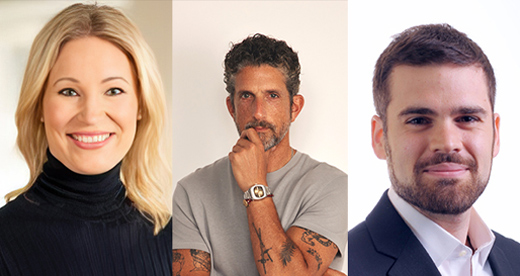
Matt Roberts, Head of Customer Marketing, Americas, Amdocs
S8 E7
17 Apr 2024
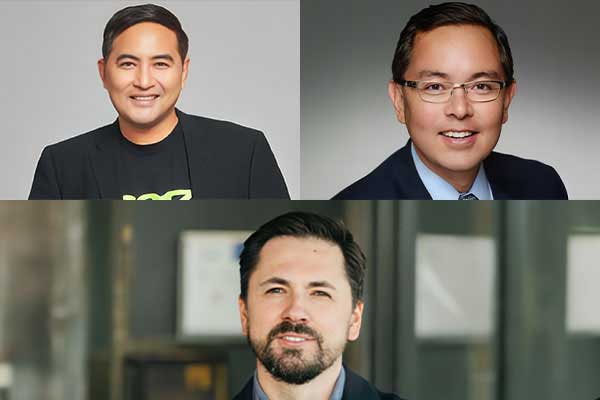
Matt Roberts Head of Customer Marketing, Americas, Amdocs
S8 E6
58:18
11 Apr 2024
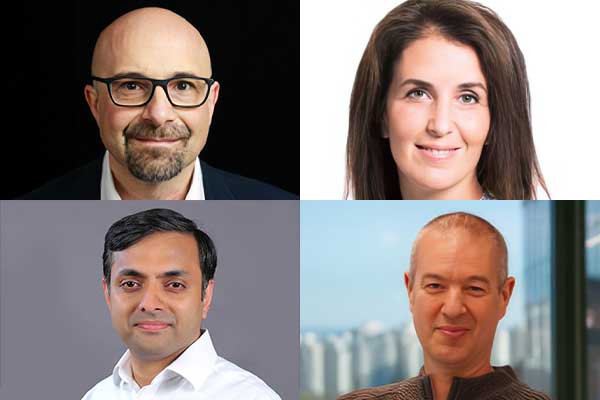
Matt Roberts Head of Customer Marketing, Americas, Amdocs
S8 E5
45:08
04 Apr 2024
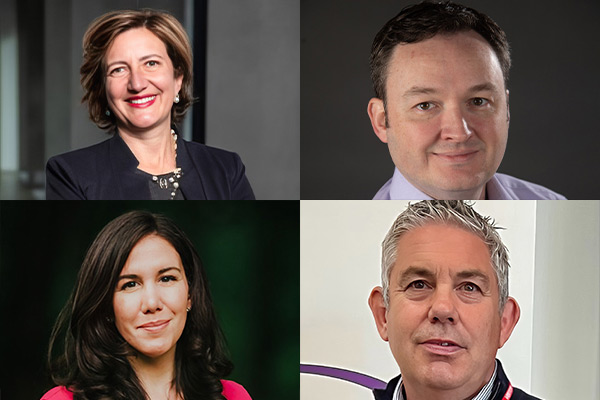
Matt Roberts, Head of Customer Marketing, Americas, Amdocs
S8 E4
29 Mar 2024
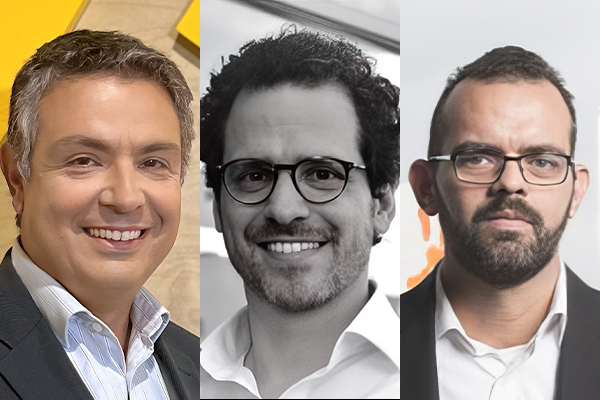
Matt Roberts, Head of Customer Marketing, Americas, Amdocs
S8 E3
53:28
21 Mar 2024
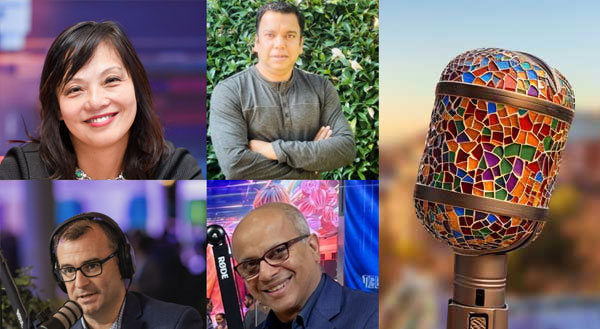
Matt Roberts, Head of Customer Marketing, Americas, Amdocs
S8 E2
14 Mar 2024
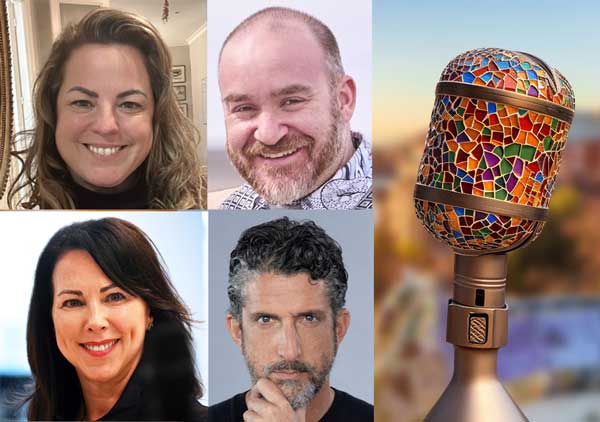
Matt Roberts, Head of Customer Marketing, Americas, Amdocs
S8 E1
07 Mar 2024